Search
Invitrogen
REG3G Monoclonal Antibody (C18)
{{$productOrderCtrl.translations['antibody.pdp.commerceCard.promotion.promotions']}}
{{$productOrderCtrl.translations['antibody.pdp.commerceCard.promotion.promocode']}}: {{promo.promoCode}} {{promo.promoTitle}} {{promo.promoDescription}}. {{$productOrderCtrl.translations['antibody.pdp.commerceCard.promotion.learnmore']}}
{{$ctrl.translations['antibody.pdp.skuNotes.additionalInformation']}}:
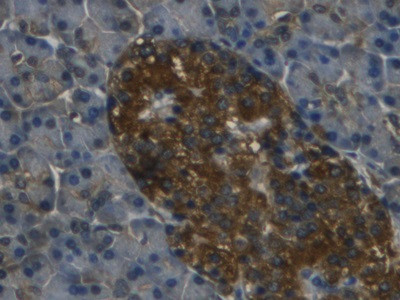
图: 1 / 4
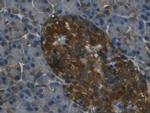
REG3G Antibody (MA5-41665) in IHC (P)
Immunohistochemistry analysis of REG3G in paraffin-embedded Human Pancreas tissue. Samples were incubated with monoclonal antibody (Product # MA5-41665) at a dilution of 30 µg/mL, followed by HRP-Linked Caprine Anti-Mouse IgG using a dilution of 2 µg/mL.
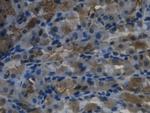
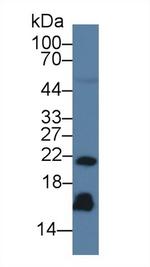
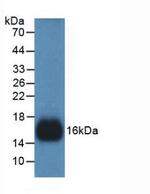
Please note: We are reviewing Western blot images included in the antibody testing data in our catalog, including those provided by third parties. Unless expressly labeled or annotated as “raw-unedited”, Western blot images included in the antibody testing data in our catalog may have been edited, optimized or otherwise adjusted for presentation.


产品信息
MA5-41665
产品规格
种属反应
Human,
Rat
宿主/亚型
Mouse
/ IgG2b, kappa
分类
Monoclonal
类型
Antibody
克隆号
C18
抗原
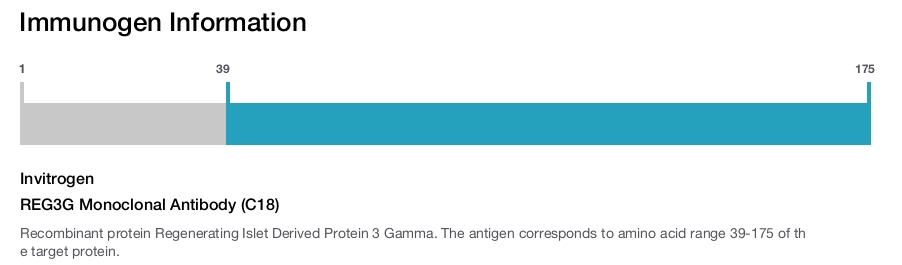
Recombinant protein Regenerating Islet Derived Protein 3 Gamma. The antigen corresponds to amino acid range 39-175 of the target protein.
偶联物
Unconjugated
Unconjugated
Unconjugated
形式
Liquid
浓度
1 mg/mL
规格
200 µg
纯化类型
Protein A/G
保存液
PBS, pH 7.4, with 50% glycerol
内含物
0.05% ProClin 300
保存条件
Store at 4°C short term. For long term storage, store at -20°C, avoiding freeze/thaw cycles.
运输条件
Ambient (domestic); Wet ice (international)
RRID
靶标信息
REG3G, also known as regenerating islet-derived 3 gamma, is a gene encoding an antimicrobial peptide crucial for maintaining intestinal homeostasis and regulating host-microbiome interactions. The protein produced by REG3G belongs to the C-type lectin family and is primarily expressed in the gut, where it plays a significant role in defending against bacterial infections. REG3G helps maintain gut barrier function and immune responses, acting in collaboration with interleukin 22 (IL-22), which regulates its expression. This gene is downregulated during chronic ethanol exposure, suggesting an influence on susceptibility to alcoholic liver disease. REG3G is also involved in glucose metabolism, with evidence showing that its administration improves glucose tolerance, potentially through actions mediated by its receptor, Extl3. Furthermore, REG3G has been identified as a nociceptor-enriched hormone, which protects against endotoxic shock by modulating both local and systemic immunity. This diverse functionality underscores the gene's importance in immune modulation, gut physiology, and metabolic processes.
仅用于科研。不用于诊断过程。未经明确授权不得转售。
篇参考文献 (0)
您是否在文献中引用过该产品?请点击下方按钮邮件告知我们。
生物信息学
蛋白别名: pancreatitis-associated protein 1B; pancreatitis-associated protein 3; pancreatitis-associated protein IB; reg III-gamma; REG-3-gamma; REG-3gamma; REG3gamma; regenerating gene III; regenerating islet-derived 3 gamma; regenerating islet-derived protein III-gamma; unnamed protein product; UNQ429
基因别名: LPPM429; PAP IB; PAP-1B; PAP1B; Pap3; PAPIB; PAPIII; REG III; REG-III; UNQ429
UniProt ID: (Human) Q6UW15, (Rat) P42854
Entrez Gene ID: (Human) 130120, (Rat) 24620
MyD88-dependent toll-like receptor signaling pathway
positive regulation of cell proliferation
response to symbiotic bacterium
response to wounding
response to bacterium
positive regulation of keratinocyte proliferation
response to lipopolysaccharide
response to peptide hormone
negative regulation of keratinocyte differentiation
negative regulation of inflammatory response
defense response to Gram-negative bacterium
defense response to Gram-positive bacterium
antimicrobial humoral immune response mediated by antimicrobial peptide
positive regulation of wound healing
negative regulation of inflammatory response to wounding
positive regulation of detection of glucose
Disclaimer

Clicking the images or links will redirect you to a website hosted by BenchSci that provides third-party scientific content. Neither the content nor the BenchSci technology and processes for selection have been evaluated by us; we are providing them as-is and without warranty of any kind, including for use or application of the Thermo Fisher Scientific products presented.

