Search
Invitrogen
SSEA1 Monoclonal Antibody (4E10)
{{$productOrderCtrl.translations['antibody.pdp.commerceCard.promotion.promotions']}}
{{$productOrderCtrl.translations['antibody.pdp.commerceCard.promotion.viewpromo']}}
{{$productOrderCtrl.translations['antibody.pdp.commerceCard.promotion.promocode']}}: {{promo.promoCode}} {{promo.promoTitle}} {{promo.promoDescription}}. {{$productOrderCtrl.translations['antibody.pdp.commerceCard.promotion.learnmore']}}
Additional Information:
{{banner.description}}

Please note: We are reviewing Western blot images included in the antibody testing data in our catalog, including those provided by third parties. Unless expressly labeled or annotated as “raw-unedited”, Western blot images included in the antibody testing data in our catalog may have been edited, optimized or otherwise adjusted for presentation.


产品信息
MA5-17042
应用
建议稀释比
已发表文章
产品规格
种属反应
Human
已发表种属
Mouse
宿主/亚型
Mouse
/ IgG1
分类
Monoclonal
类型
Antibody
克隆号
4E10
抗原
Synthesized peptide of human CD15.
偶联物
Unconjugated
Unconjugated
Unconjugated
形式
Liquid
浓度
Conc. Not Determined
保存液
ascites
内含物
0.03% sodium azide
保存条件
Store at 4°C short term. For long term storage, store at -20°C, avoiding freeze/thaw cycles.
运输条件
Ambient (domestic); Wet ice (international)
RRID
产品详细信息
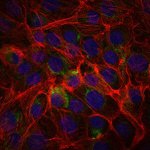
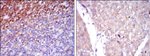
MA5-17042 targets CD15 in indirect ELISA, ICC, IHC, and IF applications and shows reactivity with Human samples.
The MA5-17042 immunogen is synthesized peptide of human CD15.
MA5-17042 detects CD15 which has a predicted molecular weight of approximately 59kDa.
靶标信息
CD15 (Lewis X, Le(x); stage specific embryonic antigen-1, SSEA-1) is a trisacharide determinant (3-fucosyl-N-acetyllactosamine) expressed on several glycolipids, glycoproteins and proteoglycans of various cell types, e.g. granulocytes, mast cells, monocytes, macrophages, cells of gastric mucosa, nervous system or various tumour cells. There are several variants of Lewis x, such as sialyl-Lewis x or sulphated Lewis x. Cells with high surface expression of Le(x) antigen exhibit strong self-aggregation, based on calcium-dependent Le(x)-Le(x) interaction. This process is involved for example in embryo compaction or in autoaggregation of teratocarcinoma cells. Sialyl-Le(x) and its isomer sialyl-Le(a) are ligands of selectins. CD15 expression has been extensively used to confirm diagnosis of Hodgkin's disease.
仅用于科研。不用于诊断过程。未经明确授权不得转售。
生物信息学
蛋白别名: 4-galactosyl-N-acetylglucosaminide 3-alpha-L-fucosyltransferase; alpha (1,3) fucosyltransferase, myeloid-specific; ELAM ligand fucosyltransferase; ELAM-1 ligand fucosyltransferase; fucosyltransferase IV; fucT-IV; FUTIV; galactoside 3-L-fucosyltransferase; Lewis X; SSEA-1; stage-specific embryonic antigen 1
基因别名: CD15; ELFT; FCT3A; FUC-TIV; FUTIV; LeX; SSEA-1
UniProt ID: (Human) P22083
Entrez Gene ID: (Human) 2526
carbohydrate metabolic process
protein N-linked glycosylation
protein O-linked glycosylation
sphingolipid metabolic process
glycosphingolipid biosynthetic process
glycoprotein biosynthetic process
oligosaccharide metabolic process
oligosaccharide biosynthetic process
L-fucose catabolic process
lymphocyte migration into lymph node
Lewis x epitope biosynthetic process
positive regulation of neutrophil migration
regulation of leukocyte cell-cell adhesion
positive regulation of leukocyte tethering or rolling
Disclaimer

Clicking the images or links will redirect you to a website hosted by BenchSci that provides third-party scientific content. Neither the content nor the BenchSci technology and processes for selection have been evaluated by us; we are providing them as-is and without warranty of any kind, including for use or application of the Thermo Fisher Scientific products presented.

