Search
Disclaimer

Clicking the images or links will redirect you to a website hosted by BenchSci that provides third-party scientific content. Neither the content nor the BenchSci technology and processes for selection have been evaluated by us; we are providing them as-is and without warranty of any kind, including for use or application of the Thermo Fisher Scientific products presented.
Invitrogen
SSEA4 Monoclonal Antibody (eBioMC-813-70 (MC-813-70)), eFluor™ 570, eBioscience™
{{$productOrderCtrl.translations['antibody.pdp.commerceCard.promotion.promotions']}}
{{$productOrderCtrl.translations['antibody.pdp.commerceCard.promotion.viewpromo']}}
{{$productOrderCtrl.translations['antibody.pdp.commerceCard.promotion.promocode']}}: {{promo.promoCode}} {{promo.promoTitle}} {{promo.promoDescription}}. {{$productOrderCtrl.translations['antibody.pdp.commerceCard.promotion.learnmore']}}


产品信息
41-8843-82
产品规格
宿主/亚型
Mouse
/ IgG3
分类
Monoclonal
类型
Antibody
克隆号
eBioMC-813-70 (MC-813-70)
偶联物
激发/发射光谱
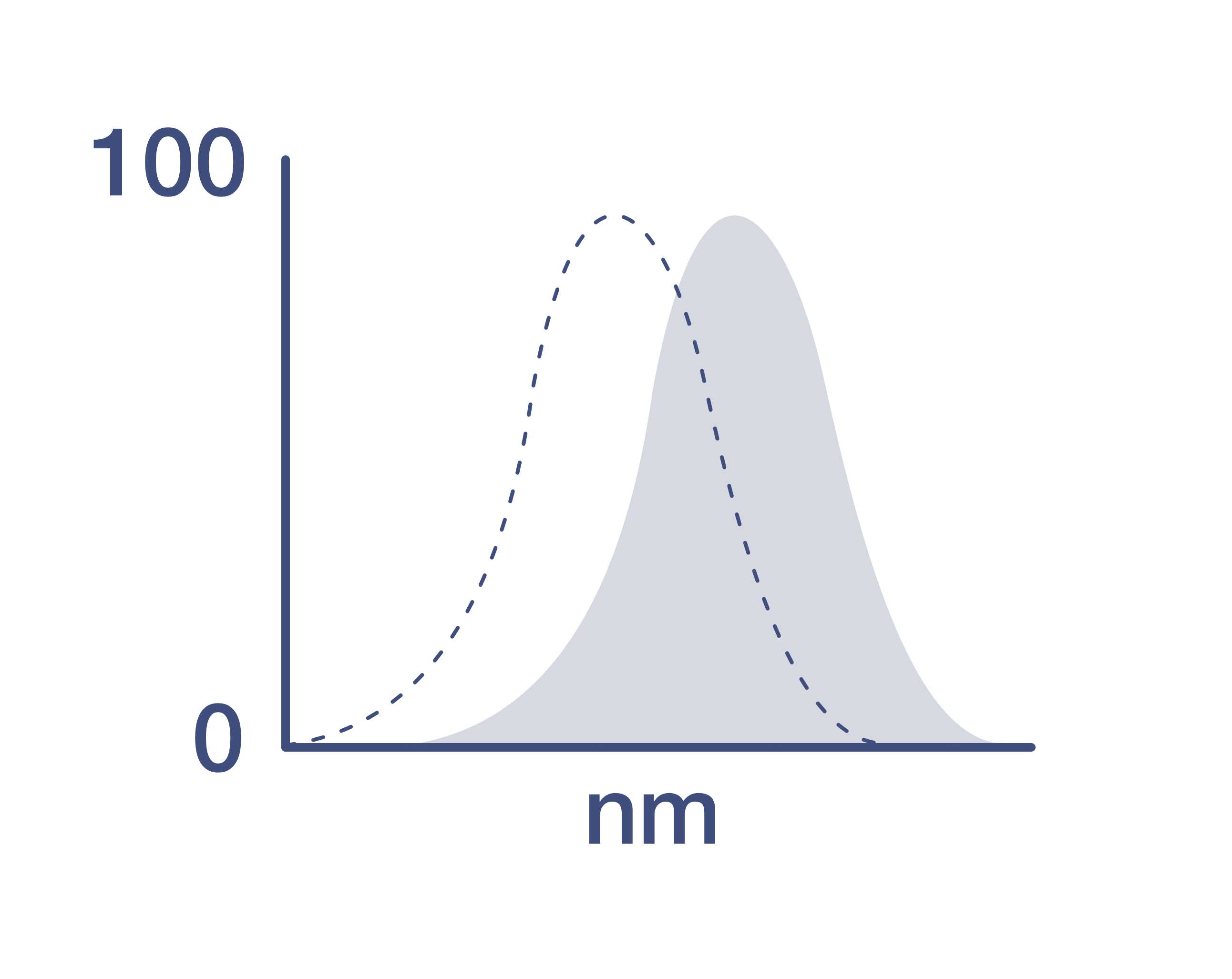
556/569 nm
查看光谱
形式
Liquid
浓度
0.2 mg/mL
保存条件
4°C, store in dark, DO NOT FREEZE!
运输条件
Ambient (domestic); Wet ice (international)
RRID
产品详细信息
Description: The eBioMC-813-70 monoclonal antibody reacts with a glycolipid carbohydrate epitope on Stage-specific embryonic antigen-4 (SSEA-4) protein. Expression is found on human teratocarcinoma stem cells (EC), human embryonic germ cells (EG), human induced pluripotent stem (iPS) cells, and human embryonic stem cells (ES) with a decrease in expression upon differentiation. Recently expression has also been found on bone marrow mesenchymal stem cells.
The eBioMC-813-70 antibody has been reported to crossreact to mouse, rabbit, canine, chicken, and Old and New World monkeys.
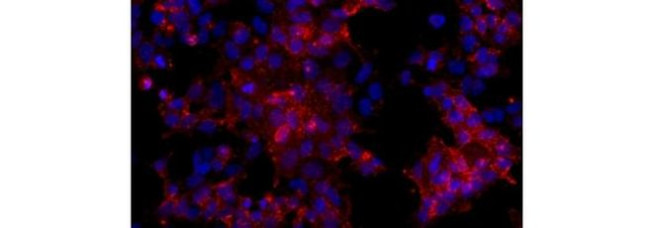
Applications Reported: This eBioMC-813-70 (MC-813-70) antibody has been reported for use in immunocytochemistry. This product has not been validated for flow cytometric analysis.
Applications Tested: This eBioMC-813-70 (MC-813-70) antibody has been tested by immunocytochemistry on fixed NTERA-2 and 2102Ep cells and can be used at less than or equal to 10 µg/mL. It is recommended that the antibody be carefully titrated for optimal performance in the assay of interest.
Filter Recommendation: When using this eFluor® 570 antibody conjugate, we recommend a filter that will capture the 570 emission wavelength (for example, Excitation 545/25, 565LP, Emission 605/70). A standard Alexa Fluor® 555 or TRITC filter is acceptable.
Excitation: 555 nm; Emission: 570 nm
靶标信息
SSEA-4 (Stage-specific embryonic antigen 4) is a cell surface antigen, expressed along with SSEA-3, TRA-1-60 and TRA-1-81 in embryonic stem cells, embryonal carcinoma cells and induced pluripotent stem cells (iPS). In human cells, these surface markers are down-regulated during the differentiation process, while SSEA-1 is absent in undifferentiated human stem cells and upregulated on the cell surface after retinoic acid mediated differentiation. Conversely, in mouse stem cells, SSEA-1 expression decreases with differentiation while SSEA-3 and SSEA-4 expression increase.
仅用于科研。不用于诊断过程。未经明确授权不得转售。

