Search
Invitrogen
TEM5 Polyclonal Antibody
{{$productOrderCtrl.translations['antibody.pdp.commerceCard.promotion.promotions']}}
{{$productOrderCtrl.translations['antibody.pdp.commerceCard.promotion.promocode']}}: {{promo.promoCode}} {{promo.promoTitle}} {{promo.promoDescription}}. {{$productOrderCtrl.translations['antibody.pdp.commerceCard.promotion.learnmore']}}
{{$ctrl.translations['antibody.pdp.skuNotes.additionalInformation']}}:
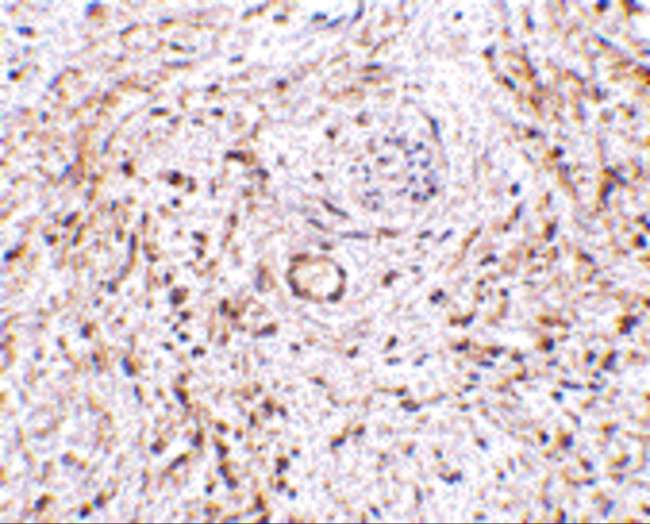

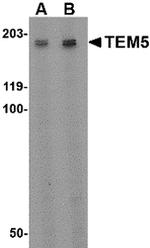
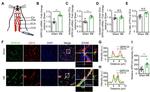
Please note: We are reviewing Western blot images included in the antibody testing data in our catalog, including those provided by third parties. Unless expressly labeled or annotated as “raw-unedited”, Western blot images included in the antibody testing data in our catalog may have been edited, optimized or otherwise adjusted for presentation.


产品信息
PA5-20442
应用
建议稀释比
已发表文章
产品规格
种属反应
Human,
Rat
已发表种属
Mouse
宿主/亚型
Rabbit
/ IgG
分类
Polyclonal
类型
Antibody
抗原
A 14 amino acid synthetic peptide near the center of human TEM5. The immunogen is located within amino acids 560-610 of TEM5.
偶联物
Unconjugated
Unconjugated
Unconjugated
形式
Liquid
浓度
1 mg/mL
规格
100 µg
纯化类型
Antigen affinity chromatography
保存液
PBS
内含物
0.02% sodium azide
保存条件
4°C
运输条件
Ambient (domestic); Wet ice (international)
RRID
产品详细信息
A suggested positive control is rat kidney tissue lysate.
PA5-20442 can be used with blocking peptide PEP-0559.
Predicted species reactivity based on immunogen sequence: Mouse: (85%).
靶标信息
Tumor endothelial markers (TEMs) are significantly up-regulated during angiogenesis and neoangiogensis that are crucial for the growth of solid tumors. TEMs localized on the cell surface and conserved across species are of particular interest for future development of anti-angiogenic therapies. These include TEMs such as TEM1, TEM5, TEM7 and TEM8. TEM5 is a member of the adhesion family of G protein coupled receptors and is localized on the surface of endothelial cells. TEM5 is a seven-pass transmembrane receptor, unlike TEM1, TEM7 and TEM8 which span the membrane once. TEM5 is abundantly expressed in tumor vessels, heart, placenta, ovary, small intestine, and colon. Proteolytically processed soluble TEM5 mediates endothelial cell survival during angiogenesis by linking integrin to glycosaminoglycans.
仅用于科研。不用于诊断过程。未经明确授权不得转售。
生物信息学
蛋白别名: DKFZp434C211; DKFZp434J0911; FLJ14390; G protein-coupled receptor 124; G-protein coupled receptor 124; seven-pass transmembrane protein; tumor endothelial marker 5; unnamed protein product
基因别名: GPR124; TEM5
UniProt ID: (Human) Q96PE1
Entrez Gene ID: (Human) 25960, (Rat) 100363275
sprouting angiogenesis
cell surface receptor signaling pathway
G-protein coupled receptor signaling pathway
central nervous system development
endothelial cell migration
regulation of angiogenesis
regulation of chemotaxis
canonical Wnt signaling pathway
regulation of establishment of blood-brain barrier
positive regulation of canonical Wnt signaling pathway
angiogenesis
positive regulation of endothelial cell migration
negative regulation of vascular endothelial growth factor signaling pathway
Disclaimer

Clicking the images or links will redirect you to a website hosted by BenchSci that provides third-party scientific content. Neither the content nor the BenchSci technology and processes for selection have been evaluated by us; we are providing them as-is and without warranty of any kind, including for use or application of the Thermo Fisher Scientific products presented.

