Search
Invitrogen
TGF beta-1 (Biosimilar) Recombinant Human Monoclonal Antibody
{{$productOrderCtrl.translations['antibody.pdp.commerceCard.promotion.promotions']}}
{{$productOrderCtrl.translations['antibody.pdp.commerceCard.promotion.promocode']}}: {{promo.promoCode}} {{promo.promoTitle}} {{promo.promoDescription}}. {{$productOrderCtrl.translations['antibody.pdp.commerceCard.promotion.learnmore']}}
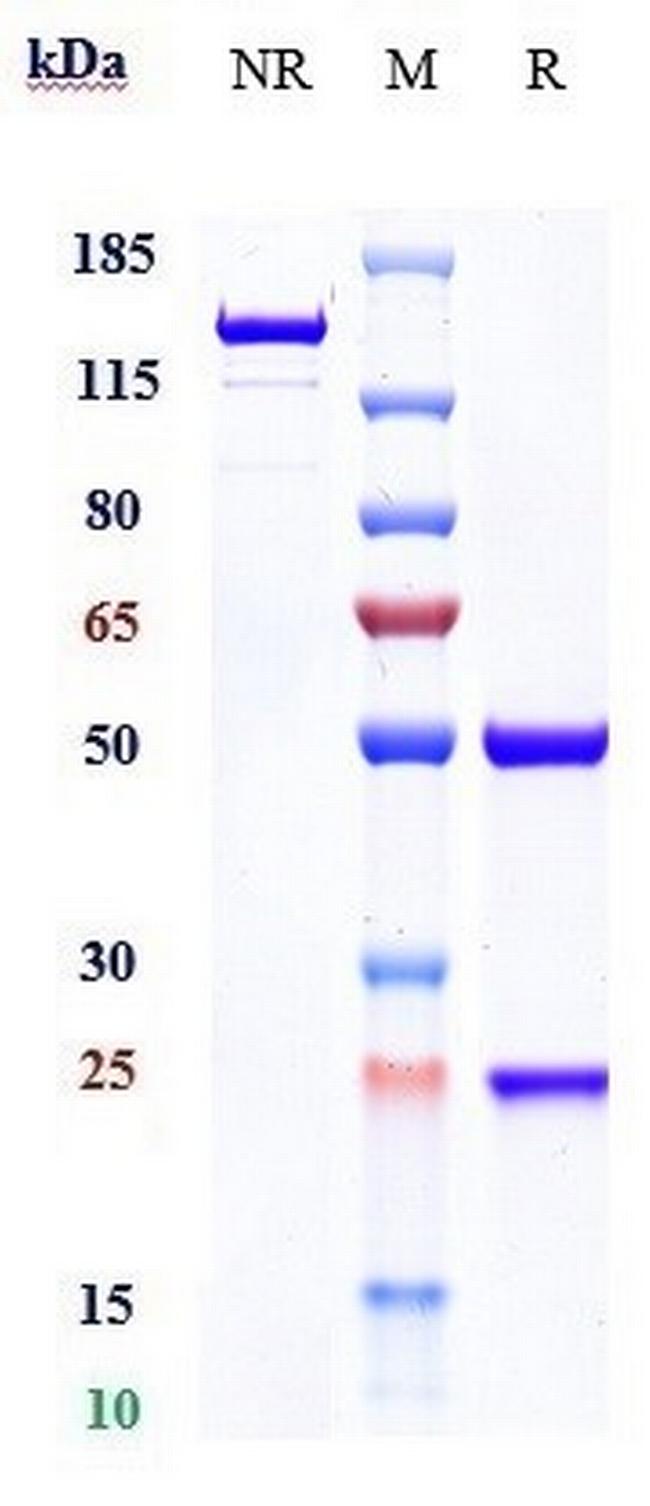
Please note: We are reviewing Western blot images included in the antibody testing data in our catalog, including those provided by third parties. Unless expressly labeled or annotated as “raw-unedited”, Western blot images included in the antibody testing data in our catalog may have been edited, optimized or otherwise adjusted for presentation.

产品信息
MA5-59933
应用
建议稀释比
已发表文章
产品规格
种属反应
Human
宿主/亚型
Human
/ IgG1
Expression System
CHO cells
分类
Recombinant Monoclonal
类型
Antibody
偶联物
Unconjugated
Unconjugated
Unconjugated
形式
Lyophilized
浓度
1 mg/mL
规格
100 µg
纯化类型
Protein A
保存液
25mM histidine, pH 6.2, with 0.01% Tween 80, 8% sucrose
内含物
no preservative
保存条件
-20°C, Avoid Freeze/Thaw Cycles
运输条件
Ambient (domestic); Dry ice (international)
RRID
产品详细信息
For reconstitution, add sterile, distilled water to achieve a final antibody concentration of 1 mg/mL. Gently shake to solubilize the protein completely. Do not vortex. Reconstituted products should be stored at -80 °.
This antibody can also be cross referenced by the term Genzyme patent anti-TGF-B.
靶标信息
TGF beta-1 (TGFB1, Transforming Growth Factor Beta 1) is a polypeptide member of the transforming growth factor beta superfamily of cytokines, found almost ubiquitously in tissues. Transforming growth factor (TGF)-b is stored in the extracellular matrix as a latent complex with its pro-domain. Activation of TGF beta-1 requires the binding of aV integrin to an RGD sequence in the prodomain and exertion of force on this domain, which is held in the extracellular matrix by latent TGF-b binding proteins. Latent forms are complexes of TGF beta-1, an amino-terminal portion of the TGF-beta precursor, designated TGF-LAP (TGF-latency associated peptide), and a specific binding protein, known as LTBP. TGF beta-1 helps regulates proliferation, differentiation, adhesion, migration in many cell types. Many cells have TGF beta receptors, and the protein positively and negatively regulates many other growth factors. TGF beta-1 is cleaved into a latency-associated peptide and a mature TGF beta-1 peptide, and is found in either a latent form composed of a TGFB1 homodimer, a LAP homodimer, and a latent TGFB1-binding protein, or in an active form composed of a TGF beta-1 homodimer. The mature peptide may also form heterodimers with other TGF beta family members. The gene for TGF beta-1 is frequently upregulated in tumor cells, and mutations in this gene result in Camurati-Engelmann disease and cystic fibrosis.
仅用于科研。不用于诊断过程。未经明确授权不得转售。
篇参考文献 (0)
您是否在文献中引用过该产品?请点击下方按钮邮件告知我们。
生物信息学
蛋白别名: latency-associated peptide; prepro-transforming growth factor beta-1; TGF b; TGF b 1; TGF beta; tgf beta 1; TGF beta-1; TGF beta-1 protein; tgf beta1; TGF β; TGF β 1; TGF β1; TGF-B1; TGF-beta 1 protein; TGF-beta-1; TGFβ1; Transforming growth factor; transforming growth factor b1; transforming growth factor beta; transforming growth factor beta1; transforming growth factor β1; unnamed protein product
基因别名: CAEND1; CED; DPD1; IBDIMDE; LAP; TGF-beta1; TGFB; TGFbeta
UniProt ID: (Human) P01137
Entrez Gene ID: (Human) 7040
type II transforming growth factor beta receptor binding
cytokine activity
transforming growth factor beta receptor binding
protein binding
growth factor activity
enzyme binding
type I transforming growth factor beta receptor binding
type III transforming growth factor beta receptor binding
identical protein binding
protein serine/threonine kinase activator activity
macromolecular complex binding
vasculogenesis
ureteric bud development
response to hypoxia
morphogenesis of a branching structure
epithelial to mesenchymal transition
neural tube closure
sprouting angiogenesis
chondrocyte differentiation
hematopoietic progenitor cell differentiation
connective tissue replacement involved in inflammatory response wound healing
adaptive immune response based on somatic recombination of immune receptors built from immunoglobulin superfamily domains
negative regulation of natural killer cell mediated cytotoxicity directed against tumor cell target
heart valve morphogenesis
aortic valve morphogenesis
protein export from nucleus
ATP biosynthetic process
phosphate-containing compound metabolic process
apoptotic process
transforming growth factor beta receptor signaling pathway
I-kappaB kinase/NF-kappaB signaling
negative regulation of neuroblast proliferation
salivary gland morphogenesis
heart development
female pregnancy
positive regulation of cell proliferation
negative regulation of cell proliferation
response to xenobiotic stimulus
response to wounding
response to glucose
response to gamma radiation
positive regulation of vascular endothelial growth factor production
positive regulation of gene expression
negative regulation of gene expression
negative regulation of extracellular matrix disassembly
positive regulation of epithelial to mesenchymal transition
macrophage derived foam cell differentiation
positive regulation of fibroblast migration
negative regulation of macrophage cytokine production
oligodendrocyte development
positive regulation of microglia differentiation
regulation of striated muscle tissue development
neural tube development
cell differentiation
hyaluronan catabolic process
negative regulation of cell growth
regulation of cell migration
positive regulation of cell migration
organ regeneration
membrane protein intracellular domain proteolysis
positive regulation of protein complex assembly
positive regulation of exit from mitosis
response to estradiol
response to progesterone
regulation of interleukin-23 production
negative regulation of interleukin-17 production
positive regulation of interleukin-17 production
positive regulation of interleukin-6 production
positive regulation of tumor necrosis factor production
receptor catabolic process
positive regulation of superoxide anion generation
positive regulation of collagen biosynthetic process
response to vitamin D
negative regulation of MyD88-dependent toll-like receptor signaling pathway
response to laminar fluid shear stress
response to immobilization stress
cellular response to platelet-derived growth factor stimulus
myofibroblast differentiation
regulation of cell proliferation
regulation of protein import into nucleus
positive regulation of protein import into nucleus
odontogenesis of dentin-containing tooth
myelination
positive regulation of apoptotic process
positive regulation of vascular permeability
positive regulation of I-kappaB kinase/NF-kappaB signaling
positive regulation of MAPK cascade
positive regulation of blood vessel endothelial cell migration
negative regulation of blood vessel endothelial cell migration
regulatory T cell differentiation
cell-cell junction organization
response to ethanol
positive regulation of regulatory T cell differentiation
negative regulation of cell differentiation
positive regulation of cell differentiation
negative regulation of fat cell differentiation
negative regulation of myoblast differentiation
positive regulation of epidermal growth factor receptor signaling pathway
negative regulation of cell cycle
negative regulation of transcription, DNA-templated
positive regulation of transcription, DNA-templated
positive regulation of transcription from RNA polymerase II promoter
positive regulation of isotype switching to IgA isotypes
lymph node development
digestive tract development
negative regulation of skeletal muscle tissue development
positive regulation of smooth muscle cell proliferation
inner ear development
positive regulation of epithelial cell proliferation
negative regulation of epithelial cell proliferation
positive regulation of protein secretion
positive regulation of inflammatory response
negative regulation of phagocytosis
defense response to fungus
positive regulation of chemotaxis
positive regulation of cellular component organization
positive regulation of multicellular organismal process
positive regulation of protein metabolic process
negative regulation of release of sequestered calcium ion into cytosol
positive regulation of protein kinase B signaling
ventricular cardiac muscle tissue morphogenesis
regulation of blood vessel remodeling
face morphogenesis
frontal suture morphogenesis
positive regulation of SMAD protein import into nucleus
negative regulation of biomineral tissue development
positive regulation of ERK1 and ERK2 cascade
response to cholesterol
cellular response to mechanical stimulus
cellular response to glucose stimulus
cellular response to growth factor stimulus
cellular response to low-density lipoprotein particle stimulus
cellular response to hypoxia
cellular response to ionizing radiation
cellular response to dexamethasone stimulus
cellular response to transforming growth factor beta stimulus
positive regulation of mononuclear cell migration
odontoblast differentiation
extracellular matrix assembly
positive regulation of branching involved in ureteric bud morphogenesis
positive regulation of canonical Wnt signaling pathway
extrinsic apoptotic signaling pathway
liver regeneration
cellular response to virus
transforming growth factor beta receptor superfamily signaling pathway
negative regulation of hyaluronan biosynthetic process
positive regulation of protein localization to nucleus
positive regulation of extracellular matrix assembly
response to salt
positive regulation of mesenchymal stem cell proliferation
regulation of miRNA transcription
negative regulation of pri-miRNA transcription from RNA polymerase II promoter
positive regulation of pri-miRNA transcription from RNA polymerase II promoter
negative regulation of protein localization to plasma membrane
positive regulation of vasculature development
positive regulation of STAT cascade
regulation of epithelial to mesenchymal transition involved in endocardial cushion formation
cellular response to acetaldehyde
cellular response to insulin-like growth factor stimulus
embryonic liver development
negative regulation of cell-cell adhesion mediated by cadherin
positive regulation of chemokine (C-X-C motif) ligand 2 production
positive regulation of endothelial cell apoptotic process
positive regulation of primary miRNA processing
positive regulation of cardiac muscle cell differentiation
Disclaimer

Clicking the images or links will redirect you to a website hosted by BenchSci that provides third-party scientific content. Neither the content nor the BenchSci technology and processes for selection have been evaluated by us; we are providing them as-is and without warranty of any kind, including for use or application of the Thermo Fisher Scientific products presented.

