Search
Invitrogen
TGFBR2 (Biosimilar) Recombinant Human Monoclonal Antibody
{{$productOrderCtrl.translations['antibody.pdp.commerceCard.promotion.promotions']}}
{{$productOrderCtrl.translations['antibody.pdp.commerceCard.promotion.viewpromo']}}
{{$productOrderCtrl.translations['antibody.pdp.commerceCard.promotion.promocode']}}: {{promo.promoCode}} {{promo.promoTitle}} {{promo.promoDescription}}. {{$productOrderCtrl.translations['antibody.pdp.commerceCard.promotion.learnmore']}}
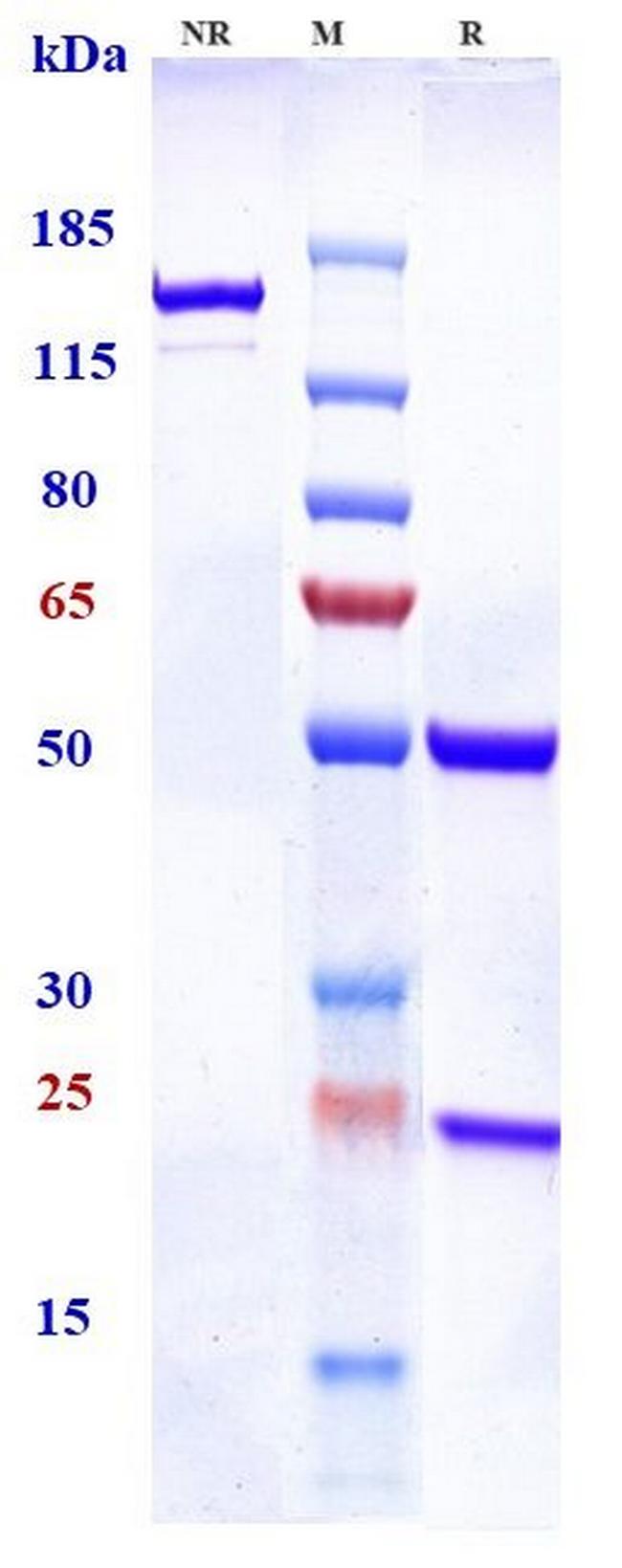
Please note: We are reviewing Western blot images included in the antibody testing data in our catalog, including those provided by third parties. Unless expressly labeled or annotated as “raw-unedited”, Western blot images included in the antibody testing data in our catalog may have been edited, optimized or otherwise adjusted for presentation.

产品信息
MA5-59801
应用
建议稀释比
已发表文章
产品规格
种属反应
Human
宿主/亚型
Human
/ IgG1, kappa
Expression System
CHO cells
分类
Recombinant Monoclonal
类型
Antibody
偶联物
Unconjugated
Unconjugated
Unconjugated
形式
Lyophilized
浓度
1 mg/mL
规格
100 µg
纯化类型
Protein A
保存液
25mM histidine, pH 6.2, with 0.01% Tween 80, 8% sucrose
内含物
no preservative
保存条件
-20°C, Avoid Freeze/Thaw Cycles
运输条件
Ambient (domestic); Dry ice (international)
RRID
产品详细信息
For reconstitution, add sterile, distilled water to achieve a final antibody concentration of 1 mg/mL. Gently shake to solubilize the protein completely. Do not vortex. Reconstituted products should be stored at -80 °.
This antibody can also be cross referenced by the term LY3022859.
靶标信息
Transforming Growth Factor, beta receptor 2 (AAT3, FAA3, MFS2, RIIC, LDS1B, LDS2B, TAAD2, TGFR-2, TGFbeta-RII) is a member of the TGF-beta family of receptor Serine/Threonine kinases. It is involved in the regulation of cell proliferation. Mitochondrial ATP synthase catalyzes ATP synthesis, utilizing an electrochemical gradient of protons across the inner membrane during oxidative phosphorylation. ATP synthase is composed of two linked multi-subunit complexes: the soluble catalytic core, F1, and the membrane-spanning component, Fo, comprising the proton channel. The catalytic portion of mitochondrial ATP synthase consists of 5 different subunits (alpha, beta, gamma, delta, and epsilon) assembled with a stoichiometry of 3 alpha, 3 beta, and a single representative of the other 3. The proton channel consists of three main subunits (a, b, c). TGFBR2 encodes the gamma subunit of the catalytic core. Alternatively spliced transcript variants encoding different isoforms have been identified. TGFBR2 also has a pseudogene on chromosome 14.
仅用于科研。不用于诊断过程。未经明确授权不得转售。
篇参考文献 (0)
您是否在文献中引用过该产品?请点击下方按钮邮件告知我们。
生物信息学
蛋白别名: Ser/Thr protein kinase; tgf beta receptor 2; TGF-beta receptor type IIB; TGF-beta type II receptor; TGFbeta RII; TGFBR2-SE; TGFR2; transforming growth factor beta receptor II; transforming growth factor beta receptor II (70/80kDa) isoform TGFBR2_1; transforming growth factor beta receptor II (70/80kDa) isoform TGFBR2_2; transforming growth factor beta receptor type IIC; transforming growth factor, beta receptor II (70/80kDa); transforming growth factor, beta receptor II alpha; transforming growth factor, beta receptor II beta; transforming growth factor, beta receptor II delta; transforming growth factor, beta receptor II epsilon; transforming growth factor, beta receptor II gamma; unnamed protein product
基因别名: AAT3; FAA3; LDS1B; LDS2; LDS2B; MFS2; RIIC; TAAD2; tbetaR-II; TBR-ii; TBRII; TGFbeta-RII; TGFR-2
UniProt ID: (Human) P37173
Entrez Gene ID: (Human) 7048
protein kinase activity
protein serine/threonine kinase activity
transmembrane receptor protein serine/threonine kinase activity
transforming growth factor beta-activated receptor activity
transforming growth factor beta receptor activity, type II
protein binding
ATP binding
glycosaminoglycan binding
activin receptor activity, type I
kinase activator activity
type I transforming growth factor beta receptor binding
type III transforming growth factor beta receptor binding
signaling receptor activity
SMAD binding
metal ion binding
activin binding
transforming growth factor beta binding
binding, bridging
blood vessel development
patterning of blood vessels
vasculogenesis
epithelial to mesenchymal transition
heart looping
positive regulation of mesenchymal cell proliferation
positive regulation of tolerance induction to self antigen
positive regulation of B cell tolerance induction
positive regulation of T cell tolerance induction
outflow tract septum morphogenesis
membranous septum morphogenesis
outflow tract morphogenesis
aortic valve morphogenesis
atrioventricular valve morphogenesis
tricuspid valve morphogenesis
cardiac left ventricle morphogenesis
endocardial cushion fusion
apoptotic process
transmembrane receptor protein serine/threonine kinase signaling pathway
transforming growth factor beta receptor signaling pathway
nervous system development
brain development
heart development
positive regulation of cell proliferation
response to xenobiotic stimulus
positive regulation of epithelial to mesenchymal transition
cell differentiation
activin receptor signaling pathway
response to lipid
embryonic hemopoiesis
aorta morphogenesis
regulation of cell proliferation
myeloid dendritic cell differentiation
animal organ development
blood vessel morphogenesis
embryonic cranial skeleton morphogenesis
artery morphogenesis
positive regulation of developmental process
positive regulation of NK T cell differentiation
cartilage development
regulation of multicellular organismal process
palate development
positive regulation of SMAD protein import into nucleus
ventricular septum morphogenesis
secondary palate development
response to cholesterol
cellular response to growth factor stimulus
positive regulation of epithelial to mesenchymal transition involved in endocardial cushion formation
cell proliferation involved in endocardial cushion morphogenesis
superior endocardial cushion morphogenesis
inferior endocardial cushion morphogenesis
miRNA transport
positive regulation of reactive oxygen species metabolic process
positive regulation of CD4-positive, alpha-beta T cell proliferation
regulation of stem cell differentiation
Disclaimer

Clicking the images or links will redirect you to a website hosted by BenchSci that provides third-party scientific content. Neither the content nor the BenchSci technology and processes for selection have been evaluated by us; we are providing them as-is and without warranty of any kind, including for use or application of the Thermo Fisher Scientific products presented.

