Search
Invitrogen
TPR Polyclonal Antibody
{{$productOrderCtrl.translations['antibody.pdp.commerceCard.promotion.promotions']}}
{{$productOrderCtrl.translations['antibody.pdp.commerceCard.promotion.promocode']}}: {{promo.promoCode}} {{promo.promoTitle}} {{promo.promoDescription}}. {{$productOrderCtrl.translations['antibody.pdp.commerceCard.promotion.learnmore']}}
{{$ctrl.translations['antibody.pdp.skuNotes.additionalInformation']}}:
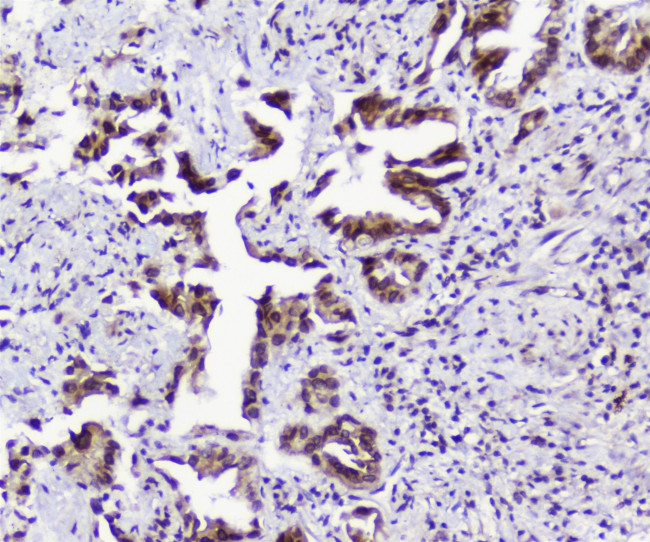
图: 1 / 9
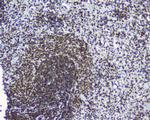
TPR Antibody (PA5-95533) in IHC (P)
Immunohistochemistry analysis of TPR in paraffin-embedded human lung cancer tissues. Antigen retrieval was performed on the tissue using citrate buffer (pH 6, 20 min) and blocked with 10% goat serum. Samples were incubated with TPR polyclonal antibody (Product # PA5-95533) at a 1 µg/mL dilution, followed by biotinylated goat anti-rabbit IgG (30 min, 37°C), and developed with Strepavidin-Biotin-Complex and D... View More
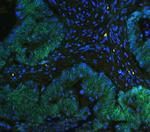
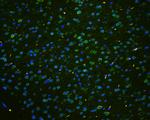
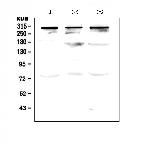
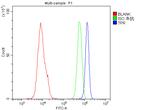
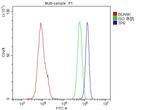
Please note: We are reviewing Western blot images included in the antibody testing data in our catalog, including those provided by third parties. Unless expressly labeled or annotated as “raw-unedited”, Western blot images included in the antibody testing data in our catalog may have been edited, optimized or otherwise adjusted for presentation.


产品信息
PA5-95533
应用
建议稀释比
已发表文章
产品规格
种属反应
Human,
Mouse,
Rat
宿主/亚型
Rabbit
/ IgG
分类
Polyclonal
类型
Antibody
抗原
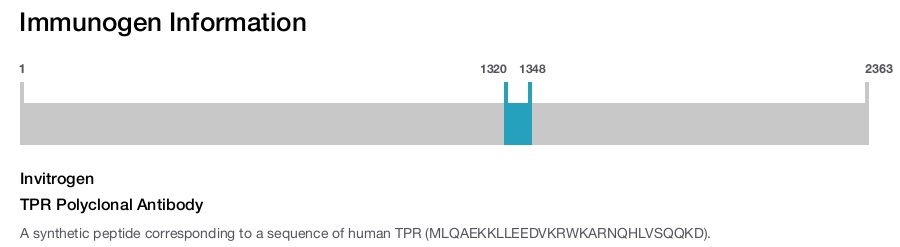
A synthetic peptide corresponding to a sequence of human TPR (MLQAEKKLLEEDVKRWKARNQHLVSQQKD).
偶联物
Unconjugated
Unconjugated
Unconjugated
形式
Lyophilized
浓度
500 µg/mL
规格
100 µg
纯化类型
Affinity chromatography
保存液
PBS with 4mg trehalose
内含物
0.05mg sodium azide
保存条件
-20°C
运输条件
Ambient (domestic); Wet ice (international)
RRID
产品详细信息
Reconstitute with 0.2 mL of distilled water to yield a concentration of 500 µg/mL.
Positive Control - WB: human K562 whole cell, human HL-60 whole cell, human Hela whole cell. IHC: human lung cancer tissue, mouse brain tissue, mouse kidney tissue, rat spleen tissue. Flow: U937 cell.|Store at -20°C for one year from date of receipt. After reconstitution, at 4°C for one month. It can also be aliquotted and stored frozen at -20°C for six months. Avoid repeated freeze-thaw cycles.
靶标信息
Steroidogenic factor-1 (SF-1) regulates multiple genes involved in the adrenal and gonadal development and in the biosynthesis of a variety of hormones, including adrenal and gonadal steroids, anti-Mullerian hormone (AMH), and gonadotropins. SF-1 belongs to the fushi tarazu factor-1 (FTZ-F1) subfamily of orphan nuclear receptors. In the adult ovary, SF-1 localizes to theca/interstitial cells.
仅用于科研。不用于诊断过程。未经明确授权不得转售。
篇参考文献 (0)
您是否在文献中引用过该产品?请点击下方按钮邮件告知我们。
生物信息学
蛋白别名: megator; NPC-associated intranuclear protein; nuclear pore complex-associated protein TPR; Tpr; TPR; nuclear pore complex-associated protein; translocated promoter region (to activated MET oncogene); translocated promoter region and nuclear basket protein; translocated promoter region protein; tumor potentiating region; unnamed protein product
基因别名: 2610029M07Rik; MRT79
UniProt ID: (Human) P12270, (Mouse) F6ZDS4
Entrez Gene ID: (Human) 7175, (Mouse) 108989, (Rat) 304862
negative regulation of transcription from RNA polymerase II promoter
RNA import into nucleus
RNA export from nucleus
mRNA export from nucleus
protein import into nucleus
protein export from nucleus
intracellular protein transport
nucleocytoplasmic transport
nuclear pore organization
mitotic spindle assembly checkpoint
regulation of mRNA export from nucleus
regulation of mitotic sister chromatid separation
positive regulation of heterochromatin assembly
regulation of protein stability
mRNA export from nucleus in response to heat stress
regulation of protein localization
cellular response to heat
cellular response to interferon-alpha
regulation of protein import into nucleus
positive regulation of protein import into nucleus
nuclear matrix organization
negative regulation of translational initiation
positive regulation of nucleocytoplasmic transport
regulation of protein export from nucleus
positive regulation of protein export from nucleus
negative regulation of RNA export from nucleus
nuclear export
nuclear pore complex assembly
response to epidermal growth factor
positive regulation of mitotic cell cycle spindle assembly checkpoint
positive regulation of intracellular protein transport
regulation of mitotic spindle assembly
Disclaimer

Clicking the images or links will redirect you to a website hosted by BenchSci that provides third-party scientific content. Neither the content nor the BenchSci technology and processes for selection have been evaluated by us; we are providing them as-is and without warranty of any kind, including for use or application of the Thermo Fisher Scientific products presented.

