Search
Invitrogen
TRPML1 Recombinant Rabbit Monoclonal Antibody (PSH09-01)
{{$productOrderCtrl.translations['antibody.pdp.commerceCard.promotion.promotions']}}
{{$productOrderCtrl.translations['antibody.pdp.commerceCard.promotion.promocode']}}: {{promo.promoCode}} {{promo.promoTitle}} {{promo.promoDescription}}. {{$productOrderCtrl.translations['antibody.pdp.commerceCard.promotion.learnmore']}}
{{$ctrl.translations['antibody.pdp.skuNotes.additionalInformation']}}:
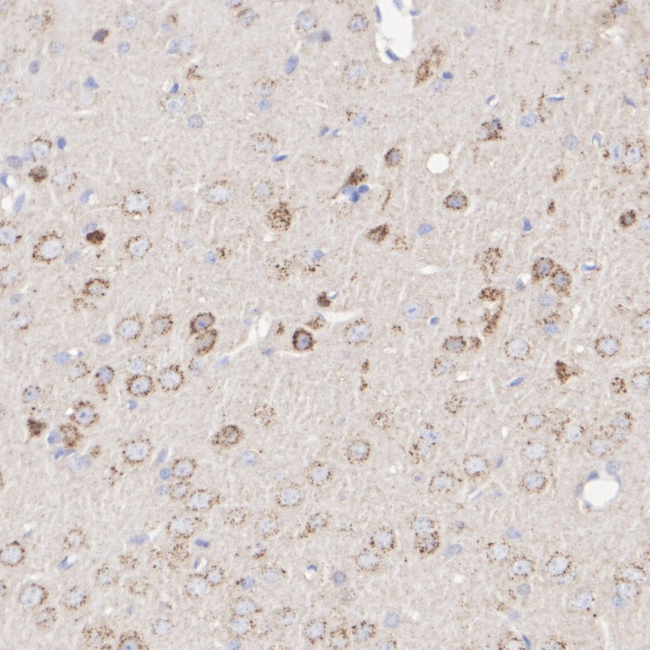
图: 1 / 6
TRPML1 Antibody (MA562892) in IHC (P)
Immunohistochemical analysis of Mucolipin-1 (TRPML1) on formalin-fixed paraffin-embedded mouse brain tissue.The section was pre-treated using heat mediated antigen retrieval with Tris-EDTA buffer (pH 9.0) for 20 minutes. The tissue was blocked in 1% BSA for 20 minutes at room temperature, then probed with TRPML1 Recombinant Rabbit Monoclonal Antibody (PSH09-01) (Product # MA562892) at 1:1,000 dilution for 1... View More
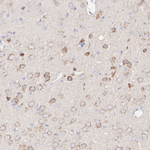
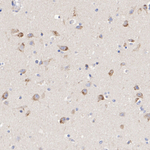
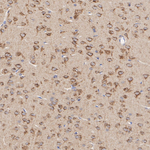
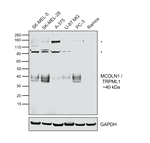
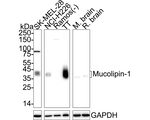
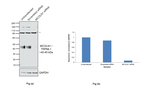
Please note: We are reviewing Western blot images included in the antibody testing data in our catalog, including those provided by third parties. Unless expressly labeled or annotated as “raw-unedited”, Western blot images included in the antibody testing data in our catalog may have been edited, optimized or otherwise adjusted for presentation.


产品信息
MA562892
产品规格
种属反应
Human,
Mouse,
Rat
宿主/亚型
Rabbit
/ IgG
Expression System
HEK293 cells
分类
Recombinant Monoclonal
类型
Antibody
克隆号
PSH09-01
抗原
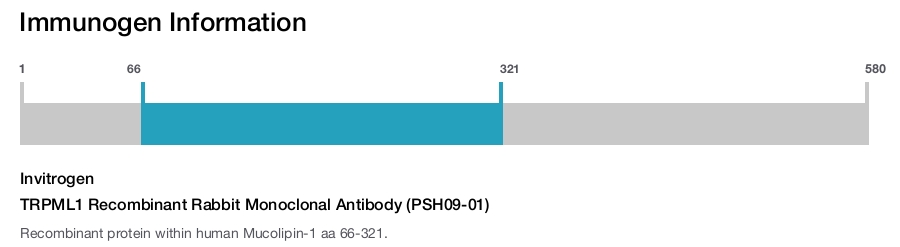
Recombinant protein within human Mucolipin-1 aa 66-321.
偶联物
Unconjugated
Unconjugated
Unconjugated
形式
Liquid
浓度
1.03 mg/mL
规格
103 µg
纯化类型
Protein A
保存液
PBS, pH 7.4, with 0.1% BSA, 40% glycerol
内含物
0.05% sodium azide
保存条件
Store at 4°C short term. For long term storage, store at -20°C, avoiding freeze/thaw cycles.
运输条件
Ambient (domestic); Wet ice (international)
RRID
产品详细信息
Positive Control: SK-MEL-28 cell lysate, NCI-H226 cell lysate, TT cell lysate, Mouse brain tissue lysate, Rat brain tissue lysate, human brain tissue, mouse brain tissue, rat brain tissue.
Tissue Specificity: Low tissue specificity
Subcellular Location: Late endosome membrane, Lysosome membrane, Cytoplasmic vesicle membrane, Cell projection, phagocytic cup, Cytoplasmic vesicle, phagosome membrane, Cell membrane.
Sequence Similarities: 89.1% Mouse
Predicted band size: 65 kDa.
靶标信息
Defects in Mucolipin-1 are the cause of mucolipidosis type IV (MLIV), also known as sialolipidosis. MLIV is an autosomal recessive lysosomal storage disorder characterized by severe psychomotor retardation and ophthalmologic abnormalities, including corneal opacity, retinal degeneration and strabismus. Storage bodies of lipids and water-soluble substances are seen by electron microscopy in almost every cell type of the patients. Most patients are unable to speak or walk independently and reach a maximal developmental level of 1-2 years. All patients have constitutive achlorhydia associated with a secondary elevation of serum gastrin levels.
仅用于科研。不用于诊断过程。未经明确授权不得转售。
篇参考文献 (0)
您是否在文献中引用过该产品?请点击下方按钮邮件告知我们。
生物信息学
蛋白别名: MCLN1; MCOLN1 mucolipin 1; MGC7172; mucolipidin; mucolipidosis type IV protein; mucolipin 1; transient receptor potential cation channel mucolipin subfamily member 1; transient receptor potential channel mucolipin 1; transient receptor potential mucolipin 1; transient receptor potential-mucolipin 1; unnamed protein product
基因别名: 2210015I05Rik; LECD; MG-2; ML1; ML4; MLIV; MST080; MSTP080; mucolipidin; TRP-ML1; TRPM-L1; TRPML1
UniProt ID: (Human) Q9GZU1, (Mouse) Q99J21
Entrez Gene ID: (Human) 57192, (Mouse) 94178, (Rat) 288371
anion channel activity
cation channel activity
calcium channel activity
potassium channel activity
sodium channel activity
iron ion transmembrane transporter activity
protein binding
identical protein binding
NAADP-sensitive calcium-release channel activity
intracellular phosphatidylinositol-3,5-bisphosphate-sensitive cation channel activity
ligand-gated calcium channel activity
cation transmembrane transporter activity
cation transport
cellular zinc ion homeostasis
calcium-mediated signaling
transferrin transport
iron ion transmembrane transport
sodium ion transmembrane transport
protein homotetramerization
calcium ion transmembrane transport
cellular response to calcium ion
cellular response to pH
potassium ion transmembrane transport
phagosome maturation
cation transmembrane transport
anion transmembrane transport
calcium ion export
positive regulation of lysosome organization
lysosome organization
endosomal transport
negative regulation of innate immune response
release of sequestered calcium ion into cytosol
autophagosome maturation
antibacterial innate immune response
negative regulation of protein localization to nucleus
positive regulation of protein localization to nucleus
Disclaimer

Clicking the images or links will redirect you to a website hosted by BenchSci that provides third-party scientific content. Neither the content nor the BenchSci technology and processes for selection have been evaluated by us; we are providing them as-is and without warranty of any kind, including for use or application of the Thermo Fisher Scientific products presented.

