Search
Invitrogen
Transferrin Receptor Polyclonal Antibody
{{$productOrderCtrl.translations['antibody.pdp.commerceCard.promotion.promotions']}}
{{$productOrderCtrl.translations['antibody.pdp.commerceCard.promotion.promocode']}}: {{promo.promoCode}} {{promo.promoTitle}} {{promo.promoDescription}}. {{$productOrderCtrl.translations['antibody.pdp.commerceCard.promotion.learnmore']}}
{{$ctrl.translations['antibody.pdp.skuNotes.additionalInformation']}}:
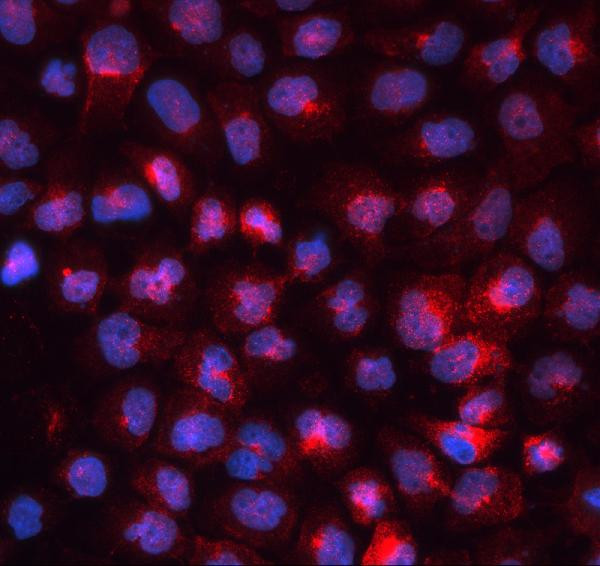
图: 1 / 8
Transferrin Receptor Antibody (PA5-95212) in ICC/IF
Immunocytochemistry analysis of TFRC using anti-TFRC antibody (Product # PA5-95212). TFRC was detected in a section of A431 cells. Enzyme antigen retrieval was performed using IHC enzyme antigen retrieval reagent for 15 mins. The cells were blocked with 10% goat serum and then incubated with 2μg/mL rabbit anti-TFRC antibody (Product # PA5-95212) overnight at 4°C. Cy3 Conjugated Goat Anti-Rabbit IgG was used... View More
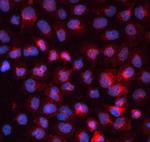
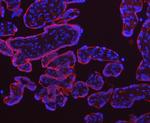
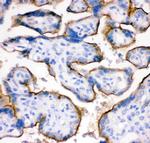
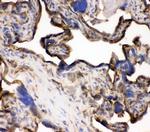
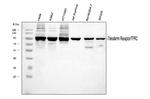
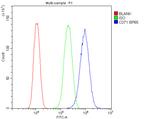
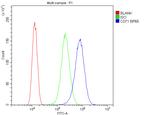
Please note: We are reviewing Western blot images included in the antibody testing data in our catalog, including those provided by third parties. Unless expressly labeled or annotated as “raw-unedited”, Western blot images included in the antibody testing data in our catalog may have been edited, optimized or otherwise adjusted for presentation.


产品信息
PA5-95212
应用
建议稀释比
已发表文章
产品规格
种属反应
Human,
Mouse,
Rat
宿主/亚型
Rabbit
/ IgG
分类
Polyclonal
类型
Antibody
抗原
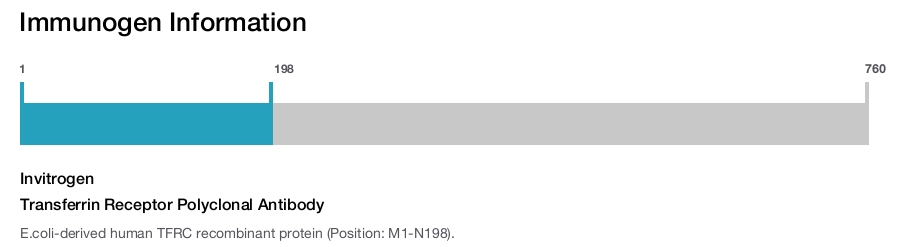
E.coli-derived human TFRC recombinant protein (Position: M1-N198).
偶联物
Unconjugated
Unconjugated
Unconjugated
形式
Lyophilized
浓度
500 µg/mL
规格
100 µg
纯化类型
Affinity chromatography
保存液
PBS with 5mg BSA
内含物
0.05mg sodium azide
保存条件
-20°C
运输条件
Ambient (domestic); Wet ice (international)
RRID
产品详细信息
Human TFRC shares 72% and 70% amino acid (aa) sequences identity with mouse and rat TFRC, respectively.
Reconstitute with 0.2 mL of distilled water to yield a concentration of 500 µg/mL.
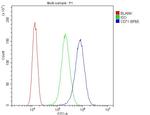
Positive Control - WB: human Hela whole cell, human K562 whole cell, human HT1080 whole cell, rat thymus tissue, rat RAW2647 whole cell, mouse SP2/0 whole cell. IHC: human placenta tissue IHC-F: human placenta tissue. ICC/IF: A431 cell. Flow: SiHa cell, U87 cell.|Store at -20°C for one year from date of receipt. After reconstitution, at 4°C for one month. It can also be aliquotted and stored frozen at -20°C for six months. Avoid repeated freeze-thaw cycles.
靶标信息
Cellular uptake of iron occurs via receptor-mediated endocytosis of ligand-occupied transferrin receptor into specialized endosomes. Endosomal acidification leads to iron release. The apotransferrin-receptor complex is then recycled to the cell surface with a return to neutral pH and the concomitant loss of affinity of apotransferrin for its receptor. Transferrin receptor is necessary for development of erythrocytes and the nervous system. Serum transferrin receptor (sTfR) is used as a means of detecting erythropoietin (EPO) misuse by athletes and as a diagnostic test for anemias resulting from a number of conditions including rheumatoid arthritis, pregnancy, irritable bowel syndrome and in HIV patients.
仅用于科研。不用于诊断过程。未经明确授权不得转售。
篇参考文献 (0)
您是否在文献中引用过该产品?请点击下方按钮邮件告知我们。
生物信息学
蛋白别名: CD antigen CD71; mammary tumor virus receptor 1; tfR; tfR1; TR; transferrin receptor; transferrin receptor 1; unnamed protein product
基因别名: 2610028K12Rik; CD71; E430033M20Rik; IMD46; Mtvr1; p90; T9; TFR; TFR1; TR; TRFR
UniProt ID: (Human) P02786, (Rat) Q99376, (Mouse) Q62351
Entrez Gene ID: (Human) 7037, (Rat) 64678, (Mouse) 22042
regulation of cell growth
response to hypoxia
iron ion transport
cellular iron ion homeostasis
receptor-mediated endocytosis
acute-phase response
cell surface receptor signaling pathway
response to nutrient
response to iron ion
response to manganese ion
positive regulation of gene expression
negative regulation of mitochondrial fusion
osteoclast differentiation
positive regulation of B cell proliferation
positive regulation of protein complex assembly
receptor internalization
response to retinoic acid
transferrin transport
intracellular signal transduction
positive regulation of T cell proliferation
regulation of cell proliferation
negative regulation of apoptotic process
positive regulation of I-kappaB kinase/NF-kappaB signaling
positive regulation of isotype switching
response to copper ion
multicellular organismal iron ion homeostasis
cellular response to xenobiotic stimulus
regulation of postsynaptic membrane neurotransmitter receptor levels
positive regulation of protein localization to nucleus
cellular response to leukemia inhibitory factor
transport across blood-brain barrier
iron ion transmembrane transport
cellular response to iron ion
Disclaimer

Clicking the images or links will redirect you to a website hosted by BenchSci that provides third-party scientific content. Neither the content nor the BenchSci technology and processes for selection have been evaluated by us; we are providing them as-is and without warranty of any kind, including for use or application of the Thermo Fisher Scientific products presented.

