Search
Invitrogen
alpha-1a Adrenergic Receptor Polyclonal Antibody
{{$productOrderCtrl.translations['antibody.pdp.commerceCard.promotion.promotions']}}
{{$productOrderCtrl.translations['antibody.pdp.commerceCard.promotion.promocode']}}: {{promo.promoCode}} {{promo.promoTitle}} {{promo.promoDescription}}. {{$productOrderCtrl.translations['antibody.pdp.commerceCard.promotion.learnmore']}}
{{$ctrl.translations['antibody.pdp.skuNotes.additionalInformation']}}:
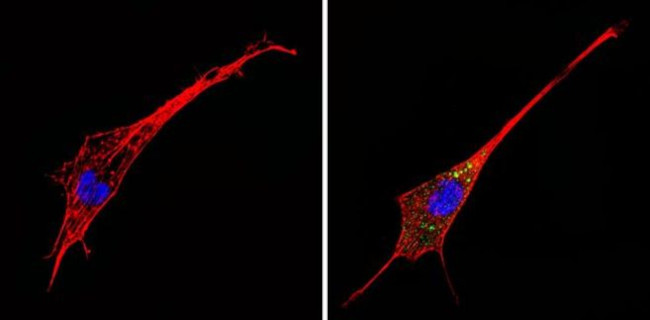
图: 1 / 11
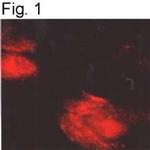
alpha-1a Adrenergic Receptor Antibody (PA1-047) in ICC/IF
Immunofluorescent analysis of alpha-1 Adrenergic Receptor (green) showing staining in the cytoplasm of NIH-3T3 cells (right) compared to a negative control without primary antibody (left). Formalin-fixed cells were permeabilized with 0.1% Triton X-100 in TBS for 5-10 minutes and blocked with 3% BSA-PBS for 30 minutes at room temperature. Cells were probed with an Alpha-1 Adrenergic Receptor polyclonal antib... View More
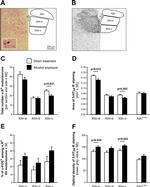
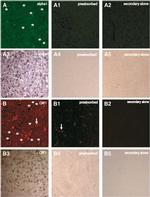
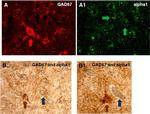
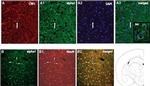
Please note: We are reviewing Western blot images included in the antibody testing data in our catalog, including those provided by third parties. Unless expressly labeled or annotated as “raw-unedited”, Western blot images included in the antibody testing data in our catalog may have been edited, optimized or otherwise adjusted for presentation.


产品信息
PA1-047
应用
建议稀释比
已发表文章
产品规格
种属反应
Fruit fly,
Human,
Mouse,
Rat,
Zebrafish
已发表种属
Cat,
Human,
Mouse,
Non-human primate,
Rat,
Zebrafish
宿主/亚型
Rabbit
/ IgG
分类
Polyclonal
类型
Antibody
抗原
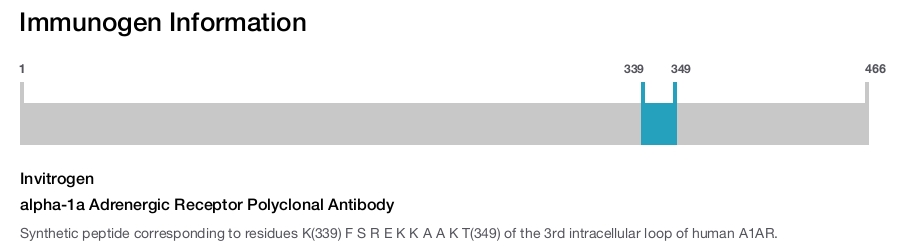
Synthetic peptide corresponding to residues K(339) F S R E K K A A K T(349) of the 3rd intracellular loop of human A1AR.
偶联物
Unconjugated
Unconjugated
Unconjugated
形式
Liquid
浓度
0.5 mg/mL
规格
50 µg
纯化类型
Antigen affinity chromatography
保存液
PBS with 1mg/mL BSA
内含物
0.05% sodium azide
保存条件
-20°C, Avoid Freeze/Thaw Cycles
运输条件
Ambient (domestic); Wet ice (international)
RRID
产品详细信息
PA1-047 detects alpha-1 adrenergic receptor (A1AR) from human, mouse, rat, zebra fish (Danio rerio) and Drosophila samples.
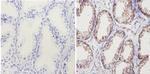
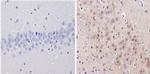
PA1-047 has been successfully used in Western blot, immunohistochemistry and immunofluorescence procedures. By Western blot, this antibody detects an ~60 kDa protein representing the A1AR from mouse kidney membrane preparations, mouse liver, HeLa cell lysates, zebra fish and drosophila samples. Immunofluorescence staining of A1AR in mouse kidney distal tubule cells with PA1-047 results in staining of the plasma membrane.
The PA1-047 immunogen is a synthetic peptide corresponding to residues K(339) F S R E K K A A K T(349) of the 3rd intracellular loop of human A1AR. This sequence is 100% conserved in all A1AR subtypes examined. PA1-047 immunizing peptide (Cat. # PEP-216) is available for use in neutralization and control experiments.
靶标信息
Adrenergic receptors (ARs) are members of the 7-transmembrane domain G-protein-coupled receptor superfamily that bind the endogenous catecholamines epinephrine and norepinephrine. Pharmacological, structural, and molecular cloning data indicate significant heterogeneity within this receptor family. Nine receptor subtypes have been identified thus far including three alpha-1 AR subtypes (1A/D, 1B, and 1C), three alpha-2 ARs (2A, 2B, and 2C), and three beta AR subtypes (1, 2, and 3). ARs participate in either the onset or maintenance of several disease states including hypertension, cardiac dysfunction (congestive heart failure, ischemia, arrhythmias), diabetes, glaucoma, depression, and impotence. A1AR subtypes are found in numerous tissues and have been shown to be involved in the regulation of blood pressure due to changes in vascular tone and cardiac output. Effects on uterine contraction, hepatic glucose metabolism, heat shock protein 70 (HSP70), proto-oncogene expression, and mitogenesis have been linked to A1AR activation. Norepinephrine can increase nitric oxide synthase (NOS) levels in the hypothalamus by activating alpha-1 AR which may indirectly suppress the release of luteinizing hormone (LH), the androgens, estrogen, and progesterone.
仅用于科研。不用于诊断过程。未经明确授权不得转售。
生物信息学
蛋白别名: ADA1; adrenergic alpha 1c receptor; adrenergic receptor alpha 1c subtype; adrenergic receptor, alpha 1a; adrenergic receptor, alpha 1c; adrenergic, alpha-1A-, receptor; adrenergic, alpha-1Aa, receptor; adrenoceptor alpha 1A; alpha 1c-adrenoceptor subtype; alpha-1A adrenoceptor; alpha-1A adrenoreceptor; alpha-1C adrenergic receptor; Alpha1C-AR; G protein coupled receptor; GPCR; unnamed protein product
基因别名: adra1a; ADRA1C; ADRA1L1; ALPHA1AAR; fc18h12; wu:fc18h12
UniProt ID: (Human) P35348, (Rat) P43140, (Mouse) P97718
Entrez Gene ID: (Human) 148, (Rat) 29412, (Mouse) 11549, (Zebrafish) 798498
negative regulation of heart rate involved in baroreceptor response to increased systemic arterial blood pressure
norepinephrine-epinephrine vasoconstriction involved in regulation of systemic arterial blood pressure
positive regulation of heart rate by epinephrine-norepinephrine
positive regulation of the force of heart contraction by epinephrine-norepinephrine
positive regulation of systemic arterial blood pressure
regulation of muscle contraction
G-protein coupled receptor signaling pathway
phospholipase C-activating G-protein coupled receptor signaling pathway
positive regulation of cytosolic calcium ion concentration
cell-cell signaling
adult heart development
regulation of blood pressure
response to xenobiotic stimulus
response to hormone
positive regulation of heart rate
negative regulation of autophagy
positive regulation of cardiac muscle hypertrophy
regulation of vasoconstriction
positive regulation of synaptic transmission, GABAergic
negative regulation of Rho protein signal transduction
organ growth
response to cocaine
positive regulation of MAPK cascade
positive regulation of action potential
positive regulation of vasoconstriction
positive regulation of smooth muscle contraction
regulation of cardiac muscle contraction
positive regulation of cardiac muscle contraction
cell growth involved in cardiac muscle cell development
positive regulation of ERK1 and ERK2 cascade
adrenergic receptor signaling pathway
adenylate cyclase-activating adrenergic receptor signaling pathway
phospholipase C-activating adrenergic receptor signaling pathway
pilomotor reflex
presynaptic modulation of chemical synaptic transmission
positive regulation of phospholipase C/protein kinase C signal transduction
neuron-glial cell signaling
signal transduction
apoptotic process
smooth muscle contraction
negative regulation of cell proliferation
intracellular signal transduction
regulation of systemic arterial blood pressure by carotid sinus baroreceptor feedback
vasoconstriction
Disclaimer

Clicking the images or links will redirect you to a website hosted by BenchSci that provides third-party scientific content. Neither the content nor the BenchSci technology and processes for selection have been evaluated by us; we are providing them as-is and without warranty of any kind, including for use or application of the Thermo Fisher Scientific products presented.

