Search
OriGene
Adiponectin Monoclonal Antibody (UMAB104), UltraMAB™
{{$productOrderCtrl.translations['antibody.pdp.commerceCard.promotion.promotions']}}
{{$productOrderCtrl.translations['antibody.pdp.commerceCard.promotion.promocode']}}: {{promo.promoCode}} {{promo.promoTitle}} {{promo.promoDescription}}. {{$productOrderCtrl.translations['antibody.pdp.commerceCard.promotion.learnmore']}}
{{$ctrl.translations['antibody.pdp.skuNotes.additionalInformation']}}:
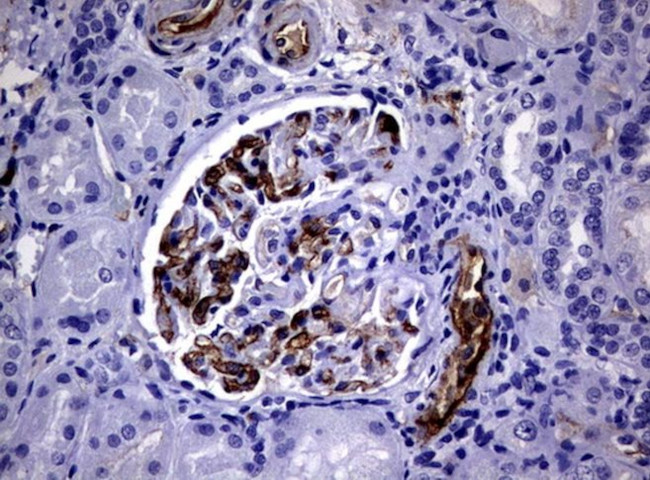
图: 1 / 7
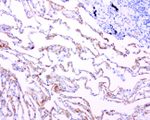
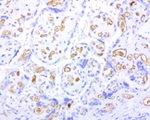
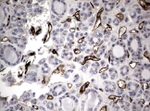
Adiponectin Antibody (UM500072CF) in IHC (P)
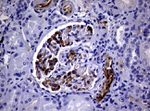
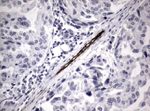
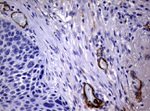
Immunohistochemical staining of paraffin-embedded human kidney tissue using ADIPOQ clone UMAB104, mouse monoclonal antibody. Heat-induced epitope retrieval by 10mM citric buffer pH6.0 was done at 120°C for 3min in pressure chamber/cooker prior to UM500072 application. UM500072 was diluted 1:100 and detection with shown HRP enzyme and DAB chromogen. Strong cytoplasmic and membranous staining is seen in the g... View More
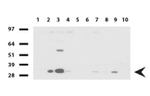
Please note: We are reviewing Western blot images included in the antibody testing data in our catalog, including those provided by third parties. Unless expressly labeled or annotated as “raw-unedited”, Western blot images included in the antibody testing data in our catalog may have been edited, optimized or otherwise adjusted for presentation.


产品信息
UM500072CF
产品规格
种属反应
Human
宿主/亚型
Mouse
/ IgG1
分类
Monoclonal
类型
Antibody
克隆号
UMAB104
抗原
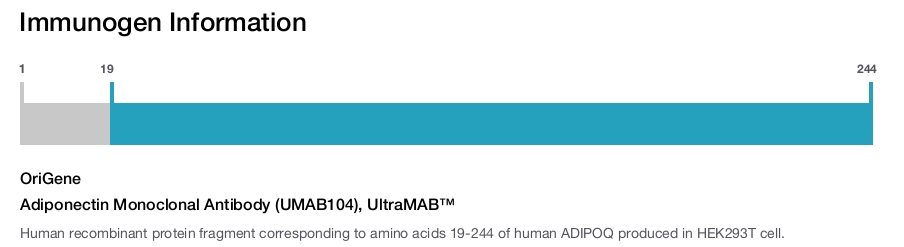
Human recombinant protein fragment corresponding to amino acids 19-244 of human ADIPOQ produced in HEK293T cell.
偶联物
Unconjugated
Unconjugated
Unconjugated
形式
Lyophilized
浓度
1 mg/mL
规格
100 µg
纯化类型
Affinity chromatography
保存液
PBS with 8% trehalose
内含物
no preservative
保存条件
-20°C, Avoid Freeze/Thaw Cycles
运输条件
Ambient (domestic); Wet ice (international)
产品详细信息
For reconstitution, we recommend adding 100 µL distilled water to a final antibody concentration of about 1 mg/mL. To use this carrier-free antibody for conjugation experiments, we strongly recommend performing another round of desalting. (Zeba Spin Desalting Columns, 7KMWCO, 0.5 mL, Product # 89882)
靶标信息
Adiponectin is a protein hormone secreted exclusively by adipocytes that regulates the metabolism of lipids and glucose. Adiponectin has been shown to play a role in various physiological processes including homeostasis and obesity. Decreased levels of adiponectin are associated with obese individuals as well as insulin resistance and hyperinsulinemia (type 2 diabetes). In mice adiponectin has been shown to improve insulin signaling, thus ameliorating insulin resistance. Through activation of AMP kinase and PPAR-alpha, adiponectin can increase fatty acid transport, oxidation, and dissipation in skeletal muscle, leading to a reduction of intramyocellular lipid levels and thus improved insulin signaling.
仅用于科研。不用于诊断过程。未经明确授权不得转售。
篇参考文献 (0)
您是否在文献中引用过该产品?请点击下方按钮邮件告知我们。
生物信息学
蛋白别名: 30 kDa adipocyte complement-related protein; adipocyte complement-related 30 kDa protein; adipose most abundant gene transcript 1 protein; adipose specific collagen-like factor; ADPIOQ; gelatin-binding protein 28; unnamed protein product
基因别名: ACDC; ACRP30; ADIPQTL1; ADPN; APM-1; APM1; GBP28
UniProt ID: (Human) Q15848
Entrez Gene ID: (Human) 9370
glucose metabolic process
generation of precursor metabolites and energy
fatty acid beta-oxidation
response to glucose
positive regulation of signal transduction
negative regulation of platelet-derived growth factor receptor signaling pathway
negative regulation of macrophage derived foam cell differentiation
negative regulation of tumor necrosis factor-mediated signaling pathway
positive regulation of cholesterol efflux
regulation of glucose metabolic process
fatty acid oxidation
negative regulation of cell migration
negative regulation of granulocyte differentiation
negative regulation of tumor necrosis factor production
positive regulation of interleukin-8 production
cellular response to insulin stimulus
positive regulation of myeloid cell apoptotic process
adiponectin-activated signaling pathway
negative regulation of heterotypic cell-cell adhesion
low-density lipoprotein particle clearance
response to tumor necrosis factor
endocrine signaling
glucose homeostasis
positive regulation of I-kappaB kinase/NF-kappaB signaling
negative regulation of I-kappaB kinase/NF-kappaB signaling
negative regulation of MAP kinase activity
negative regulation of fat cell differentiation
negative regulation of macrophage differentiation
negative regulation of gluconeogenesis
negative regulation of blood pressure
positive regulation of fatty acid metabolic process
positive regulation of glucose import
negative regulation of receptor-mediated endocytosis
negative regulation of inflammatory response
negative regulation of phagocytosis
negative regulation of synaptic transmission
brown fat cell differentiation
positive regulation of lipid catabolic process
negative regulation of cholesterol import
negative regulation of ERK1 and ERK2 cascade
cellular response to xenobiotic stimulus
positive regulation of monocyte chemotactic protein-1 production
positive regulation of cold-induced thermogenesis
negative regulation of cold-induced thermogenesis
positive regulation of cAMP/PKA signal transduction
negative regulation of vascular smooth muscle cell proliferation
negative regulation of vascular associated smooth muscle cell migration
positive regulation of glycogen (starch) synthase activity
positive regulation of renal albumin absorption
negative regulation of platelet-derived growth factor receptor-alpha signaling pathway
negative regulation of metanephric mesenchymal cell migration
Disclaimer

Clicking the images or links will redirect you to a website hosted by BenchSci that provides third-party scientific content. Neither the content nor the BenchSci technology and processes for selection have been evaluated by us; we are providing them as-is and without warranty of any kind, including for use or application of the Thermo Fisher Scientific products presented.

