Search
Invitrogen
Arginase 1 Polyclonal Antibody
{{$productOrderCtrl.translations['antibody.pdp.commerceCard.promotion.promotions']}}
{{$productOrderCtrl.translations['antibody.pdp.commerceCard.promotion.promocode']}}: {{promo.promoCode}} {{promo.promoTitle}} {{promo.promoDescription}}. {{$productOrderCtrl.translations['antibody.pdp.commerceCard.promotion.learnmore']}}
{{$ctrl.translations['antibody.pdp.skuNotes.additionalInformation']}}:
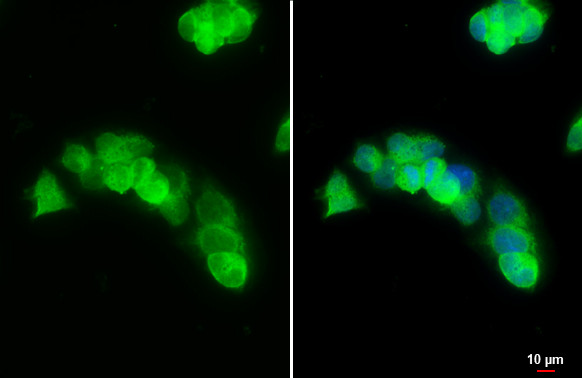
图: 1 / 12
Arginase 1 Antibody (PA5-22009) in ICC/IF
Arginase 1 Polyclonal Antibody detects Arginase 1 protein at cytoplasm by immunofluorescent analysis. Sample: HepG2 cells were fixed in 4% paraformaldehyde at RT for 15 min. Green: Arginase 1 stained by Arginase 1 Polyclonal Antibody (Product # PA5-22009) diluted at 1:500. Blue: Fluoroshield with DAPI . Scale bar= 10 µm.
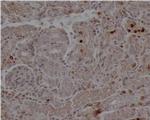
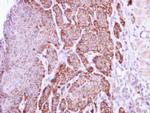
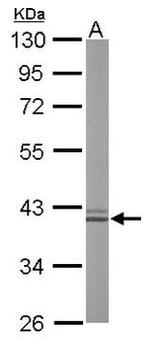
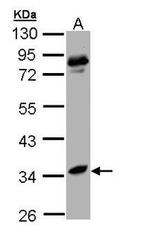
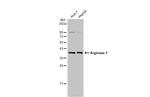
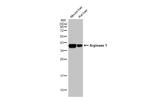
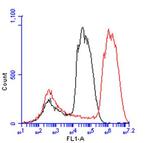
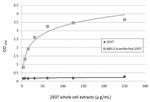
Please note: We are reviewing Western blot images included in the antibody testing data in our catalog, including those provided by third parties. Unless expressly labeled or annotated as “raw-unedited”, Western blot images included in the antibody testing data in our catalog may have been edited, optimized or otherwise adjusted for presentation.


产品信息
PA5-22009
应用
建议稀释比
已发表文章
产品规格
已发表种属
Mouse,
Rat
宿主/亚型
Rabbit
/ IgG
分类
Polyclonal
类型
Antibody
抗原
Recombinant protein fragment contain a sequence corresponding to a region within amino acids 1 and 322 (P05089) of Arginase I
偶联物
Unconjugated
Unconjugated
Unconjugated
形式
Liquid
浓度
1 mg/mL
规格
100 µg
保存条件
-20°C, Avoid Freeze/Thaw Cycles
运输条件
Wet ice
产品详细信息
PA5-22009 targets arginase I in ICC, IF, IHC (P), and WB applications and shows reactivity with Human and mouse samples. For immunohistochemistry, antigen retrieval using heat mediated 10 mM citrate buffer (pH 6.0) or Tris-EDTA buffer (pH 8.0) is recommended.
The PA5-22009 immunogen is recombinant protein fragment contain a sequence corresponding to a region within amino acids 1 and 322 (P05089) of Arginase I.
靶标信息
Arginase-1 (Arg1) is a 35 kDa enzyme converting L-arginine to urea and L-ornithine, which is the final step in the urea cycle. The resulting polyamines are important for cell proliferation and removal of toxins that arise from protein degradation. By degrading arginine, Arginase 1 deprives NO synthase of its substrate and down-regulates nitric oxide production. In both human and mouse, Arginase 1 is expressed in the liver, neutrophils, myeloid derived suppressor cells (MDSC) and neural stem cells. In human, expression in blood neutrophils but not in CCR3+ granulocytes has been reported. In mice, expression of Arginase 1 is one of the hallmarks of alternatively activated macrophages (M2a). Arginase-1 may be expressed in the myeloid cells infiltrating tumors, and is typically found in the majority of hepatocellular carcinomas. Defects in Arginase 1 are the cause of argininemia, an autosomal recessive disorder characterized by hyperammonemia.
仅用于科研。不用于诊断过程。未经明确授权不得转售。
Disclaimer

Clicking the images or links will redirect you to a website hosted by BenchSci that provides third-party scientific content. Neither the content nor the BenchSci technology and processes for selection have been evaluated by us; we are providing them as-is and without warranty of any kind, including for use or application of the Thermo Fisher Scientific products presented.

