Search
Disclaimer

Clicking the images or links will redirect you to a website hosted by BenchSci that provides third-party scientific content. Neither the content nor the BenchSci technology and processes for selection have been evaluated by us; we are providing them as-is and without warranty of any kind, including for use or application of the Thermo Fisher Scientific products presented.
Invitrogen
Asialo GM1 Polyclonal Antibody, Alexa Fluor™ 488, eBioscience™
{{$productOrderCtrl.translations['antibody.pdp.commerceCard.promotion.promotions']}}
{{$productOrderCtrl.translations['antibody.pdp.commerceCard.promotion.viewpromo']}}
{{$productOrderCtrl.translations['antibody.pdp.commerceCard.promotion.promocode']}}: {{promo.promoCode}} {{promo.promoTitle}} {{promo.promoDescription}}. {{$productOrderCtrl.translations['antibody.pdp.commerceCard.promotion.learnmore']}}

产品信息
53-6507-80
应用
建议稀释比
已发表文章
产品规格
已发表种属
Hamster
宿主/亚型
Rabbit
/ IgG
分类
Polyclonal
类型
Antibody
偶联物
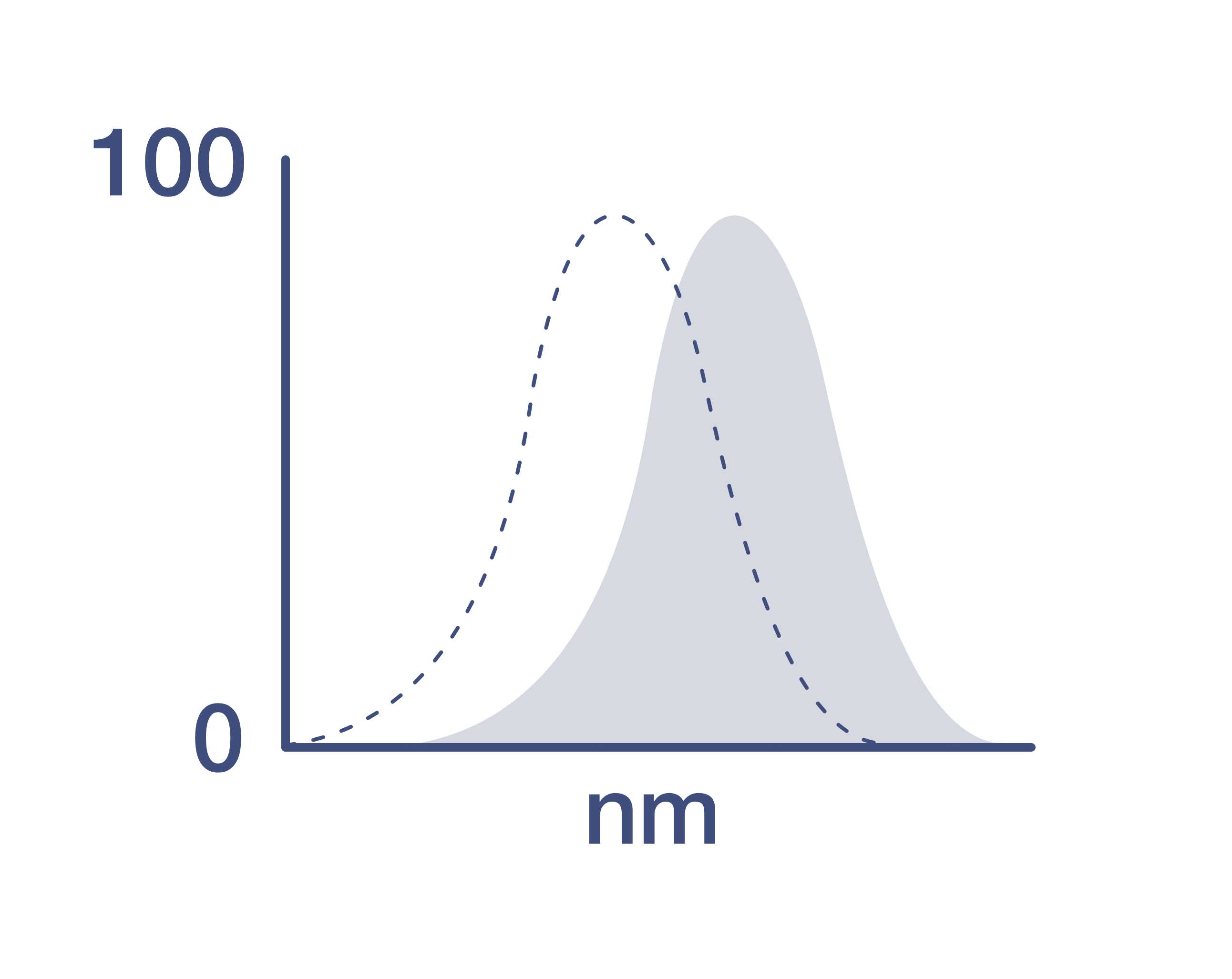
激发/发射光谱
499/520 nm
查看光谱
形式
Liquid
浓度
0.5 mg/mL
保存条件
4°C, store in dark, DO NOT FREEZE!
运输条件
Ambient (domestic); Wet ice (international)
RRID
产品详细信息
Description: This rabbit polyclonal antibody reacts with the asialo ganglio-N-tetraosylceramide (asialo-GM1), a glycolipid on human, mouse, rat, bovine and hamster cells. Glycolipids such as this sialyated version are defined by the specific transferases that modify the lipid. Glycolipids are targets of immune cell response. Auto-antibodies have also been identified. Additionally these glycolipids can act as co-receptors for pathogens. Asialo-GM1 is present on both NK cells and a subset of monocyte/macrophages from the mouse spleen. Expression is also found on rat and bovine brain, fetal liver and on fetal immature thymocytes. Expression has also been shown to increase with tumor progression. The antibody recognizes asialo-GM1 specifically and not other glycolipids, including GM1 and asialo-GM2.
This antibody has been reported to deplete NK cells in mice and hamsters in vivo and exhibits in vitro effects in a variety of species.
Applications Reported: This polyclonal antibody has been reported for use in flow cytometric analysis.
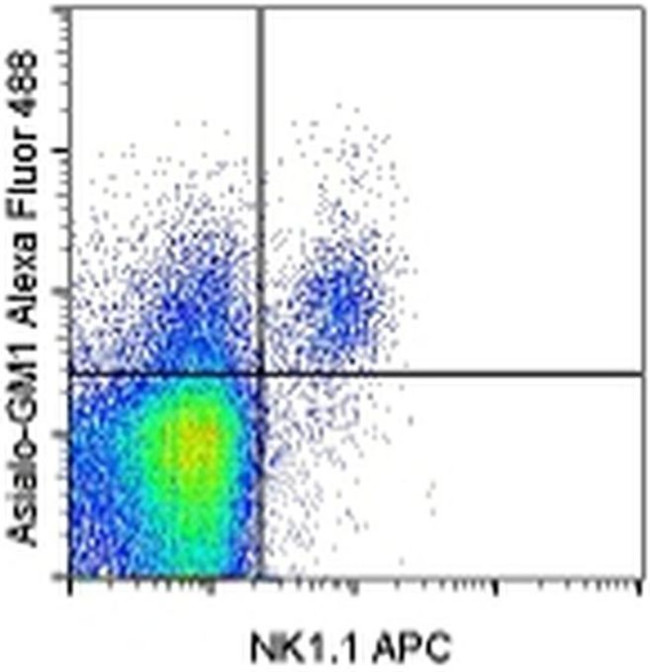
Applications Tested: This polyclonal antibody has been tested by flow cytometric analysis of mouse splenocytes. This can be used at less than or equal to 0.5 µg per test. Because this is a polyclonal antibody, there may be differences in staining brightness from lot to lot. A test is defined as the amount (µg) of antibody that will stain a cell sample in a final volume of 100 µL. Cell number should be determined empirically but can range from 10^5 to 10^8 cells/test. It is recommended that the antibody be carefully titrated for optimal performance in the assay of interest.
Excitation: 488 nm; Emission: 519 nm; Laser: Blue Laser.
Filtration: 0.2 µm post-manufacturing filtered.
靶标信息
Asialo ganglio-N-tetraosylceramide (asialo-GM1) is a glycolipid on human, mouse, rat, bovine and hamster cells. Glycolipids such as this sialyated version are defined by the specific transferases that modify the lipid. Glycolipids are targets of immune cell response. Auto-antibodies have also been identified. Additionally these glycolipids can act as co-receptors for pathogens. Asialo-GM1 is present on both NK cells and a subset of monocyte/macrophages from the mouse spleen. Expression is also found on rat and bovine brain, fetal liver and on fetal immature thymocytes. Expression has also been shown to increase with tumor progression.
仅用于科研。不用于诊断过程。未经明确授权不得转售。
How to use the Panel Builder
Watch the video to learn how to use the Invitrogen Flow Cytometry Panel Builder to build your next flow cytometry panel in 5 easy steps.

