Search
Invitrogen
CD370 (Clec9A) Monoclonal Antibody (42D2), PerCP-eFluor™ 710, eBioscience™
{{$productOrderCtrl.translations['antibody.pdp.commerceCard.promotion.promotions']}}
{{$productOrderCtrl.translations['antibody.pdp.commerceCard.promotion.promocode']}}: {{promo.promoCode}} {{promo.promoTitle}} {{promo.promoDescription}}. {{$productOrderCtrl.translations['antibody.pdp.commerceCard.promotion.learnmore']}}
{{$ctrl.translations['antibody.pdp.skuNotes.additionalInformation']}}:
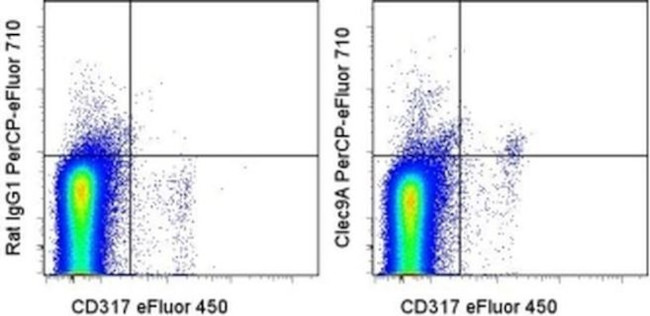
图: 1 / 4
CD370 (Clec9A) Antibody (46-5975-82) in Flow
Staining of SJL splenocytes with Anti-Mouse CD317 (BST2, PDCA-1) eFluor® 450 (Product # 48-3172-82) and 0.5 µg of Rat IgG1 K Isotype Control PerCP-eFluor® 710 (Product # 46-4301-80) (left) or 0.5 µg of Anti-Mouse CD370 (Clec9A) PerCP-eFluor® 710 (right). Cells in the lymphocyte gate were used for analysis.

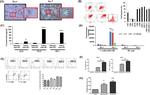
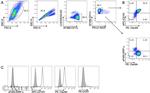
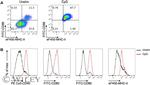
Please note: We are reviewing Western blot images included in the antibody testing data in our catalog, including those provided by third parties. Unless expressly labeled or annotated as “raw-unedited”, Western blot images included in the antibody testing data in our catalog may have been edited, optimized or otherwise adjusted for presentation.


产品信息
46-5975-82
应用
建议稀释比
已发表文章
产品规格
种属反应
Mouse
已发表种属
Mouse
宿主/亚型
Rat
/ IgG1
分类
Monoclonal
类型
Antibody
克隆号
42D2
偶联物
PerCP-eFluor™ 710
PerCP-eFluor™ 710
PerCP-eFluor™ 710
激发/发射光谱
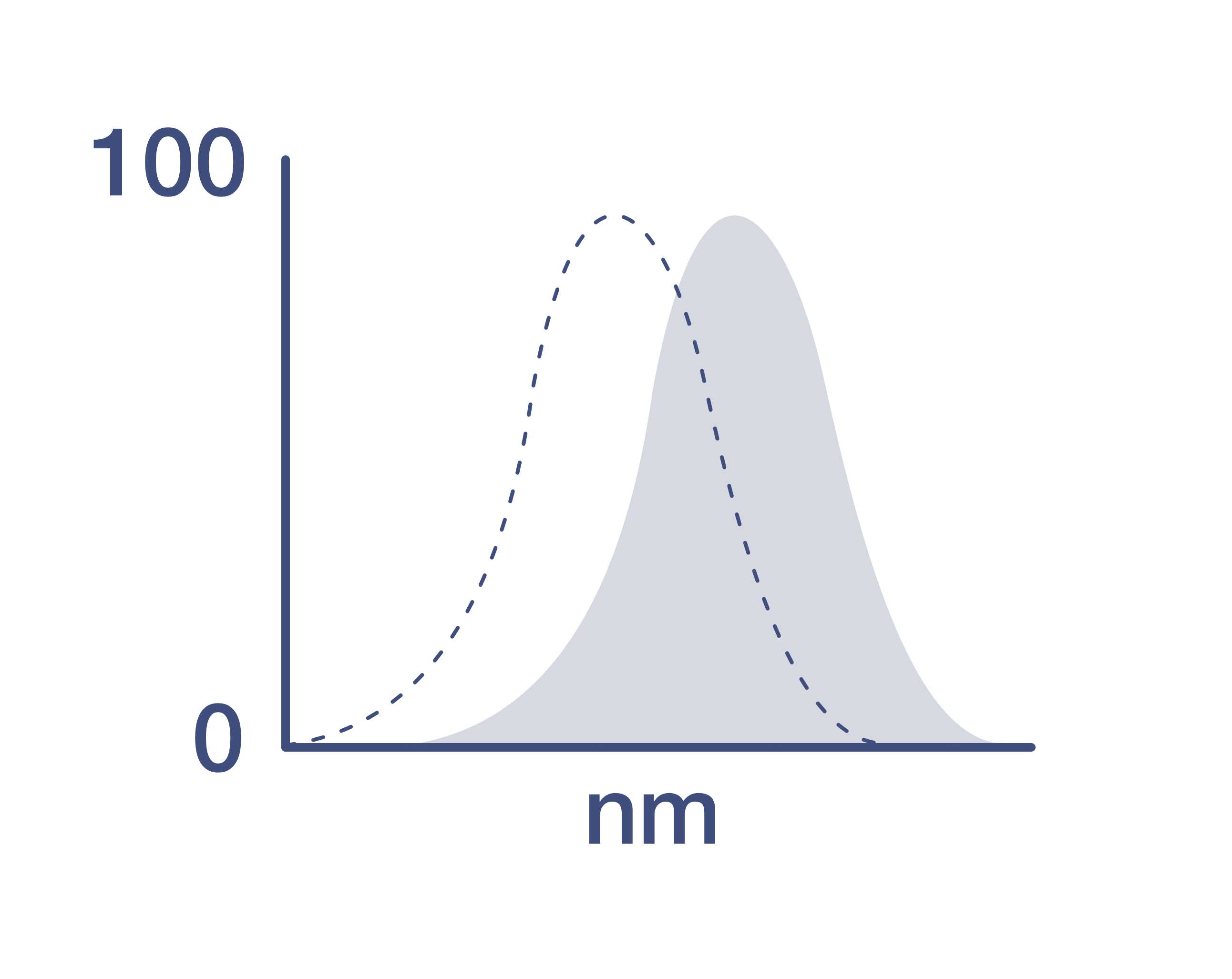
482/708 nm
查看光谱
形式
Liquid
浓度
0.2 mg/mL
规格
100 µg
纯化类型
Affinity chromatography
保存液
PBS, pH 7.2
内含物
0.09% sodium azide
保存条件
4°C, store in dark, DO NOT FREEZE!
运输条件
Ambient (domestic); Wet ice (international)
RRID
产品详细信息
Description: This 42D2 monoclonal antibody reacts with mouse CD370, which is also known as DNGR-1 or Clec9A. CD370 is a C-type lectin-like receptor expressed on conventional and plasmacytoid dendritic cells (DCs). In particular, CD8+ conventional DCs in the thymus, spleen, and lymph nodes, as well as CD24+ DCs in the blood, express CD370. This receptor is not detectable on most B cells, T and NK cells, monocytes, and macrophages. The cytoplasmic domain of CD37° Contains an ITAM motif that has been demonstrated to phosphorylate Syk tyrosine kinase, leading to NFAT activation. This signaling reportedly mediates the presentation of necrotic cell-associated antigens by CD8+ DCs in innate immunity.
Applications Reported: This 42D2 antibody has been reported for use in flow cytometric analysis.
Applications Tested: This 42D2 antibody has been tested by flow cytometric analysis of mouse splenocytes. This can be used at less than or equal to 1 µg per test. A test is defined as the amount (µg) of antibody that will stain a cell sample in a final volume of 100 µL. Cell number should be determined empirically but can range from 10^5 to 10^8 cells/test. It is recommended that the antibody be carefully titrated for optimal performance in the assay of interest.
PerCP-eFluor® 710 can be used in place of PE-Cy5, PE-Cy5.5 or PerCP-Cy5.5. PerCP-eFluor® 710 emits at 710 nm and is excited with the blue laser (488 nm). Please make sure that your instrument is capable of detecting this fluorochrome. For a filter configuration, we recommend using the 685 LP dichroic mirror and 710/40 band pass filter, however the 695/40 band pass filter is an acceptable alternative.
Our testing indicates that PerCP-eFluor® 710 conjugated antibodies are stable when stained samples are exposed to freshly prepared 2% formaldehyde overnight at 4°C, but please evaluate for alternative fixation protocols.
Excitation: 488 nm; Emission: 710 nm; Laser: Blue Laser.
Filtration: 0.2 µm post-manufacturing filtered.
靶标信息
C-type lectin domain family 9 member A (CLEC9A) is a gene located on chromosome 12p13.2, encoding a protein that belongs to the C-type lectin receptor family. CLEC9A is primarily expressed on dendritic cells and certain subsets of macrophages, playing a pivotal role in the immune system by recognizing and binding dead cell debris, including necrotic cells. This receptor facilitates the presentation of antigens derived from dead cells to T cells, thus contributing to the initiation of immune responses. CLEC9A is involved in cross-presentation, a process crucial for adaptive immunity, particularly in the context of viral infections and cancer. Its expression and activity are of particular interest for vaccine development and immunotherapy, given its ability to enhance antigen presentation and stimulate robust immune responses. Research into CLEC9A continues to explore its therapeutic potential for modulating immune activity in various diseases, including cancer and infectious diseases.
仅用于科研。不用于诊断过程。未经明确授权不得转售。
How to use the Panel Builder
Watch the video to learn how to use the Invitrogen Flow Cytometry Panel Builder to build your next flow cytometry panel in 5 easy steps.
生物信息学
蛋白别名: clec9a; dendritic cell natural killer lectin group receptor 1; unnamed protein product
基因别名: 9830005G06Rik; DNGR-1
UniProt ID: (Mouse) Q8BRU4
Entrez Gene ID: (Mouse) 232414
Disclaimer

Clicking the images or links will redirect you to a website hosted by BenchSci that provides third-party scientific content. Neither the content nor the BenchSci technology and processes for selection have been evaluated by us; we are providing them as-is and without warranty of any kind, including for use or application of the Thermo Fisher Scientific products presented.

