Search
Proteintech
CD5 Polyclonal Antibody
{{$productOrderCtrl.translations['antibody.pdp.commerceCard.promotion.promotions']}}
{{$productOrderCtrl.translations['antibody.pdp.commerceCard.promotion.promocode']}}: {{promo.promoCode}} {{promo.promoTitle}} {{promo.promoDescription}}. {{$productOrderCtrl.translations['antibody.pdp.commerceCard.promotion.learnmore']}}
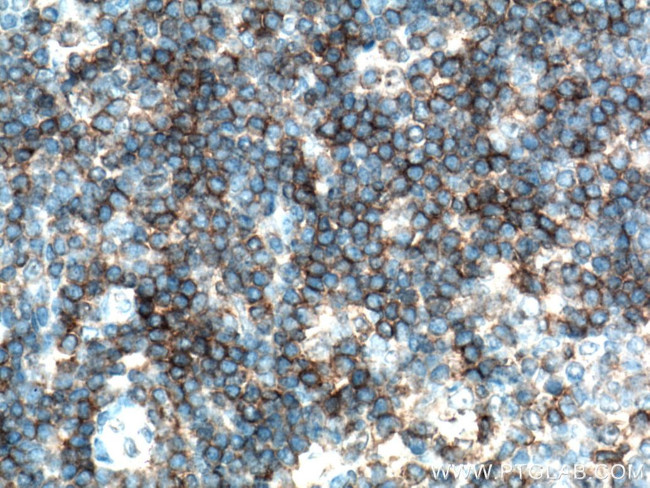
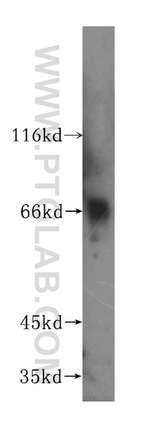
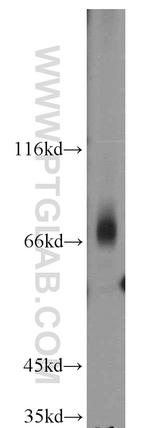
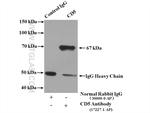
Please note: We are reviewing Western blot images included in the antibody testing data in our catalog, including those provided by third parties. Unless expressly labeled or annotated as “raw-unedited”, Western blot images included in the antibody testing data in our catalog may have been edited, optimized or otherwise adjusted for presentation.


产品信息
17227-1-AP
应用
建议稀释比
已发表文章
产品规格
种属反应
Human,
Mouse
已发表种属
Mouse
宿主/亚型
Rabbit
/ IgG
分类
Polyclonal
类型
Antibody
抗原
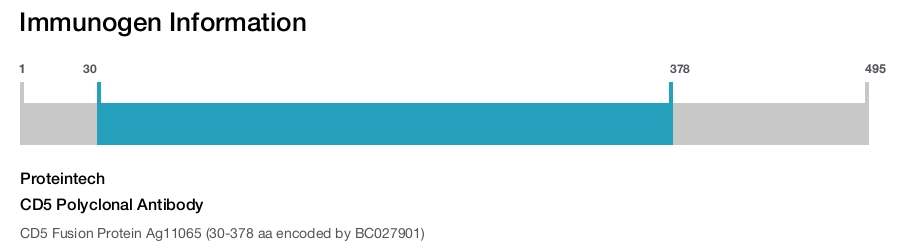
CD5 Fusion Protein Ag11065 (30-378 aa encoded by BC027901)
偶联物
Unconjugated
Unconjugated
Unconjugated
形式
Liquid
浓度
0.4 mg/mL
规格
60 µg
纯化类型
Antigen affinity chromatography
保存液
PBS, pH 7.3, with 50% glycerol
内含物
0.02% sodium azide
保存条件
-20°C
运输条件
Wet ice (domestic); Dry ice (international)
产品详细信息
Immunogen sequence: DPDFQARLT RSNSKCQGQL EVYLKDGWHM VCSQSWGRSS KQWEDPSQAS KVCQRLNCGV PLSLGPFLVT YTPQSSIICY GQLGSFSNCS HSRNDMCHSL GLTCLEPQKT TPPTTRPPPT TTPEPTAPPR LQLVAQSGGQ HCAGVVEFYS GSLGGTISYE AQDKTQDLEN FLCNNLQCGS FLKHLPETEA GRAQDPGEPR EHQPLPIQWK IQNSSCTSLE HCFRKIKPQK SGRVLALLCS GFQPKVQSRL VGGSSICEGT VEVRQGAQWA ALCDSSSARS SLRWEEVCRE QQCGSVNSYR VLDAGDPTSR GLFCPHQKLS QCHELWERNS YCKKVFVTCQ DPNPAGLAAG (30-378 aa encoded by BC027901)
靶标信息
CD5 is a 67 kDa human T-lymphocyte single-chain transmembrane glycoprotein. CD5 is present on all mature T-lymphocytes, on most of thymocytes and on many T-cell leukemias and lymphomas. CD5 also reacts with a subpopulation of activated B-cells and may act as a receptor in regulating T-cell proliferation. CD5 is found on 95% of thymocytes and 72% of peripheral blood lymphocytes. In lymph nodes, the main reactivity is observed in T cell areas. CD5 is expressed by many T cell leukemia, lymphomas, and activated T cells. Diseases associated with CD5 dysfunction include thymus cancer and Richter's Syndrome.
仅用于科研。不用于诊断过程。未经明确授权不得转售。
生物信息学
蛋白别名: CD antigen CD5; CD5 antigen (p56 62); CD5 antigen (p56-62); CD5 antigen p56-62; epididymis secretory sperm binding protein; fCD5; Ly12; LyA; lymphocyte antigen 1; lymphocyte antigen T1/Leu-1; Pan T cell; unnamed protein product
基因别名: LEU1; Ly-1; Ly-12; Ly-A; Lyt-1; T1
UniProt ID: (Human) P06127, (Mouse) P13379
Entrez Gene ID: (Human) 921, (Mouse) 12507
Disclaimer

Clicking the images or links will redirect you to a website hosted by BenchSci that provides third-party scientific content. Neither the content nor the BenchSci technology and processes for selection have been evaluated by us; we are providing them as-is and without warranty of any kind, including for use or application of the Thermo Fisher Scientific products presented.

