Search
Proteintech
CIDEA Polyclonal Antibody
{{$productOrderCtrl.translations['antibody.pdp.commerceCard.promotion.promotions']}}
{{$productOrderCtrl.translations['antibody.pdp.commerceCard.promotion.promocode']}}: {{promo.promoCode}} {{promo.promoTitle}} {{promo.promoDescription}}. {{$productOrderCtrl.translations['antibody.pdp.commerceCard.promotion.learnmore']}}
{{$ctrl.translations['antibody.pdp.skuNotes.additionalInformation']}}:
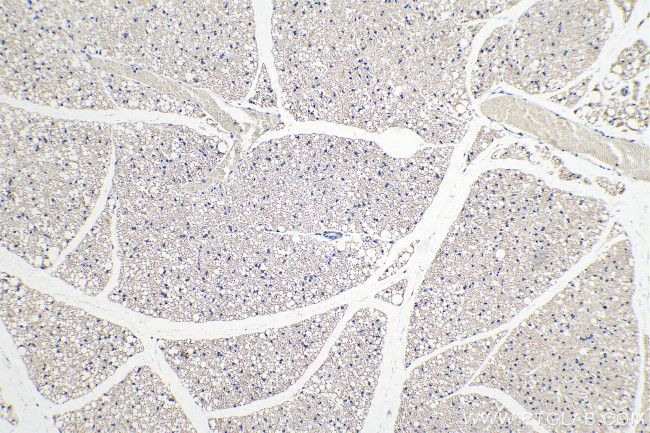

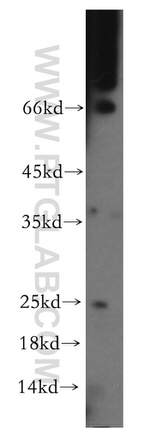
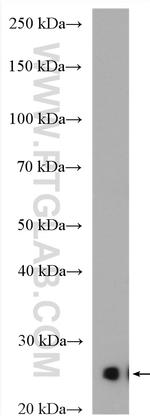
Please note: We are reviewing Western blot images included in the antibody testing data in our catalog, including those provided by third parties. Unless expressly labeled or annotated as “raw-unedited”, Western blot images included in the antibody testing data in our catalog may have been edited, optimized or otherwise adjusted for presentation.


产品信息
13170-1-AP
应用
建议稀释比
已发表文章
产品规格
种属反应
Human,
Mouse,
Rat
已发表种属
Mouse
宿主/亚型
Rabbit
/ IgG
分类
Polyclonal
类型
Antibody
抗原
CIDEA Fusion Protein Ag3824 (1-253 aa encoded by BC031896)
偶联物
Unconjugated
Unconjugated
Unconjugated
形式
Liquid
浓度
0.3 mg/mL
规格
45 µg
纯化类型
Antigen affinity chromatography
保存液
PBS, pH 7.3, with 50% glycerol
内含物
0.02% sodium azide
保存条件
-20°C
运输条件
Wet ice (domestic); Dry ice (international)
产品详细信息
The MW of this protein is 25 kDa, and this antibody specifically recognizes the 25 kDa protein.
Immunogen sequence: MRGDRASGG PGNHNGSWAR EGPRLGPSWK RGLWSPRGGP NRPAEPSRPL TFMGSQTKRV LFTPLMHPAR PFRVSNHDRS SRRGVMASSL QELISKTLDA LVIATGLVTL VLEEDGTVVD TEEFFQTLGD NTHFMILEKG QKWMPGSQHV PTCSPPKRSG IARVTFDLYR LNPKDFIGCL NVKATMYEMY SVSYDIRCTG LKGLLRSLLR FLSYSAQVTG QFLIYLGTYM LRVLDDKEER PSLRSQAKGR FTCG (1-253 aa encoded by BC031896)
靶标信息
This gene encodes the homolog of the mouse protein Cidea that has been shown to activate apoptosis. This activation of apoptosis is inhibited by the DNA fragmentation factor DFF45 but not by caspase inhibitors. Mice that lack functional Cidea have higher metabolic rates, higher lipolysis in brown adipose tissue and higher core body temperatures when subjected to cold. These mice are also resistant to diet-induced obesity and diabetes. This suggests that in mice this gene product plays a role in thermogenesis and lipolysis. Alternatively spliced transcripts have been identified.
仅用于科研。不用于诊断过程。未经明确授权不得转售。
生物信息学
蛋白别名: cell death activator CIDE-A; cell death-inducing DFFA-like effector A; cell death-inducing DNA fragmentation factor, alpha subunit-like effector A; cide a; unnamed protein product
基因别名: CIDE-A
UniProt ID: (Human) O60543, (Mouse) O70302
Entrez Gene ID: (Human) 1149, (Mouse) 12683, (Rat) 291541
temperature homeostasis
negative regulation of cytokine production
lipid metabolic process
apoptotic process
lipid storage
negative regulation of transforming growth factor beta receptor signaling pathway
negative regulation of tumor necrosis factor production
response to stilbenoid
fat cell differentiation
negative regulation of lipid catabolic process
negative regulation of multicellular organismal process
cellular response to cold
intermembrane lipid transfer
negative regulation of cold-induced thermogenesis
lipid droplet fusion
negative regulation of execution phase of apoptosis
regulation of apoptotic DNA fragmentation
biological_process
positive regulation of transcription, DNA-templated
positive regulation of cold-induced thermogenesis
Disclaimer

Clicking the images or links will redirect you to a website hosted by BenchSci that provides third-party scientific content. Neither the content nor the BenchSci technology and processes for selection have been evaluated by us; we are providing them as-is and without warranty of any kind, including for use or application of the Thermo Fisher Scientific products presented.

