Search
Invitrogen
CXCL1 (GRO alpha) Monoclonal Antibody (W3ZLCXC), eFluor™ 660, eBioscience™
{{$productOrderCtrl.translations['antibody.pdp.commerceCard.promotion.promotions']}}
{{$productOrderCtrl.translations['antibody.pdp.commerceCard.promotion.promocode']}}: {{promo.promoCode}} {{promo.promoTitle}} {{promo.promoDescription}}. {{$productOrderCtrl.translations['antibody.pdp.commerceCard.promotion.learnmore']}}
{{$ctrl.translations['antibody.pdp.skuNotes.additionalInformation']}}:
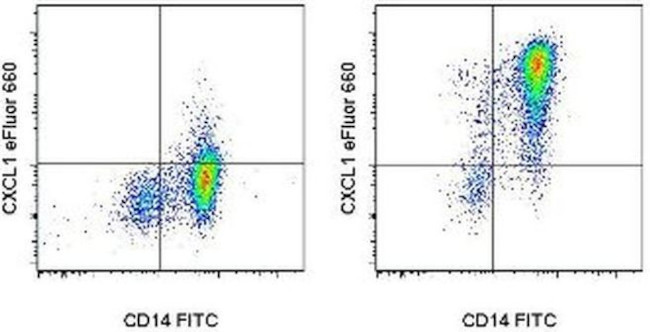
图: 1 / 1
CXCL1 (GRO alpha) Antibody (50-7519-42) in Flow
Normal human peripheral blood monocytes were unstimulated (left) or stimulated with LPS in the presence of Protein Transport Inhibitor Cocktail (cat. 00-4980) (right). Cells were fixed and stained intracellularly with Anti-Human CD14 FITC (cat. 11-0149) and Anti-Human CXCL1 eFluor® 660 using the Fixation and Permeabilization Buffers (cat. 88-8823). Cells in the monocyte gate were used for analysis.
Please note: We are reviewing Western blot images included in the antibody testing data in our catalog, including those provided by third parties. Unless expressly labeled or annotated as “raw-unedited”, Western blot images included in the antibody testing data in our catalog may have been edited, optimized or otherwise adjusted for presentation.

产品信息
50-7519-42
产品规格
宿主/亚型
Mouse
/ IgG
分类
Monoclonal
类型
Antibody
克隆号
W3ZLCXC
偶联物
eFluor™ 660
eFluor™ 660
eFluor™ 660
激发/发射光谱
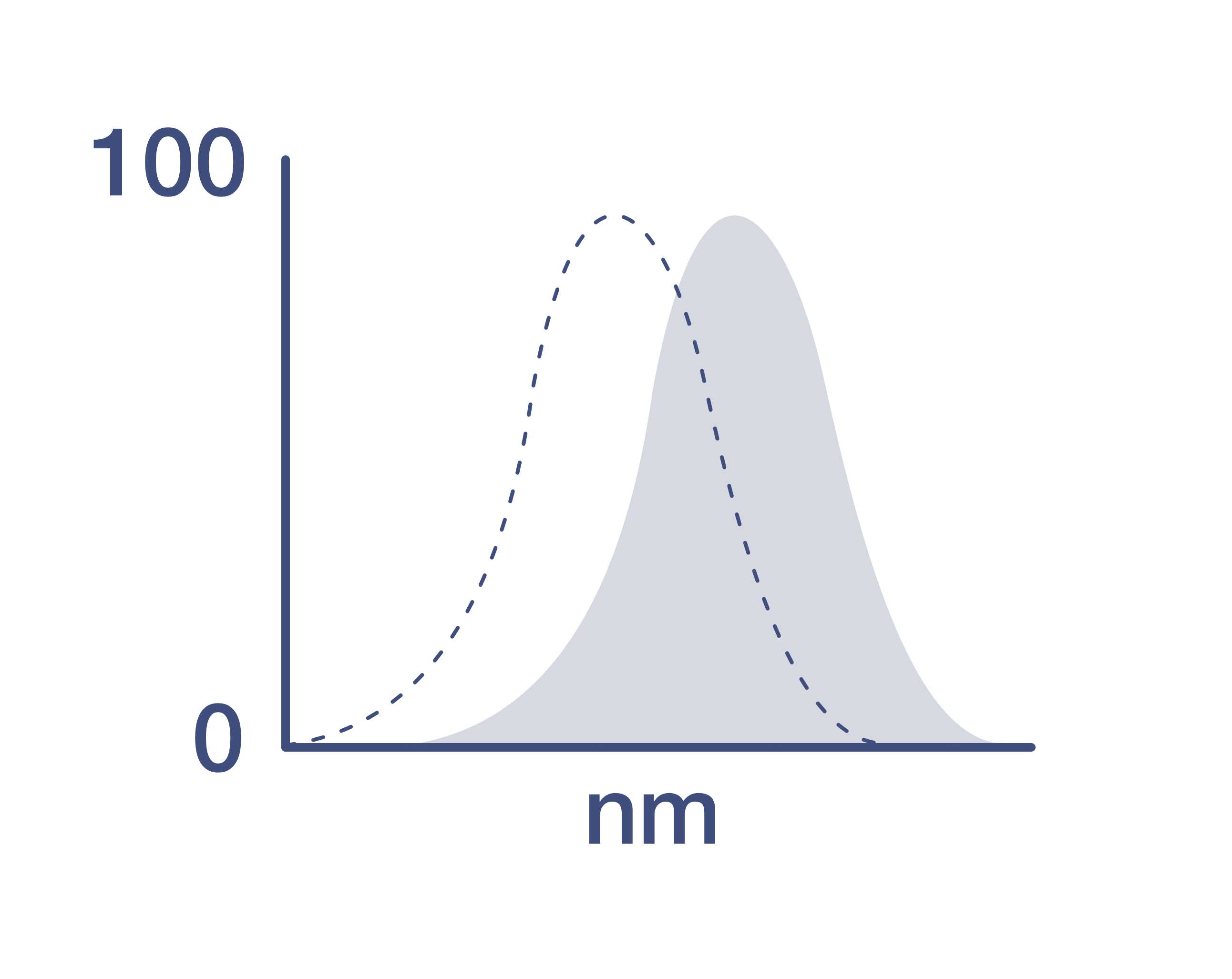
651/668 nm
查看光谱
形式
Liquid
浓度
5 µL/Test
保存条件
4°C, store in dark, DO NOT FREEZE!
运输条件
Wet ice
RRID
产品详细信息
CXCL1 is secreted by monocytes, epithelial cells, and fibroblasts in response to pro-inflammatory stimuli such as LPS, IL-1 beta, and TNF alpha. Overexpression is observed in many malignant tumors, where it contributes to tumor vascularization and metastasis. Recent data suggests this antibody has slight crossreactivity by ELISA to CXCL2 and CXCL3. This has not been confirmed by flow cytometry. For a more specific antibody to CXCL1, please use clone KTYFLF (cat 50-7515).
This W3ZLCXC antibody has been reported for use in intracellular staining followed by flow cytometric analysis.
This W3ZLCXC antibody has been pre-titrated and tested by intracellular staining followed by flow cytometric analysis of human peripheral blood monocytes. This can be used at 5 µL (0.06 µg) per test. A test is defined as the amount (µg) of antibody that will stain a cell sample in a final volume of 100 µL. Cell number should be determined empirically but can range from 105 to 108 cells/test.
eFluor™ 660 is an alternative for Alexa Fluor™ 647. eFluor™ 660 emits at 659 nm and is excited with the red laser (633 nm). Please make sure that your instrument is capable of detecting this fluorochome.
Excitation: 633-647 nm; Emission: 668 nm; Laser: Red Laser.
Filtration: 0.2 µm post-manufacturing filtered.
靶标信息
CXCL1, CXCL2, and CXCL3, also known respectively as GRO alpha, GRO beta (MIP-2 alpha) and GRO gamma (MIP-2 beta), are members of the CXC subfamily of chemokines. Mature CXCL1/2/3 proteins bind with high affinity to the IL-8 receptor type B and are potent neutrophil attractants and activators. In vitro, the processed forms GRO-alpha(4-73), GRO-alpha(5-73) and GRO-alpha(6-73) show a 30-fold higher chemotactic activity.
仅用于科研。不用于诊断过程。未经明确授权不得转售。
How to use the Panel Builder
Watch the video to learn how to use the Invitrogen Flow Cytometry Panel Builder to build your next flow cytometry panel in 5 easy steps.
篇参考文献 (0)
您是否在文献中引用过该产品?请点击下方按钮邮件告知我们。
Disclaimer

Clicking the images or links will redirect you to a website hosted by BenchSci that provides third-party scientific content. Neither the content nor the BenchSci technology and processes for selection have been evaluated by us; we are providing them as-is and without warranty of any kind, including for use or application of the Thermo Fisher Scientific products presented.

