Search
Disclaimer

Clicking the images or links will redirect you to a website hosted by BenchSci that provides third-party scientific content. Neither the content nor the BenchSci technology and processes for selection have been evaluated by us; we are providing them as-is and without warranty of any kind, including for use or application of the Thermo Fisher Scientific products presented.
Progen
Cyclin D1 Monoclonal Antibody (DCS-6)
{{$productOrderCtrl.translations['antibody.pdp.commerceCard.promotion.promotions']}}
{{$productOrderCtrl.translations['antibody.pdp.commerceCard.promotion.viewpromo']}}
{{$productOrderCtrl.translations['antibody.pdp.commerceCard.promotion.promocode']}}: {{promo.promoCode}} {{promo.promoTitle}} {{promo.promoDescription}}. {{$productOrderCtrl.translations['antibody.pdp.commerceCard.promotion.learnmore']}}
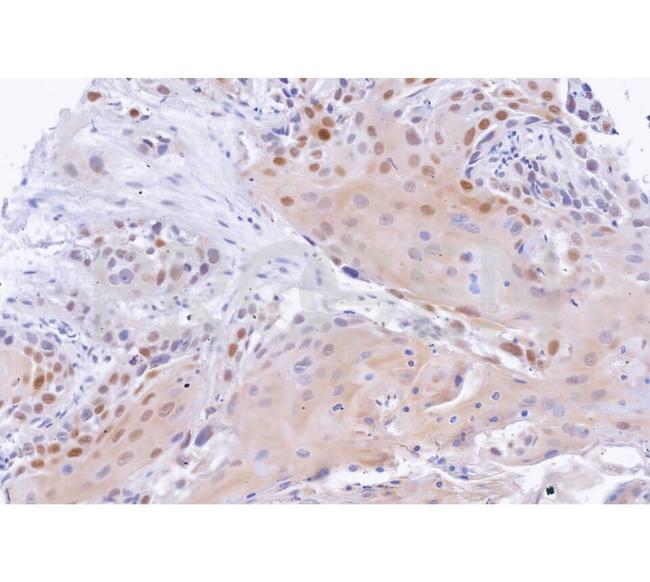
图: 1 / 4
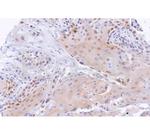
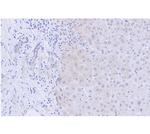
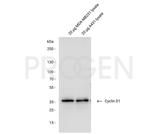
Cyclin D1 Antibody (61053PROGEN) in IHC (P)
Immunohistochemistry analysis of head and neck squamous cell carcinoma using anti-Cyclin D1. IHC was performed on formalin fixed paraffin embedded sections. The samples were deparaffinized with xylol and ethanol followed by heat induced antigen retrieval with 10 mM citrate buffer. After preparation the tissue was blocked with normal serum for 20 min at RT. The primary antibody anti-Cyclin D1 mouse monoclona... View More


产品信息
61053PROGEN
应用
建议稀释比
已发表文章
产品规格
种属反应
Dog,
Human,
Mouse,
Non-human primate,
Rat
宿主/亚型
Mouse
/ IgG2a
分类
Monoclonal
类型
Antibody
克隆号
DCS-6
抗原
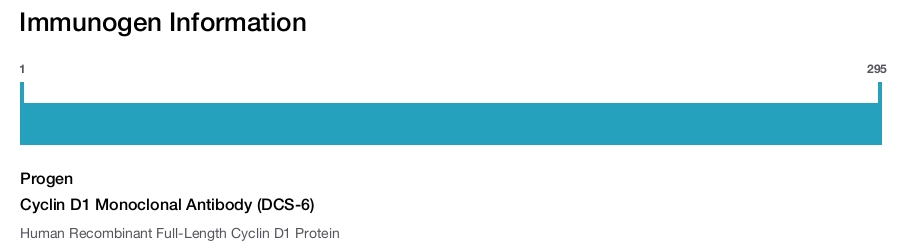
Human Recombinant Full-Length Cyclin D1 Protein
偶联物
形式
Lyophilized
纯化类型
Affinity chromatography
保存液
PBS, pH 7.4, with 0.5% BSA
内含物
0.09% sodium azide
保存条件
Store at 4°C short term. For long term storage, store at -20°C, avoiding freeze/thaw cycles.
运输条件
Ambient (domestic); Wet ice (international)
产品详细信息
Reconstitute lyophilized product with 1 mL distilled water.
DCS-6 reacts specifically with cyclin D1 protein present predominantly in G1 phase of cell cycle; it does not cross-react with D2 or D3 cyclins (the closest relatives within the cyclin family); DCS-6 is especially useful in tumor diagnosis: it can be used as fast method to identify cases with 11q13 amplifications. Cyclin D1 gene is identical to the BCL-1 and the PRAD-1 oncogene and is part of the chromosome 11q13 amplicon which is amplified in several common tumor types like breast, lung, esophagus, urinary bladder and head and neck carcinoma. Polypeptide reacting: MW 36 000 polypeptide (cyclin D1 polypeptide of human cells).Reactivity on cultured cell lines: MCF-7, MDA-MB-134 (breast cancer cell lines), UMSC22 (squamous cell carcinoma cell line), U-2-OS (osteosarcoma cell line) RT 112, A 431, HT 29.
靶标信息
Cyclin D1 (PRAD-1, bcl-1) is one of the key cell cycle regulators, and functions in association with cdk4 and/or cdk6 by phosphorylating the Rb protein. Cyclin D1 is a putative proto-oncogene overexpressed in a wide variety of human neoplasms including mantle cell lymphomas (MCL). In addition, cyclin D1 positively regulates protein phosphorylation, mammary gland epithelial cell proliferation, and fat cell differentiation. In humans, the CCND1 gene encoding cyclin D1 is present on chromosome 11. Cyclin D1 is a cytoplasmic and nuclear protein that is synthesized during G1 phase and assembles with either cyclin-dependent kinase 4 (CDK4) or CDK6 in response to growth factor stimulation. D-type cyclin-CDK complexes act to inactivate the growth-suppressive function of the Rb protein through its phosphorylation, and titrate CDK inhibitors such as p21Cip1 and p27Kip1. Without growth factor-mediated stimulation, Cyclin D1 is unstable, and undergoes ubiquitin-mediated degradation, which is triggered by its phosphorylation. Cyclin D1 destabilization participates in G1/S phase arrest. The Cyclin D1 protein belongs to the highly conserved cyclin family, whose members are characterized by a dramatic periodicity in protein abundance throughout the cell cycle. Cyclins function as regulators of CDK kinases. Different cyclins exhibit distinct expression and degradation patterns which contribute to the temporal coordination of each mitotic event. Cyclin D1 forms a complex with and functions as a regulatory subunit of CDK4 or CDK6, whose activity is required for cell cycle G1/S transition. The Cyclin D1 protein has been shown to interact with tumor suppressor protein Rb and the expression of this gene is regulated positively by Rb. Mutations, amplification and overexpression of this gene, which alters cell cycle progression, are observed frequently in a variety of tumors and may contribute to tumorigenesis. Cyclin D1 has been successfully employed and is a promising tool for further studies in both cell cycle biology and cancer associated abnormalities.
仅用于科研。不用于诊断过程。未经明确授权不得转售。
篇参考文献 (0)
您是否在文献中引用过该产品?请点击下方按钮邮件告知我们。
生物信息学
蛋白别名: B-cell CLL/lymphoma 1; B-cell lymphoma 1 protein; BCL-1; BCL-1 oncogene; CCND1 protein; cDNA; FLJ93625; G1/S-specific cyclin-D1; mRNA; PRAD-1; PRAD1 oncogene
基因别名: AI327039; bcl-1; BCL1; CCND1; cD1; CycD1; Cyl-1; D11S287E; PRAD1; U21B31
UniProt ID: (Dog) Q64HP0, (Human) P24385, (Rat) P39948, (Mouse) P25322
Entrez Gene ID: (Dog) 449028, (Human) 595, (Rat) 58919, (Mouse) 12443
transcription corepressor activity
protein kinase activity
protein binding
transcription factor binding
cyclin-dependent protein serine/threonine kinase regulator activity
enzyme binding
protein kinase binding
protein complex binding
histone deacetylase binding
proline-rich region binding
kinase activity
kinase activator
G1/S transition of mitotic cell cycle
negative regulation of transcription from RNA polymerase II promoter
positive regulation of protein phosphorylation
cellular response to DNA damage stimulus
positive regulation of G2/M transition of mitotic cell cycle
mitotic G1 DNA damage checkpoint
positive regulation of cyclin-dependent protein serine/threonine kinase activity
cell division
response to UV-A
negative regulation of cell cycle arrest
re-entry into mitotic cell cycle
transcription, DNA-templated
protein phosphorylation
lactation
response to iron ion
response to X-ray
response to organonitrogen compound
negative regulation of Wnt signaling pathway
negative regulation of epithelial cell differentiation
endoplasmic reticulum unfolded protein response
response to magnesium ion
response to estradiol
response to vitamin E
Leydig cell differentiation
mammary gland epithelial cell proliferation
positive regulation of mammary gland epithelial cell proliferation
response to drug
response to estrogen
response to leptin
fat cell differentiation
response to ethanol
positive regulation of cell cycle
response to corticosterone
response to calcium ion
canonical Wnt signaling pathway
mammary gland alveolus development
liver regeneration
liver development
positive regulation of cell proliferation
response to organic substance
response to organic cyclic compound
Wnt signaling pathway
organ regeneration
regulation of protein kinase activity
response to steroid hormone
response to glucocorticoid
regulation of cell cycle
cellular response to organic substance
regulation of G1/S transition of mitotic cell cycle
regulation of transcription, DNA-templated
cell cycle

