Search
Proteintech
DLK1 Polyclonal Antibody
{{$productOrderCtrl.translations['antibody.pdp.commerceCard.promotion.promotions']}}
{{$productOrderCtrl.translations['antibody.pdp.commerceCard.promotion.viewpromo']}}
{{$productOrderCtrl.translations['antibody.pdp.commerceCard.promotion.promocode']}}: {{promo.promoCode}} {{promo.promoTitle}} {{promo.promoDescription}}. {{$productOrderCtrl.translations['antibody.pdp.commerceCard.promotion.learnmore']}}
Additional Information:
{{banner.description}}
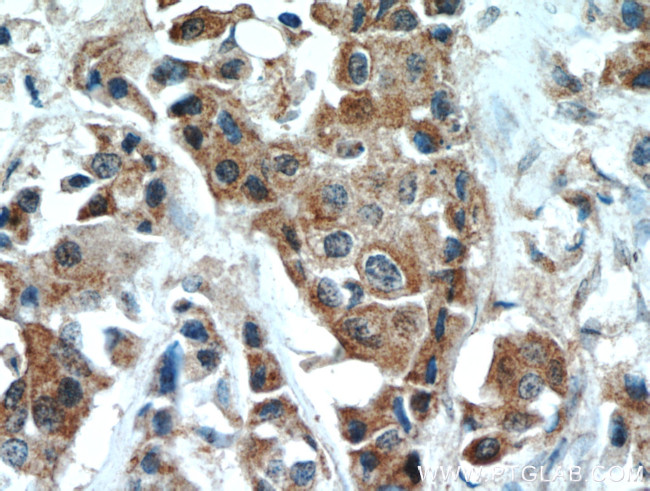
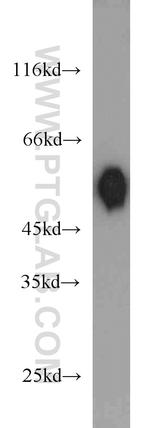
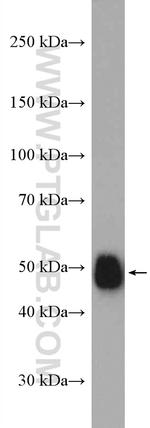
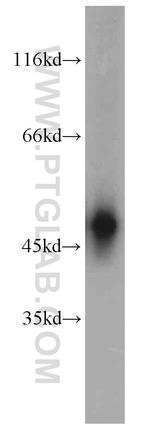
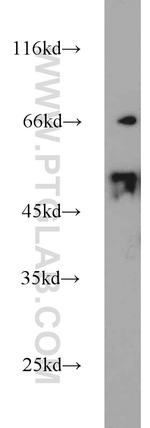
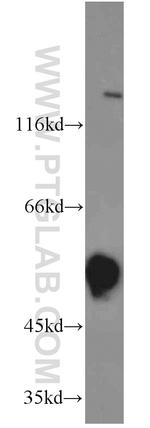


产品信息
10636-1-AP
应用
建议稀释比
已发表文章
产品规格
种属反应
Human,
Mouse,
Rat
已发表种属
Human,
Mouse,
Pig,
Rat
宿主/亚型
Rabbit
/ IgG
分类
Polyclonal
类型
Antibody
抗原
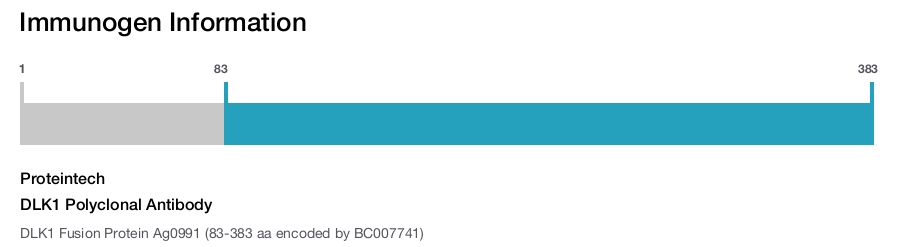
DLK1 Fusion Protein Ag0991 (83-383 aa encoded by BC007741)
偶联物
形式
Liquid
浓度
0.34 mg/mL
规格
51 µg
纯化类型
Antigen affinity chromatography
保存液
PBS, pH 7.3, with 50% glycerol
内含物
0.02% sodium azide
保存条件
-20°C
运输条件
Wet ice (domestic); Dry ice (international)
产品详细信息
Immunogen sequence: ELCDRDVRA CSSAPCANNG TCVSLDDGLY ECSCAPGYSG KDCQKKDGPC VINGSPCQHG GTCVDDEGRA SHASCLCPPG FSGNFCEIVA NSCTPNPCEN DGVCTDIGGD FRCRCPAGFI DKTCSRPVTN CASSPCQNGG TCLQHTQVSY ECLCKPEFTG LTCVKKRALS PQQVTRLPNG YGLAYRLTPG VHELPVQQPE HRILKVSMKE LNKKTPLLTE GQAICFTILG VLTSLVVLGT VGIVFLNKCE TWVSNLRYNH MLRKKKNLLL QYNSGEDLAV NIIFPEKIDM TTFSKEAGDE EI (83-383 aa encoded by BC007741)
靶标信息
The Delta-like 1 homolog (DLK1) is a transmembrane protein containing six epidermal growth factor repeats. It is involved in the differentiation of several cell types, including adipocytes and is also thought to be a tumor suppressor. The DLK1 gene is one of several imprinted genes located in a region on chromosome 14q32; certain mutations in this imprinted region can cause phenotypes similar to maternal and paternal uniparental disomy of chromosome 14 (UPD14). DLK1 is expressed from the paternal allele; a polymorphism within this gene has been associated with child and adolescent obesity.
仅用于科研。不用于诊断过程。未经明确授权不得转售。
生物信息学
蛋白别名: adenoma-associated variant of dlk1 protein; Adipocyte differentiation inhibitor protein; alternatively spliced; lacking 219 bp between positions 858 and 859; The 219 bp deletion has been demonstrated to originate by alternative splicing within an exon.; delta-like 1 homolog; dlk; DLK-1; EGF like function; fetal antigen 1; pG2; Preadipocyte factor 1; preadipocyte factor-1; PREF; Pref-1; Protein delta homolog 1; secredeltin; stromal cell derived protein 1; unnamed protein product
基因别名: AW742678; Delta1; DLK; DLK-1; DLK1; DlkI; FA1; Ly107; Peg9; pG2; Pref-1; PREF1; Scp-1; SCP1; ZOG
UniProt ID: (Human) P80370, (Mouse) Q09163, (Rat) O70534
Entrez Gene ID: (Human) 8788, (Mouse) 13386, (Rat) 114587
Disclaimer

Clicking the images or links will redirect you to a website hosted by BenchSci that provides third-party scientific content. Neither the content nor the BenchSci technology and processes for selection have been evaluated by us; we are providing them as-is and without warranty of any kind, including for use or application of the Thermo Fisher Scientific products presented.

