Search
Proteintech
DNM3 Polyclonal Antibody
{{$productOrderCtrl.translations['antibody.pdp.commerceCard.promotion.promotions']}}
{{$productOrderCtrl.translations['antibody.pdp.commerceCard.promotion.viewpromo']}}
{{$productOrderCtrl.translations['antibody.pdp.commerceCard.promotion.promocode']}}: {{promo.promoCode}} {{promo.promoTitle}} {{promo.promoDescription}}. {{$productOrderCtrl.translations['antibody.pdp.commerceCard.promotion.learnmore']}}
Additional Information:
{{banner.description}}


产品信息
14737-1-AP
应用
建议稀释比
已发表文章
产品规格
种属反应
Human,
Mouse,
Rat
已发表种属
Human,
Mouse
宿主/亚型
Rabbit
/ IgG
分类
Polyclonal
类型
Antibody
抗原
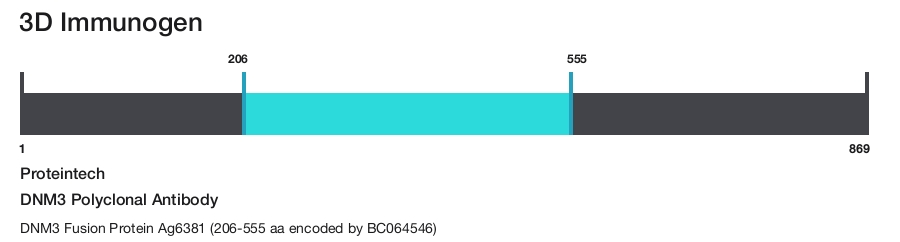
DNM3 Fusion Protein Ag6381 (206-555 aa encoded by BC064546)
偶联物
形式
Liquid
浓度
0.15 mg/mL
规格
22.5 µg
纯化类型
Antigen affinity chromatography
保存液
PBS, pH 7.3, with 50% glycerol
内含物
0.02% sodium azide
保存条件
-20°C
运输条件
Wet ice (domestic); Dry ice (international)
产品详细信息
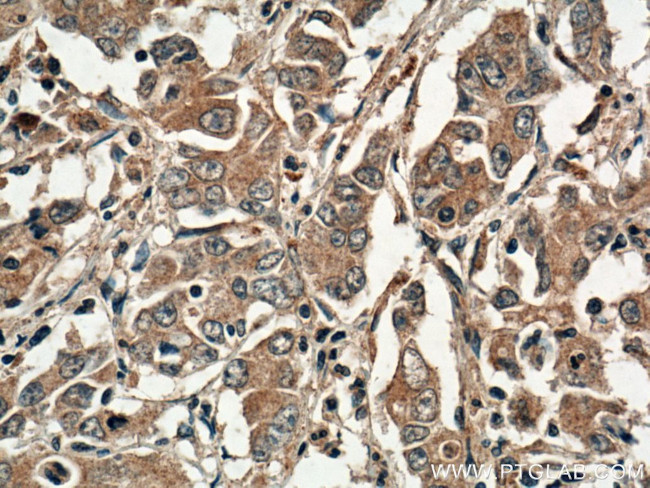
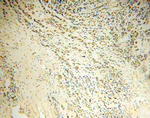
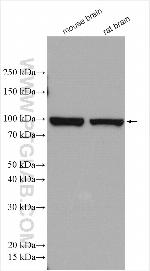
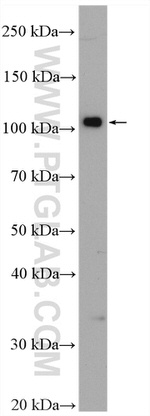
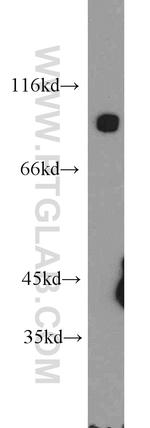
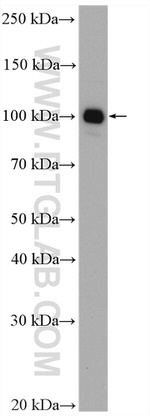
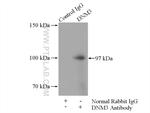
Western blot using this antibody specifically detected the 100 kDa DNM3 in mouse brain. It doesn't cross-react with other DNMs.
Immunogen sequence: KLDLMDEGT DARDVLENKL LPLRRGYVGV VNRSQKDIDG KKDIKAAMLA ERKFFLSHPA YRHIADRMGT PHLQKVLNQQ LTNHIRDTLP NFRNKLQGQL LSIEHEVEAY KNFKPEDPTR KTKALLQMVQ QFAVDFEKRI EGSGDQVDTL ELSGGAKINR IFHERFPFEI VKMEFNEKEL RREISYAIKN IHGIRTGLFT PDMAFEAIVK KQIVKLKGPS LKSVDLVIQE LINTVKKCTK KLANFPRLCE ETERIVANHI REREGKTKDQ VLLLIDIQVS YINTNHEDFI GFANAQQRSS QVHKKTTVGN QVIRKGWLTI SNIGIMKGGS KGYWFVLTAE SLSWYKDDEN I (206-555 aa encoded by BC064546)
靶标信息
The dynamins are a family of 100 kDa GTPases transcribed from at least three separate genes. At least four mRNA splice variants for each dynamin have been described. Dynamins contain several conserved regions including the conserved, amino-terminal GTPase domain, a centrally located membrane-binding plekstrin homology domain (PHD), and a coiled-coil region located in front of a proline-rich domain (PRD). The PRD is thought to mediate interactions between dynamin and numerous other cellular proteins. Dynamin I is expressed exclusively in neurons, dynamin II is ubiquitously expressed, and dynamin III is thought to be restricted to expression in the brain, testis, heart, and lung. The dynamins participate in the cellular process of clathrin-mediated and fluid-phase endocytosis.
仅用于科研。不用于诊断过程。未经明确授权不得转售。
生物信息学
蛋白别名: Dyna III; dynamin family member; Dynamin III; Dynamin, testicular; Dynamin-3; T-dynamin; testicular dynamin; unnamed protein product
基因别名: 9630020E24Rik; AW061159; B230343F03Rik; C530045C17; DNM3; Dyn3; Dyna III; dynamin-2; KIAA0820; mKIAA0820
UniProt ID: (Human) Q9UQ16, (Mouse) Q8BZ98, (Rat) Q08877
Entrez Gene ID: (Human) 26052, (Mouse) 103967, (Rat) 171574
Disclaimer

Clicking the images or links will redirect you to a website hosted by BenchSci that provides third-party scientific content. Neither the content nor the BenchSci technology and processes for selection have been evaluated by us; we are providing them as-is and without warranty of any kind, including for use or application of the Thermo Fisher Scientific products presented.

