Search
Proteintech
FPGT Polyclonal Antibody
{{$productOrderCtrl.translations['antibody.pdp.commerceCard.promotion.promotions']}}
{{$productOrderCtrl.translations['antibody.pdp.commerceCard.promotion.viewpromo']}}
{{$productOrderCtrl.translations['antibody.pdp.commerceCard.promotion.promocode']}}: {{promo.promoCode}} {{promo.promoTitle}} {{promo.promoDescription}}. {{$productOrderCtrl.translations['antibody.pdp.commerceCard.promotion.learnmore']}}
Additional Information:
{{banner.description}}
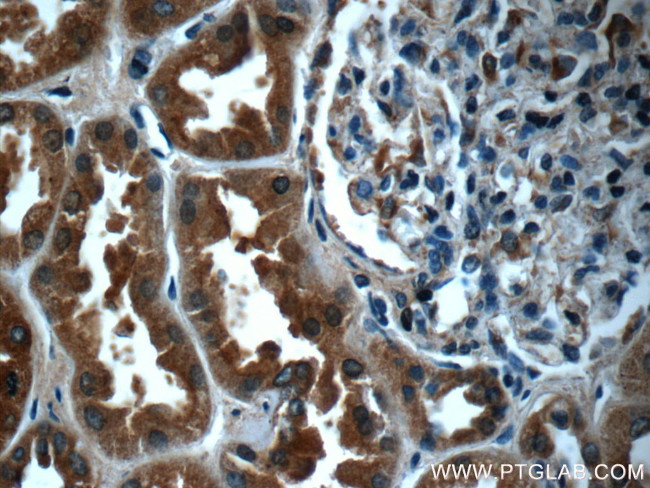
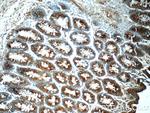
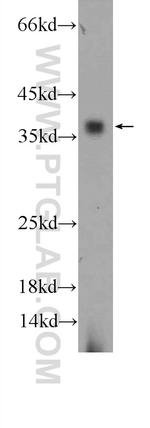


产品信息
24937-1-AP
产品规格
种属反应
Human,
Mouse
宿主/亚型
Rabbit
/ IgG
分类
Polyclonal
类型
Antibody
抗原
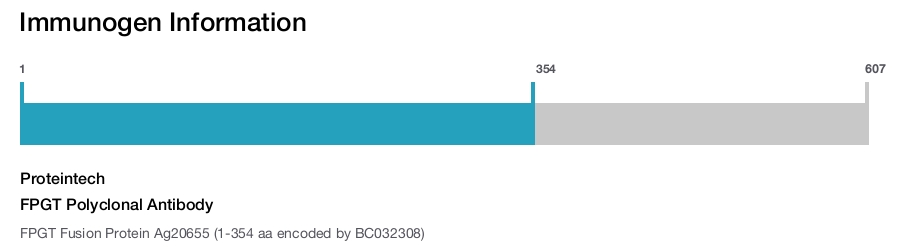
FPGT Fusion Protein Ag20655 (1-354 aa encoded by BC032308)
偶联物
形式
Liquid
浓度
0.47 mg/mL
规格
70.5 µg
纯化类型
Antigen affinity chromatography
保存液
PBS, pH 7.3, with 50% glycerol
内含物
0.02% sodium azide
保存条件
-20°C
运输条件
Wet ice (domestic); Dry ice (international)
产品详细信息
Immunogen sequence: MAAARDPPE VSLREATQRK LRRFSELRGK LVARGEFWDI VAITAADEKQ ELAYNQQLSE KLKRKELPLG VQYHVFVDPA GAKIGNGGST LCALQCLEKL YGDKWNSFTI LLIHSGGYSQ RLPNASALGK IFTALPLGNP IYQMLELKLA MYIDFPLNMN PGILVTCADD IELYSIGEFE FIRFDKPGFT ALAHPSSLTI GTTHGVFVLD PFDDLKHRDL EYRSCHRFLH KPSIEKMYQF NAVCRPGNFC QQDFAGGDIA DLKLDSDYVY TDSLFYMDHK SAKMLLAFYE KIGTLSCEID AYGDFLQALG PGATVEYTRN TSNVIKEESE LVEMRQRIFH LLKGTSLNVV VLNNS (1-354 aa encoded by BC032308)
靶标信息
L-fucose is a key sugar in glycoproteins and other complex carbohydrates since it may be involved in many of the functional roles of these macromolecules, such as in cell-cell recognition. The fucosyl donor for these fucosylated oligosaccharides is GDP-beta-L-fucose. There are two alternate pathways for the biosynthesis of GDP-fucose; the major pathway converts GDP-alpha-D-mannose to GDP-beta-L-fucose. The protein encoded by this gene participates in an alternate pathway that is present in certain mammalian tissues, such as liver and kidney, and appears to function as a salvage pathway to reutilize L-fucose arising from the turnover of glycoproteins and glycolipids. This pathway involves the phosphorylation of L-fucose to form beta-L-fucose-1-phosphate, and then condensation of the beta-L-fucose-1-phosphate with GTP by fucose-1-phosphate guanylyltransferase to form GDP-beta-L-fucose.
仅用于科研。不用于诊断过程。未经明确授权不得转售。
篇参考文献 (0)
您是否在文献中引用过该产品?请点击下方按钮邮件告知我们。
生物信息学
蛋白别名: fucose-1-phosphate guanyltransferase; Fucose-1-phosphate guanylyltransferase; GDP-beta-L-fucose pyrophosphorylase; GDP-L-fucose diphosphorylase; GDP-L-fucose pyrophosphorylase; unnamed protein product
基因别名: 1700016E03Rik; FPGT; GFPP
UniProt ID: (Human) O14772, (Mouse) G5E8F4
Entrez Gene ID: (Human) 8790, (Mouse) 75540
Disclaimer

Clicking the images or links will redirect you to a website hosted by BenchSci that provides third-party scientific content. Neither the content nor the BenchSci technology and processes for selection have been evaluated by us; we are providing them as-is and without warranty of any kind, including for use or application of the Thermo Fisher Scientific products presented.

