Search
Proteintech
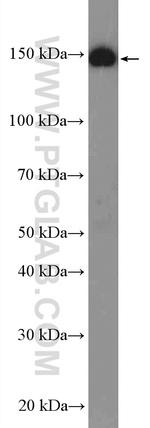
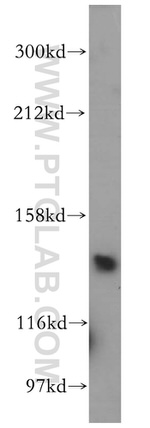
GPR116 Polyclonal Antibody
{{$productOrderCtrl.translations['antibody.pdp.commerceCard.promotion.promotions']}}
{{$productOrderCtrl.translations['antibody.pdp.commerceCard.promotion.viewpromo']}}
{{$productOrderCtrl.translations['antibody.pdp.commerceCard.promotion.promocode']}}: {{promo.promoCode}} {{promo.promoTitle}} {{promo.promoDescription}}. {{$productOrderCtrl.translations['antibody.pdp.commerceCard.promotion.learnmore']}}
Additional Information:
{{banner.description}}


产品信息
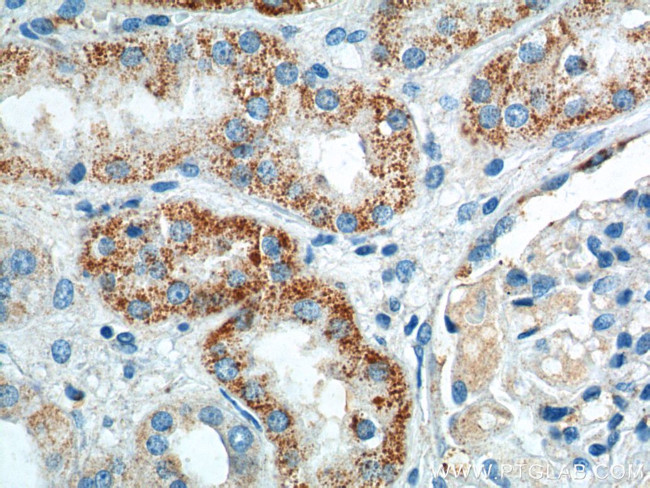
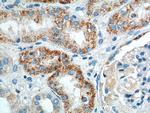
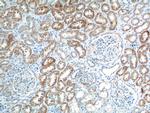
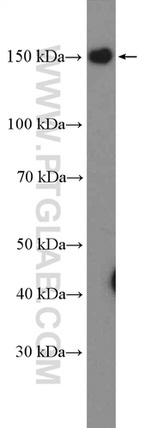
14047-1-AP
应用
建议稀释比
已发表文章
产品规格
种属反应
Human
已发表种属
Human
宿主/亚型
Rabbit
/ IgG
分类
Polyclonal
类型
Antibody
抗原
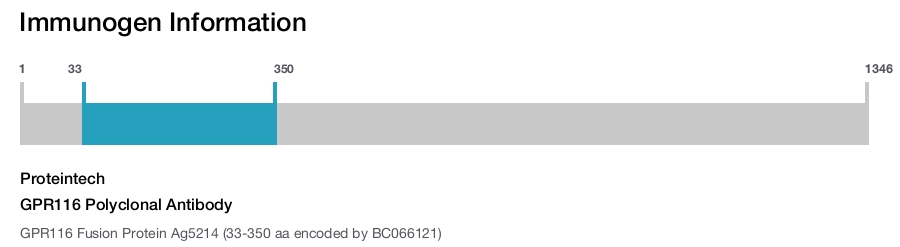
GPR116 Fusion Protein Ag5214 (33-350 aa encoded by BC066121)
偶联物
形式
Liquid
浓度
0.25 mg/mL
规格
37.5 µg
纯化类型
Antigen affinity chromatography
保存液
PBS, pH 7.3, with 50% glycerol
内含物
0.02% sodium azide
保存条件
-20°C
运输条件
Wet ice (domestic); Dry ice (international)
产品详细信息
Immunogen sequence: PLSLHEHEP AGEEALRQKR AVATKSPTAE EYTVNIEISF ENASFLDPIK AYLNSLSFPI HGNNTDQITD ILSINVTTVC RPAGNEIWCS CETGYGWPRE RCLHNLICQE RDVFLPGHHC SCLKELPPNG PFCLLQEDVT LNMRVRLNVG FQEDLMNTSS ALYRSYKTDL ETAFRKGYGI LPGFKGVTVT GFKSGSVVVT YEVKTTPPSL ELIHKANEQV VQSLNQTYKM DYNSFQAVTI NESNFFVTPE IIFEGDTVSL VCEKEVLSSN VSWRYEEQQL EIQNSSRFSI YTALFNNMTS VSKLTIHNIT PGDAGEYVC (33-350 aa encoded by BC066121)
靶标信息
G protein-coupled receptors (GPRs), also known as seven transmembrane receptors, heptahelical receptors or 7TM receptors, comprise a superfamily of proteins that play a role in many different stimulus-response pathways. G protein coupled receptors translate extracellular signals into intracellular signals (G protein activation) and they respond to a variety of signaling molecules, such as hormones and neurotransmitters. GPR116 (G protein-coupled receptor 116) is a 1,346 amino acid multi-pass membrane protein that contains one SEA domain, one GPS domain and three Ig-like domains and belongs to the GPR family. Existing as a dilsulfide-liked homodimer at the cell surface, GPR116 exists as multiple alternatively spliced isoforms and is thought to play a role in regulating and maintaining proper acid-base balance throughout the cell.
仅用于科研。不用于诊断过程。未经明确授权不得转售。
生物信息学
蛋白别名: Adhesion G protein-coupled receptor F5; DKFZp564O1923; FLJ90640; G-protein coupled receptor 116; Ig-Hepta homolog; probable G-protein coupled receptor 116; unnamed protein product
基因别名: ADGRF5; GPR116; KIAA0758; KPG_001
UniProt ID: (Human) Q8IZF2
Entrez Gene ID: (Human) 221395
glomerular filtration
energy reserve metabolic process
signal transduction
cell surface receptor signaling pathway
G-protein coupled receptor signaling pathway
adenylate cyclase-activating G-protein coupled receptor signaling pathway
phospholipid biosynthetic process
regulation of lipid metabolic process
macrophage activation
glucose homeostasis
negative regulation of macrophage activation
surfactant homeostasis
fat cell differentiation
erythrocyte development
pharyngeal arch artery morphogenesis
positive regulation of phospholipid biosynthetic process
Disclaimer

Clicking the images or links will redirect you to a website hosted by BenchSci that provides third-party scientific content. Neither the content nor the BenchSci technology and processes for selection have been evaluated by us; we are providing them as-is and without warranty of any kind, including for use or application of the Thermo Fisher Scientific products presented.

