Search
Proteintech
GTPBP2 Polyclonal Antibody
{{$productOrderCtrl.translations['antibody.pdp.commerceCard.promotion.promotions']}}
{{$productOrderCtrl.translations['antibody.pdp.commerceCard.promotion.promocode']}}: {{promo.promoCode}} {{promo.promoTitle}} {{promo.promoDescription}}. {{$productOrderCtrl.translations['antibody.pdp.commerceCard.promotion.learnmore']}}
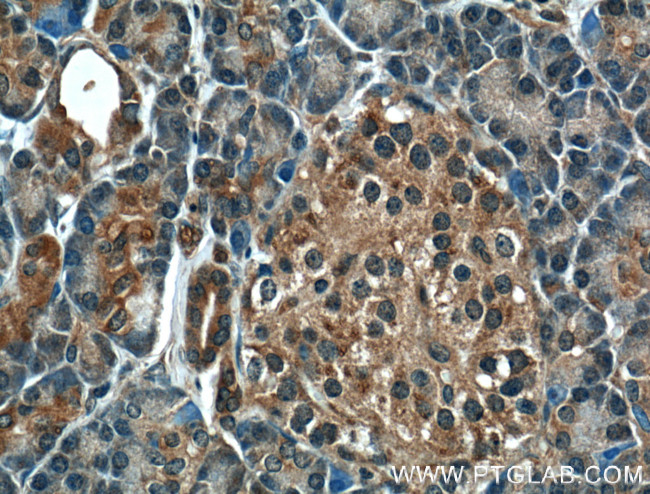
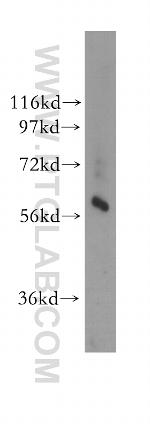
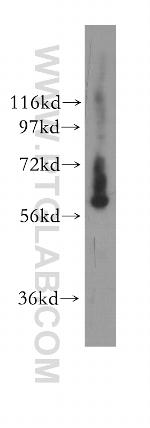
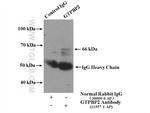
Please note: We are reviewing Western blot images included in the antibody testing data in our catalog, including those provided by third parties. Unless expressly labeled or annotated as “raw-unedited”, Western blot images included in the antibody testing data in our catalog may have been edited, optimized or otherwise adjusted for presentation.


产品信息
11557-1-AP
产品规格
种属反应
Human,
Mouse,
Rat
宿主/亚型
Rabbit
/ IgG
分类
Polyclonal
类型
Antibody
抗原
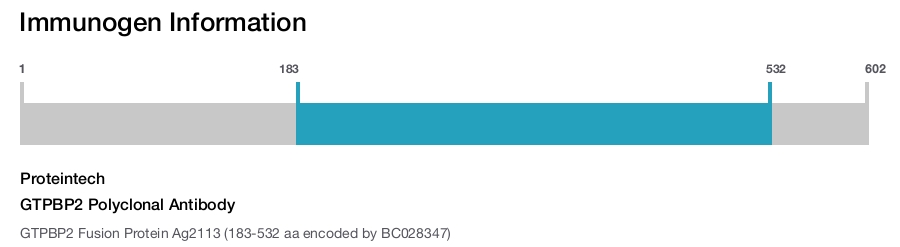
GTPBP2 Fusion Protein Ag2113 (183-532 aa encoded by BC028347)
偶联物
Unconjugated
Unconjugated
Unconjugated
形式
Liquid
浓度
0.17 mg/mL
规格
25.5 µg
纯化类型
Antigen affinity chromatography
保存液
PBS, pH 7.3, with 50% glycerol
内含物
0.02% sodium azide
保存条件
-20°C
运输条件
Wet ice (domestic); Dry ice (international)
产品详细信息
Immunogen sequence: SKMITFIDL AGHHKYLHTT IFGLTSYCPD CALLLVSANT GIAGTTREHL GLALALKVPF FIVVSKIDLC AKTTVERTVR QLERVLKQPG CHKVPMLVTS EDDAVTAAQQ FAQSPNVTPI FTLSSVSGES LDLLKVFLNI LPPLTNSKEQ EELMQQLTEF QVDEIYTVPE VGTVVGGTLS SGICREGDQL VVGPTDDGCF LELRVCSIQR NRSACRVLRA GQAATLALGD FDRALLRKGM VMLSPEMNPT ICSVFEAEIV LLFHATTFRR GFQVTVHVGN VRQTAVVEKI HAKDKLRTGE KAVVRFRFLK HPEYLKVGAK LLFREGVTKG IGHVTDVQAI TAGEAQANMG F (183-532 aa encoded by BC028347)
靶标信息
Small G proteins act as molecular switches for regulation of variety of cellular processes, such as nuclear transport, signal transduction, membrane trafficking and protein synthesis. GTPBP2 (GTP-binding protein 2) is a 602 amino acid G protein that is expressed in kidney, skeletal muscle, testis, brain and thymus, though it is not detected in liver. Expression of GTPBP2 is enhanced by ©-interferon stimulation in HeLa cells, THP-1 cells and thioglycollate-elicited mouse peritoneal macrophages. There are four isoforms of GTPBP2 that are expressed as a result of alternative splicing events. Since mutation of the gene encoding GTPBP1 does not lead to any phenotypic abnormalities, it is thought that there may be a genetic redundancy to make up for GTPBP1 lack-of-function. GTPBP2 shares 44% sequence similarity with GTPBP1 and also overlaps in expression pattern, suggesting that the GTPBP2 gene may compensate for GTPBP1 genetic abnormalities.
仅用于科研。不用于诊断过程。未经明确授权不得转售。
篇参考文献 (0)
您是否在文献中引用过该产品?请点击下方按钮邮件告知我们。
生物信息学
蛋白别名: GTP-binding-like protein 2; GTPBP2; unnamed protein product
基因别名: JABELS; nmf205
UniProt ID: (Human) Q9BX10, (Mouse) Q3UJK4
Entrez Gene ID: (Human) 54676, (Rat) 363195, (Mouse) 56055
Disclaimer

Clicking the images or links will redirect you to a website hosted by BenchSci that provides third-party scientific content. Neither the content nor the BenchSci technology and processes for selection have been evaluated by us; we are providing them as-is and without warranty of any kind, including for use or application of the Thermo Fisher Scientific products presented.

