Search
Proteintech
LPXN Polyclonal Antibody
{{$productOrderCtrl.translations['antibody.pdp.commerceCard.promotion.promotions']}}
{{$productOrderCtrl.translations['antibody.pdp.commerceCard.promotion.viewpromo']}}
{{$productOrderCtrl.translations['antibody.pdp.commerceCard.promotion.promocode']}}: {{promo.promoCode}} {{promo.promoTitle}} {{promo.promoDescription}}. {{$productOrderCtrl.translations['antibody.pdp.commerceCard.promotion.learnmore']}}
Additional Information:
{{banner.description}}
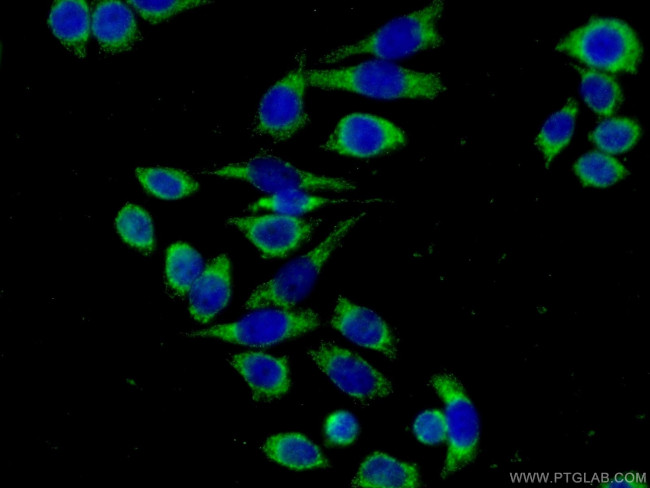
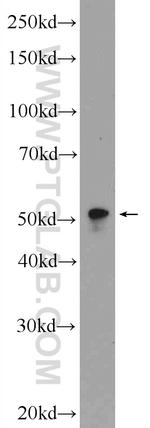
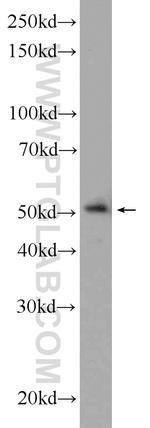


产品信息
11307-1-AP
应用
建议稀释比
已发表文章
产品规格
宿主/亚型
Rabbit
/ IgG
分类
Polyclonal
类型
Antibody
抗原
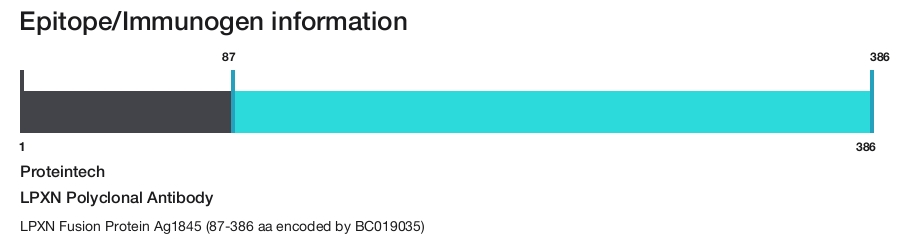
LPXN Fusion Protein Ag1845 (87-386 aa encoded by BC019035)
偶联物
形式
Liquid
浓度
0.42 mg/mL
规格
63 µg
保存条件
-20°C
运输条件
Wet ice (domestic); Dry ice (international)
产品详细信息
Immunogen sequence: TSAAAQLDE LMAHLTEMQA KVAVRADAGK KHLPDKQDHK ASLDSMLGGL EQELQDLGIA TVPKGHCASC QKPIAGKVIH ALGQSWHPEH FVCTHCKEEI GSSPFFERSG LAYCPNDYHQ LFSPRCAYCA APILDKVLTA MNQTWHPEHF FCSHCGEVFG AEGFHEKDKK PYCRKDFLAM FSPKCGGCNR PVLENYLSAM DTVWHPECFV CGDCFTSFST GSFFELDGRP FCELHYHHRR GTLCHGCGQP ITGRCISAMG YKFHPEHFVC AFCLTQLSKG IFREQNDKTY CQPCFNKLFP L (87-386 aa encoded by BC019035)
靶标信息
The product encoded by this gene is preferentially expressed in hematopoietic cells and belongs to the paxillin protein family. Similar to other members of this focal-adhesion-associated adaptor-protein family, it has four leucine-rich LD-motifs in the N-terminus and four LIM domains in the C-terminus. It may function in cell type-specific signaling by associating with PYK2, a member of focal adhesion kinase family. As a substrate for a tyrosine kinase in lymphoid cells, this protein may also function in, and be regulated by, tyrosine kinase activity. Alternative splicing results in multiple transcript variants encoding distinct isoforms.
仅用于科研。不用于诊断过程。未经明确授权不得转售。
篇参考文献 (0)
您是否在文献中引用过该产品?请点击下方按钮邮件告知我们。
Disclaimer

Clicking the images or links will redirect you to a website hosted by BenchSci that provides third-party scientific content. Neither the content nor the BenchSci technology and processes for selection have been evaluated by us; we are providing them as-is and without warranty of any kind, including for use or application of the Thermo Fisher Scientific products presented.

