Search
Abnova
MKI67IP Polyclonal Antibody, MaxPab™
{{$productOrderCtrl.translations['antibody.pdp.commerceCard.promotion.promotions']}}
{{$productOrderCtrl.translations['antibody.pdp.commerceCard.promotion.promocode']}}: {{promo.promoCode}} {{promo.promoTitle}} {{promo.promoDescription}}. {{$productOrderCtrl.translations['antibody.pdp.commerceCard.promotion.learnmore']}}
{{$ctrl.translations['antibody.pdp.skuNotes.additionalInformation']}}:
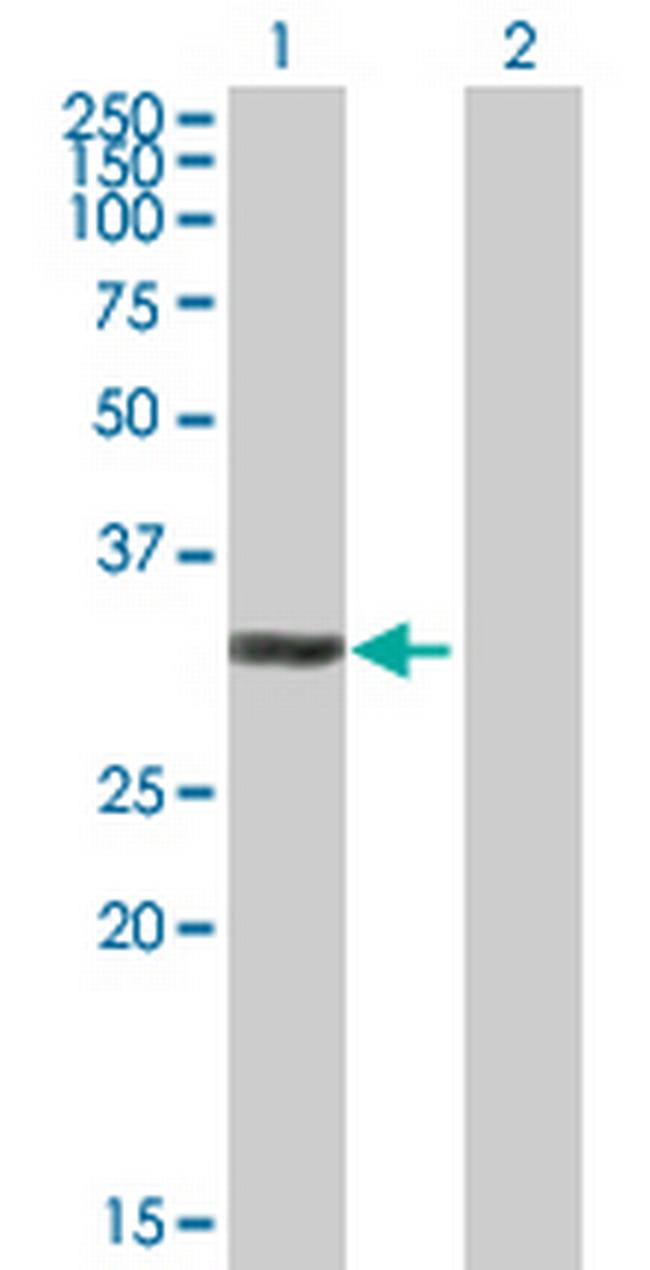
Please note: We are reviewing Western blot images included in the antibody testing data in our catalog, including those provided by third parties. Unless expressly labeled or annotated as “raw-unedited”, Western blot images included in the antibody testing data in our catalog may have been edited, optimized or otherwise adjusted for presentation.

产品信息
H00084365-B01P
产品规格
种属反应
Human
宿主/亚型
Mouse
/ IgG
分类
Polyclonal
类型
Antibody
抗原
MKI67IP (NP_115766.2, 1 a.a. approximately 293 a.a) full-length human protein.
偶联物
Unconjugated
Unconjugated
Unconjugated
形式
Liquid
浓度
0.4 mg/mL
规格
50 µg
纯化类型
Protein A
保存液
PBS, pH 7.4
内含物
no preservative
保存条件
-20°C, Avoid Freeze/Thaw Cycles
运输条件
Ambient (domestic); Wet ice (international)
产品详细信息
Product may be used with Western Blot (Transfected lysate).
The Isotype of this product is composed of an IgG Mixture.
Immunogen sequence: MATFSGPAGP ILSLNPQEDV EFQKEVAQVR KRITQRKKQE QLTPGVVYVR HLPNLLDETQ IFSYFSQFGT VTRFRLSRSK RTGNSKGYAF VEFESEDVAK IVAETMNNYL FGERLLECHF MPPEKVHKEL FKDWNIPFKQ PSYQSVKRYN RNRTLTQKLR MEERFKKKER LLRKKLAKKG IDYDFPSLIL QKTESISKTN RQTSTKGQVL RKKKKKVSGT LDTPEKTVDS QGPTPVCTPT FLERRKSQVA ELNDDDKDDE IVFKQPISCV KEEIQETQTP THSRKKRRRS SNQ
靶标信息
NIFK, also known as nucleolar protein interacting with the forkhead homolog protein, is a gene associated with several cancer types and is considered a potential prognostic biomarker. This gene functions within the nucleolus and plays a critical role in cellular proliferation, metastasis, and invasiveness, particularly noted in hepatocellular carcinoma (HCC) and colorectal cancer. NIFK expression is regulated via several pathways, including the MYC proto-oncogene pathway, and its silencing can lead to decreased fatty acid synthesis in colorectal cancer cells. Furthermore, it's involved in the regulation of innate immunity through pathways such as NF-kB in specific cancer cells. Due to its involvement in cancer progression, NIFK is being explored as a therapeutic target and holds promise for advancing precision medicine strategies across various cancer treatments.
仅用于科研。不用于诊断过程。未经明确授权不得转售。
篇参考文献 (0)
您是否在文献中引用过该产品?请点击下方按钮邮件告知我们。
生物信息学
蛋白别名: hNIFK; Ki67ip; nucleolar phosphoprotein Nopp34; nucleolar protein interacting with the FHA domain of pKi-67; unnamed protein product
基因别名: MKI67IP; Nop15; Nopp34
UniProt ID: (Human) Q9BYG3
Entrez Gene ID: (Human) 84365
Disclaimer

Clicking the images or links will redirect you to a website hosted by BenchSci that provides third-party scientific content. Neither the content nor the BenchSci technology and processes for selection have been evaluated by us; we are providing them as-is and without warranty of any kind, including for use or application of the Thermo Fisher Scientific products presented.

