Search
Proteintech
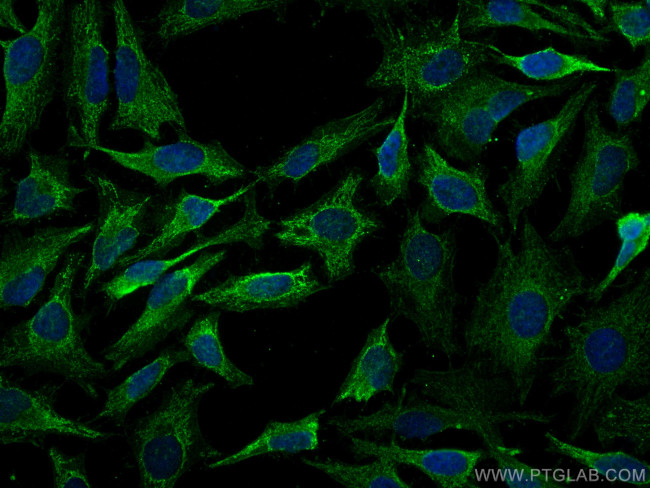
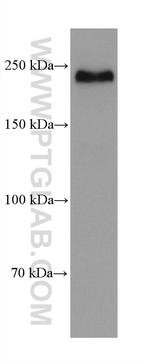
NOTCH2/NOTCH2NL Monoclonal Antibody (2D5E1)
{{$productOrderCtrl.translations['antibody.pdp.commerceCard.promotion.promotions']}}
{{$productOrderCtrl.translations['antibody.pdp.commerceCard.promotion.viewpromo']}}
{{$productOrderCtrl.translations['antibody.pdp.commerceCard.promotion.promocode']}}: {{promo.promoCode}} {{promo.promoTitle}} {{promo.promoDescription}}. {{$productOrderCtrl.translations['antibody.pdp.commerceCard.promotion.learnmore']}}
Additional Information:
{{banner.description}}


产品信息
68212-1-IG
应用
建议稀释比
已发表文章
产品规格
种属反应
Human
宿主/亚型
Mouse
/ IgG1
分类
Monoclonal
类型
Antibody
克隆号
2D5E1
抗原
Recombinant protein
偶联物
Unconjugated
Unconjugated
Unconjugated
形式
Liquid
纯化类型
Protein G
保存液
PBS with 50% glycerol
内含物
0.02% sodium azide
保存条件
-20°C
运输条件
Wet ice
产品详细信息
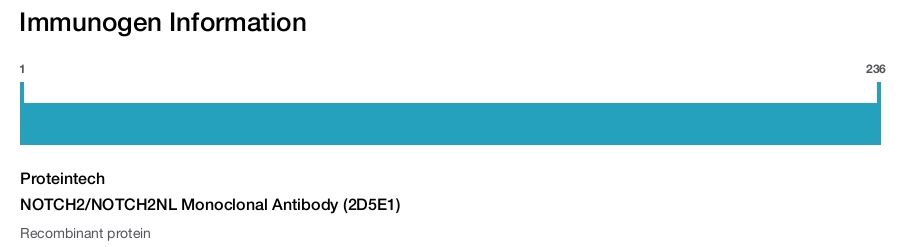
Immunogen sequence: PAHALQCRDG YEPCVNEGMC VTYHNGTGYC KCPEGFLGEY CQHRDPCEKN RCQNGGTCVA QAMLGKATCR CASGFTGEDC QYSTSHPCFV SRPCLNGGTC HMLSRDTYEC TCQVGFTGKE CQWTDACLSH PCANGSTCTT VANQFSCKCL TGFTGQKCET DVNECDIPGH CQHGGICLNL PGSYQCQCLQ GFTGQYCDSL YVPCAPSPCV NGGTCRQTGD FTFECNCLPE TVRRGTELWE RDREVWNGKE HDEN
靶标信息
NOTCH2 and NOTCH2NL are members of the Notch receptor family, with NOTCH2 being a transmembrane receptor located on the cell surface. It plays a critical role in cell-to-cell communication during development and tissue homeostasis, affecting cell fate determination, differentiation, proliferation, and apoptosis. NOTCH2 is composed of an extracellular domain with epidermal growth factor-like repeats, a transmembrane domain, and an intracellular domain. On the other hand, NOTCH2NL proteins are also transmembrane proteins that modulate NOTCH2 signaling. They can act as competitive inhibitors or enhancers of NOTCH2 signaling, depending on the specific paralog and cellular context. They are involved in neuronal development and have been linked to human brain evolution, particularly in neocortex expansion. Both NOTCH2 and NOTCH2NL are important players in cellular processes and have structural similarities, but NOTCH2NL proteins have distinct arrangements of domains compared to NOTCH2.
仅用于科研。不用于诊断过程。未经明确授权不得转售。
篇参考文献 (0)
您是否在文献中引用过该产品?请点击下方按钮邮件告知我们。
生物信息学
蛋白别名: membrane bound receptor; Neurogenic locus notch homolog protein 2; Notch 2; Notch homolog 2; Notch homolog 2 N-terminal like protein; Notch homolog 2 N-terminal-like protein; Notch homolog 2 N-terminal-like protein A; putative cell-fate determining protein; transmembrane protein; unnamed protein product
基因别名: AGS2; HJCYS; hN2; N2N; NOTCH2; NOTCH2NL; NOTCH2NLA
UniProt ID: (Human) Q04721, (Human) Q7Z3S9
Entrez Gene ID: (Human) 4853, (Human) 388677
Notch signaling pathway
cerebral cortex development
cell differentiation
positive regulation of Notch signaling pathway
negative regulation of transcription from RNA polymerase II promoter
in utero embryonic development
cell fate determination
liver development
placenta development
heart looping
morphogenesis of an epithelial sheet
marginal zone B cell differentiation
inflammatory response to antigenic stimulus
atrioventricular node development
pulmonary valve morphogenesis
regulation of transcription, DNA-templated
regulation of transcription from RNA polymerase II promoter
apoptotic process
humoral immune response
determination of left/right symmetry
nervous system development
axon guidance
cell proliferation
positive regulation of cell proliferation
organ morphogenesis
negative regulation of macromolecule biosynthetic process
negative regulation of gene expression
positive regulation of keratinocyte proliferation
hemopoiesis
embryonic limb morphogenesis
BMP signaling pathway
positive regulation of BMP signaling pathway
multicellular organism growth
intracellular signal transduction
intrahepatic bile duct development
wound healing
defense response to bacterium
regulation of apoptotic process
myeloid dendritic cell differentiation
positive regulation of apoptotic process
negative regulation of apoptotic process
positive regulation of osteoclast differentiation
positive regulation of transcription from RNA polymerase II promoter
positive regulation of Ras protein signal transduction
bone remodeling
regulation of developmental process
positive regulation of smooth muscle cell differentiation
cardiac septum morphogenesis
atrial septum morphogenesis
placenta blood vessel development
ciliary body morphogenesis
positive regulation of ERK1 and ERK2 cascade
left/right axis specification
cellular response to tumor cell
proximal tubule development
glomerular visceral epithelial cell development
glomerular capillary formation
hepatocyte proliferation
liver morphogenesis
positive regulation of pri-miRNA transcription from RNA polymerase II promoter
regulation of hemopoiesis
cholangiocyte proliferation
regulation of osteoclast development
Disclaimer

Clicking the images or links will redirect you to a website hosted by BenchSci that provides third-party scientific content. Neither the content nor the BenchSci technology and processes for selection have been evaluated by us; we are providing them as-is and without warranty of any kind, including for use or application of the Thermo Fisher Scientific products presented.

