Search
Invitrogen
O-linked N-acetylglucosamine (O-GlcNAc) Monoclonal Antibody (HGAC85)
{{$productOrderCtrl.translations['antibody.pdp.commerceCard.promotion.promotions']}}
{{$productOrderCtrl.translations['antibody.pdp.commerceCard.promotion.promocode']}}: {{promo.promoCode}} {{promo.promoTitle}} {{promo.promoDescription}}. {{$productOrderCtrl.translations['antibody.pdp.commerceCard.promotion.learnmore']}}
{{$ctrl.translations['antibody.pdp.skuNotes.additionalInformation']}}:
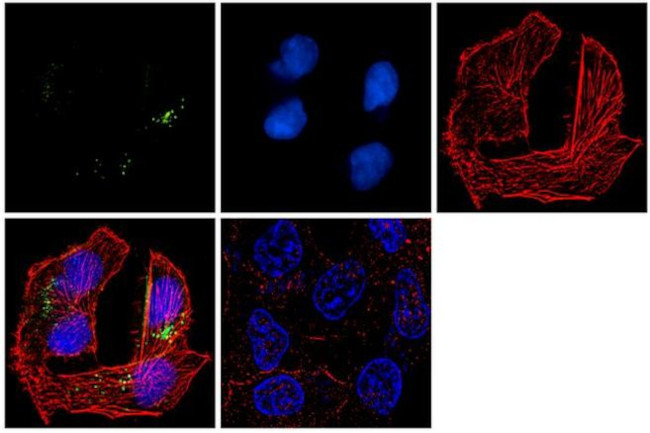
图: 1 / 12
O-linked N-acetylglucosamine (O-GlcNAc) Antibody (MA1-076) in ICC/IF
Immunofluorescence analysis of OGT was performed using 70% confluent log phase Panc-1 cells. The cells were fixed with 4% paraformaldehyde for 10 minutes, permeabilized with 0.1% Triton™ X-100 for 10 minutes, and blocked with 1% BSA for 1 hour at room temperature. The cells were labeled with OGT (HGAC85) Mouse Monoclonal Antibody (Product # MA1-076) at 1:250 dilution in 0.1% BSA and incubated for 3 hours at... View More
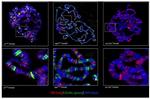
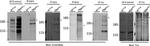
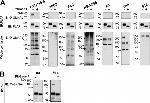
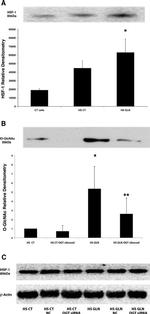
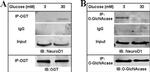
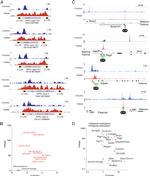

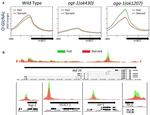
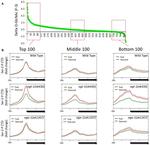
Please note: We are reviewing Western blot images included in the antibody testing data in our catalog, including those provided by third parties. Unless expressly labeled or annotated as “raw-unedited”, Western blot images included in the antibody testing data in our catalog may have been edited, optimized or otherwise adjusted for presentation.


产品信息
MA1-076
应用
建议稀释比
已发表文章
产品规格
种属反应
Chemical
已发表种属
Chemical,
Fruit fly,
Hamster,
Human,
Mouse,
Nematode,
Rabbit,
Rat,
Sheep
宿主/亚型
Mouse
/ IgG3
分类
Monoclonal
类型
Antibody
克隆号
HGAC85
抗原
Heat killed, pepsin treated group A streptococci.
偶联物
Unconjugated
Unconjugated
Unconjugated
形式
Liquid
浓度
Conc. Not Determined
保存液
ascites, PBS
内含物
0.05% sodium azide
保存条件
-20°C, Avoid Freeze/Thaw Cycles
运输条件
Ambient (domestic); Wet ice (international)
RRID
产品详细信息
MA1-076 recognizes beta-1,3 linked O-linked N-acetylglucosamine (O-GlcNAc) residues of streptococcal group A carbohydrate as well as O-GlcNAc glycosylated proteins.
MA1-076 has been successfully used in Western blot, immunofluorescence, immunoprecipitation and ELISA procedures. By Western blot, this antibody detects several proteins representing immunoprecipitated O-GlcNAc glycoproteins. Immunofluorescence staining of O-GlcNAc in cells results in labeling of the nuclear envelope and pores, nucleolus, and cytoplasm. This staining pattern is consistent with other methods of detecting O-GlcNAc moieties.
The MA1-076 immunogen is heat killed, pepsin treated group A streptococci.
DO NOT USE WITH DILUENTS CONTAINING GLYCOSYLATED PROTEINS.
靶标信息
O-linked N-acetylglucosamine (O-GlcNAc) is a posttranslational modification characterized by the attachment of N-acetylglucosamine to specific serine or threonine residues. Unlike other protein glycosylations, O-GlcNAc modifications occur within the nucleus and cytoplasm. They are found on many cellular proteins, including nuclear pore, oncogene, cytoskeletal, heat shock, viral and transcription regulatory proteins. O-GlcNAc glycosylations are thought to obscure phosphorylation sites, counteracting phosphorylation-dependent signaling pathways and protein interactions.
仅用于科研。不用于诊断过程。未经明确授权不得转售。
生物信息学
蛋白别名: GlcNAc
Disclaimer

Clicking the images or links will redirect you to a website hosted by BenchSci that provides third-party scientific content. Neither the content nor the BenchSci technology and processes for selection have been evaluated by us; we are providing them as-is and without warranty of any kind, including for use or application of the Thermo Fisher Scientific products presented.

