Search
Proteintech
OCRL Polyclonal Antibody
{{$productOrderCtrl.translations['antibody.pdp.commerceCard.promotion.promotions']}}
{{$productOrderCtrl.translations['antibody.pdp.commerceCard.promotion.promocode']}}: {{promo.promoCode}} {{promo.promoTitle}} {{promo.promoDescription}}. {{$productOrderCtrl.translations['antibody.pdp.commerceCard.promotion.learnmore']}}
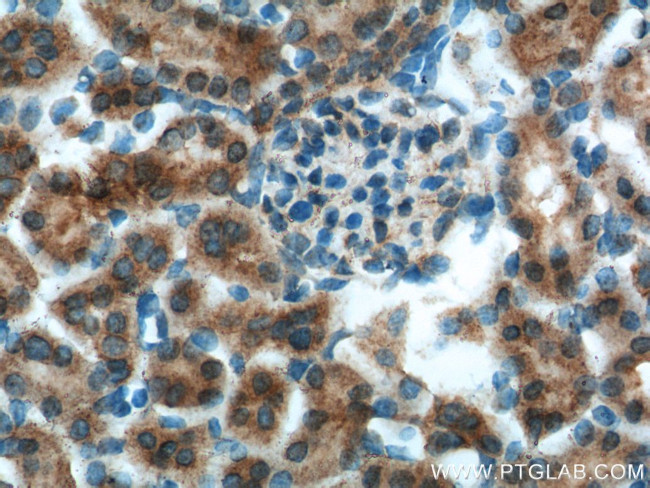
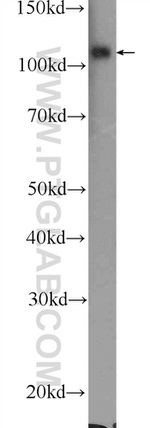
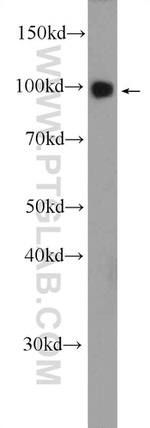
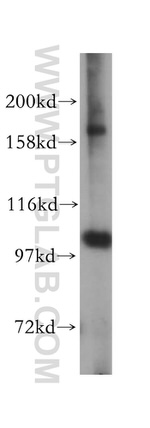
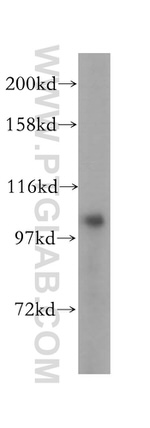
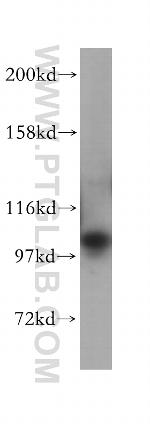
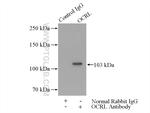
Please note: We are reviewing Western blot images included in the antibody testing data in our catalog, including those provided by third parties. Unless expressly labeled or annotated as “raw-unedited”, Western blot images included in the antibody testing data in our catalog may have been edited, optimized or otherwise adjusted for presentation.


产品信息
17695-1-AP
应用
建议稀释比
已发表文章
产品规格
种属反应
Human,
Mouse,
Rat
已发表种属
Human
宿主/亚型
Rabbit
/ IgG
分类
Polyclonal
类型
Antibody
抗原
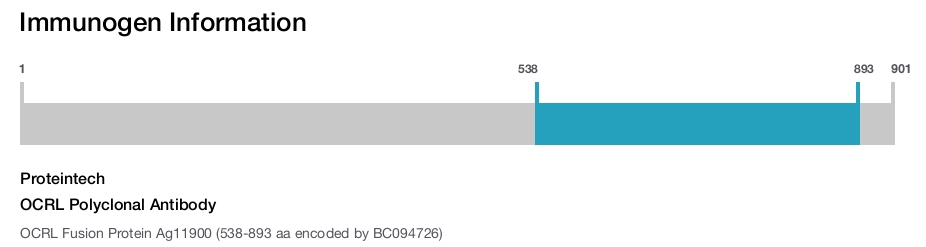
OCRL Fusion Protein Ag11900 (538-893 aa encoded by BC094726)
偶联物
Unconjugated
Unconjugated
Unconjugated
形式
Liquid
浓度
0.13 mg/mL
规格
19.5 µg
纯化类型
Antigen affinity chromatography
保存液
PBS, pH 7.3, with 50% glycerol
内含物
0.02% sodium azide
保存条件
-20°C
运输条件
Wet ice (domestic); Dry ice (international)
产品详细信息
This antibody is specific to OCRL.
Immunogen sequence: VDERRYRKV FEDSVRIMDR MENDFLPSLE LSRREFVFEN VKFRQLQKEK FQISNNGQVP CHFSFIPKLN DSQYCKPWLR AEPFEGYLEP NETVDISLDV YVSKDSVTIL NSGEDKIEDI LVLHLDRGKD YFLTISGNYL PSCFGTSLEA LCRMKRPIRE VPVTKLIDLE KSLLQMVPLD EGASERPLQV PKEIWLLVDH LFKYACHQED LFQTPGMQEE LQQIIDCLDT SIPETIPGSN HSVAEALLIF LEALPEPVIC YELYQRCLDS AYDPRICRQV ISQLPRCHRN VFRYLMAFLR ELLKFSEYNS VNANMIATLF TSLLLRPPPN LMARQTPSDR QRAIQFLLGF LLGSEED (538-893 aa encoded by BC094726 )
靶标信息
The inositol polyphosphate 5-phosphatases selectively remove the phosphate from the 5-position of various phosphatidylinositols, which generate second messengers in response to extracellular signals. OCRL1 is a type II 5-phosphatase that is mutated in the oculocerebrorenal syndrome of Lowe (OCRL). OCRL is a rare X-linked disorder that is characterized in part by congenital cataracts, mental retardation, muscular hypotonia and renal tubular dysfunction. OCRL1 has a high affinity for phosphatidylinositol 4,5-bisphosphate as well as inositol 1,4,5-trisphosphate and inositol 1,3,4,5-tetrakisphosphate as substrates. OCRL1 is localized to the Golgi complex and is thought to be part of the trans-Golgi network (TGN), which suggests that OCRL1 plays a role in protein sorting and trafficking within the cell.
仅用于科研。不用于诊断过程。未经明确授权不得转售。
生物信息学
蛋白别名: inositol polyphosphate 5-phosphatase OCRL-1; Lowe oculocerebrorenal syndrome protein; OCRL-1; oculocerebrorenal syndrome of Lowe; phosphatidylinositol 3,4,5-triphosphate 5-phosphatase; phosphatidylinositol polyphosphate 5-phosphatase; Unknown; unnamed protein product
基因别名: 9530014D17Rik; Dent-2; DENT2; LOCR; OCRL-1; OCRL1
UniProt ID: (Human) Q01968, (Mouse) Q6NVF0
Entrez Gene ID: (Human) 4952, (Rat) 317576, (Mouse) 320634
phosphatidylinositol-4,5-bisphosphate 5-phosphatase activity
inositol-polyphosphate 5-phosphatase activity
GTPase activator activity
protein binding
phosphatase activity
small GTPase binding
phosphatidylinositol-3,4,5-trisphosphate 5-phosphatase activity
phosphatidylinositol bisphosphate phosphatase activity
phosphatidylinositol phosphate 5-phosphatase activity
phosphatidylinositol phosphate 4-phosphatase activity
phosphatidylinositol-3,5-bisphosphate 5-phosphatase activity
inositol-1,4,5-trisphosphate 5-phosphatase activity
inositol-1,3,4,5-tetrakisphosphate 5-phosphatase activity
inositol phosphate phosphatase activity
lipid metabolic process
phosphatidylinositol biosynthetic process
signal transduction
phosphatidylinositol-3-phosphate biosynthetic process
inositol phosphate metabolic process
phosphatidylinositol metabolic process
phosphatidylinositol dephosphorylation
cilium morphogenesis
membrane organization
in utero embryonic development
biological_process
Disclaimer

Clicking the images or links will redirect you to a website hosted by BenchSci that provides third-party scientific content. Neither the content nor the BenchSci technology and processes for selection have been evaluated by us; we are providing them as-is and without warranty of any kind, including for use or application of the Thermo Fisher Scientific products presented.

