Search
Invitrogen
PGP9.5 Polyclonal Antibody
{{$productOrderCtrl.translations['antibody.pdp.commerceCard.promotion.promotions']}}
{{$productOrderCtrl.translations['antibody.pdp.commerceCard.promotion.promocode']}}: {{promo.promoCode}} {{promo.promoTitle}} {{promo.promoDescription}}. {{$productOrderCtrl.translations['antibody.pdp.commerceCard.promotion.learnmore']}}
{{$ctrl.translations['antibody.pdp.skuNotes.additionalInformation']}}:
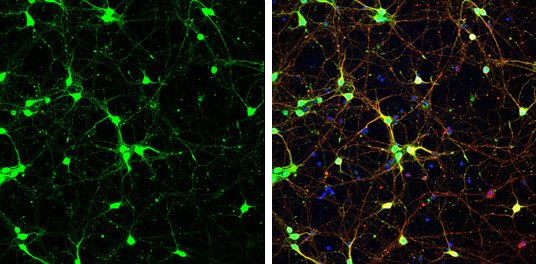
图: 1 / 16
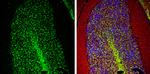
PGP9.5 Antibody (PA5-85273) in ICC/IF
PGP9.5 Polyclonal Antibody detects PGP9.5 protein at cytoplasm by immunofluorescent analysis. Sample: DIV9 rat E18 primary cortical neurons were fixed in 4% paraformaldehyde at RT for 15 min. Green: PGP9.5 protein stained by PGP9.5 Polyclonal Antibody (Product # PA5-85273) diluted at 1:500. Red: beta Tubulin 3/ Tuj1, stained by beta-3 Tubulin Polyclonal Antibody [GT11710] diluted at 1:500. Blue: Fluoroshield with DAPI .
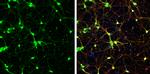
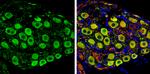

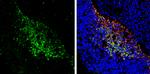
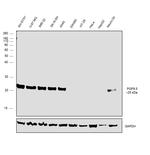
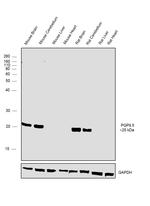
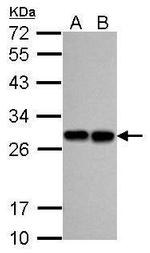
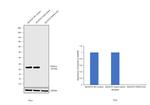
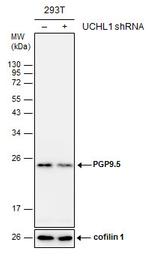
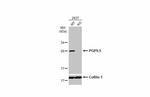
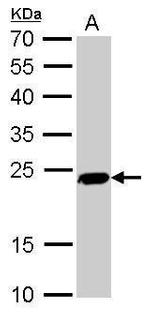
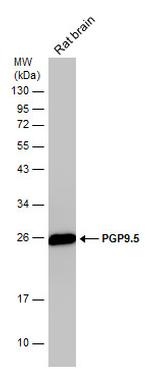
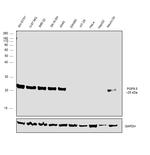
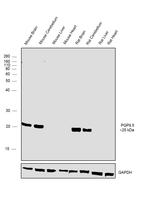
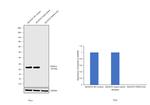
Please note: We are reviewing Western blot images included in the antibody testing data in our catalog, including those provided by third parties. Unless expressly labeled or annotated as “raw-unedited”, Western blot images included in the antibody testing data in our catalog may have been edited, optimized or otherwise adjusted for presentation.


产品信息
PA5-85273
应用
建议稀释比
已发表文章
产品规格
种属反应
Human,
Mouse,
Rat
宿主/亚型
Rabbit
/ IgG
分类
Polyclonal
类型
Antibody
抗原
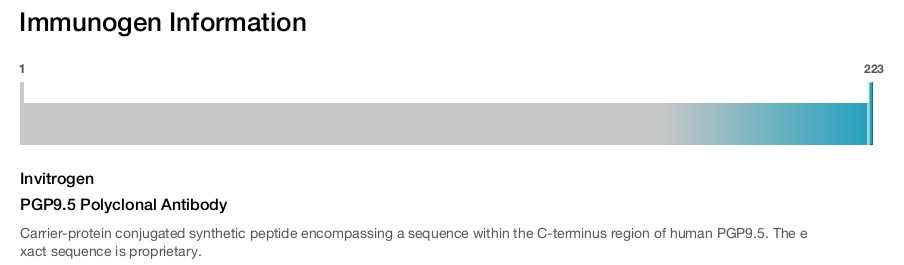
Carrier-protein conjugated synthetic peptide encompassing a sequence within the C-terminus region of human PGP9.5. The exact sequence is proprietary.
偶联物
Unconjugated
Unconjugated
Unconjugated
形式
Liquid
浓度
1 mg/mL
规格
100 µg
纯化类型
Antigen affinity chromatography
保存液
0.1M tris glycine, pH 7, with 10% glycerol
内含物
0.01% thimerosal
保存条件
Store at 4°C short term. For long term storage, store at -20°C, avoiding freeze/thaw cycles.
运输条件
Ambient (domestic); Wet ice (international)
RRID
产品详细信息
Keep as concentrated solution.
Positive Control: 293T, A549, H1299, mouse brain, rat brain.
Store product as a concentrated solution. Centrifuge briefly prior to opening the vial.
靶标信息
PGP9.5 (Protein gene product 9.5, UCH-L1, PARK5) is a neuron specific protein, structurally and immunologically distinct from neuron specific enolase. PGP9.5 has a molecular weight of 27 kDa and was first identified by high resolution two dimensional PAGE. PGP9.5 is a member of ubiquitin carboxyl-terminal hydrolase family 1 (peptidase family C12) with a ubiquitin carboxyl-terminal hydrolase domain. PGP9.5 is well known for having ubiquitin hydrolase and ligase activities that hydrolyzes small C-terminal adducts of ubiquitin to generate ubiquitin monomers. PGP9.5 is present in neurons and nerve fibers at all levels of the central and peripheral nervous system, in neuroendocrine cells, in segments of the renal tubules, in spermatogonia and Leydig cells of the testis, in ova and in some cells of both the pregnant and non-pregnant corpus luteum. Over expression of PGP9.5 leads to non-small cell lung cancer while decreased expression leads to Huntington disease and Alzheimer disease. Since PGP9.5 is present in cellular inclusions, it can be a useful as a neuronal marker and in the studies of neurodegenerative disorders such as with Parkinson disease.
⚠WARNING: This product can expose you to chemicals including mercury, which is known to the State of California to cause birth defects or other reproductive harm. For more information go to www.P65Warnings.ca.gov.
仅用于科研。不用于诊断过程。未经明确授权不得转售。
篇参考文献 (0)
您是否在文献中引用过该产品?请点击下方按钮邮件告知我们。
生物信息学
蛋白别名: epididymis luminal protein 117; epididymis secretory protein Li 53; gracile axonal dystrophy; neuron cytoplasmic protein 9.5; OTTHUMP00000218137; OTTHUMP00000218139; OTTHUMP00000218140; OTTHUMP00000218141; PGP 9.5; PGP9.5; protein gene product 9.5; ubiquitin carboxy-terminal hydrolase L1; ubiquitin carboxyl-terminal esterase L1 (ubiquitin thiolesterase); ubiquitin thioesterase L1; ubiquitin thiolesterase; UCH-L1; UCHL; unnamed protein product
基因别名: gad; HEL-117; HEL-S-53; NDGOA; PARK5; PGP 9.5; PGP9.5; PGP95; SPG79; SPG79A; UCH-L1; UCHL-1
UniProt ID: (Human) P09936, (Mouse) Q9R0P9, (Rat) Q00981
Entrez Gene ID: (Human) 7345, (Mouse) 22223, (Rat) 29545
ubiquitin-dependent protein catabolic process
regulation of macroautophagy
protein deubiquitination
protein catabolic process
proteasome-mediated ubiquitin-dependent protein catabolic process
negative regulation of MAPK cascade
positive regulation of glycolytic process
response to ischemia
axonogenesis
axon target recognition
adult walking behavior
cell proliferation
axonal transport of mitochondrion
eating behavior
neuromuscular process
muscle cell development
cellular response to xenobiotic stimulus
Disclaimer

Clicking the images or links will redirect you to a website hosted by BenchSci that provides third-party scientific content. Neither the content nor the BenchSci technology and processes for selection have been evaluated by us; we are providing them as-is and without warranty of any kind, including for use or application of the Thermo Fisher Scientific products presented.

