Search
Invitrogen
PKC iota Polyclonal Antibody
{{$productOrderCtrl.translations['antibody.pdp.commerceCard.promotion.promotions']}}
{{$productOrderCtrl.translations['antibody.pdp.commerceCard.promotion.promocode']}}: {{promo.promoCode}} {{promo.promoTitle}} {{promo.promoDescription}}. {{$productOrderCtrl.translations['antibody.pdp.commerceCard.promotion.learnmore']}}
{{$ctrl.translations['antibody.pdp.skuNotes.additionalInformation']}}:
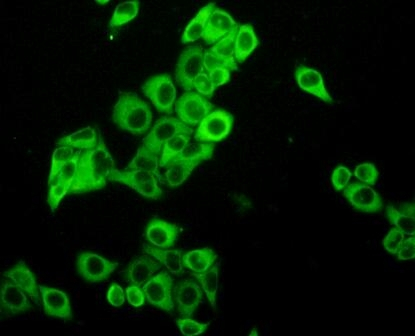
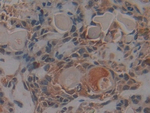
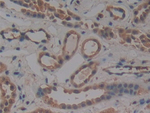
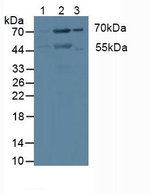
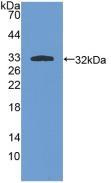
Please note: We are reviewing Western blot images included in the antibody testing data in our catalog, including those provided by third parties. Unless expressly labeled or annotated as “raw-unedited”, Western blot images included in the antibody testing data in our catalog may have been edited, optimized or otherwise adjusted for presentation.


产品信息
PA5150155
产品规格
种属反应
Human,
Mouse,
Rat
宿主/亚型
Rabbit
分类
Polyclonal
类型
Antibody
抗原
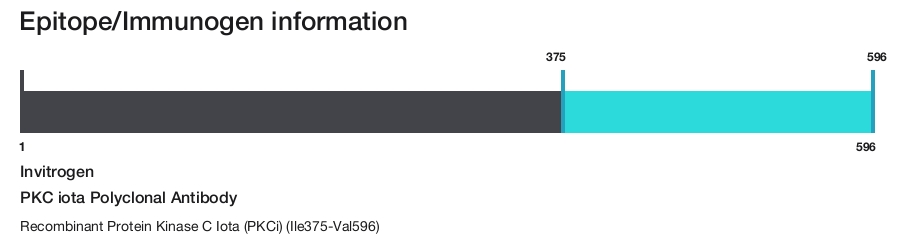
Recombinant Protein Kinase C Iota (PKCi) (Ile375-Val596)
偶联物
Unconjugated
Unconjugated
Unconjugated
形式
Liquid
浓度
0.5 mg/mL
规格
100 µg
纯化类型
Protein A
保存液
PBS, pH 7.4, with 50% glycerol
内含物
0.05% ProClin 300
保存条件
Store at 4°C short term. For long term storage, store at -20°C, avoiding freeze/thaw cycles.
运输条件
Ambient (domestic); Wet ice (international)
RRID
靶标信息
The PKC family of serine/threonine kinases, including PRKCI (PKC iota), is activated intracellularly by signal transduction pathways. In humans, at least 12 different PKC polypeptides have been identified. These isoforms differ in primary structure, tissue distribution, subcellular localization, mode of action in vitro, response to extracellular signals, and substrate specificity. PKC alpha, beta I, beta II and gamma form the conventional family; their activities are Ca2+- and phospholipid-dependent. The PKC family comprises at least eight members, which are differentially expressed and are involved in a wide variety of cellular processes. This protein kinase is calcium-independent and phospholipid-dependent. It is not activated by phorbolesters or diacylglycerol. This kinase can be recruited to vesicle tubular clusters (VTCs) by direct interaction with the small GTPase RAB2, where this kinase phosphorylates glyceraldehyde-3-phosphate dehydrogenase (GAPD/GAPDH) and plays a role in microtubule dynamics in the early secretory pathway. This kinase is found to be necessary for BCL-ABL-mediated resistance to drug-induced apoptosis and therefore protects leukemia cells against drug-induced apoptosis. There is a single exon pseudogene mapped on chromosome X.
仅用于科研。不用于诊断过程。未经明确授权不得转售。
篇参考文献 (0)
您是否在文献中引用过该产品?请点击下方按钮邮件告知我们。
生物信息学
蛋白别名: aPKC-lambda/iota; atypical protein kinase C-lambda/iota; nPKC-iota; PKC iota; PKC lambda; PKC lambda-iota; PRKC-lambda/iota; protein kinase C, lambda; unnamed protein product
基因别名: 2310021H13Rik; aPKClambda; DXS1179E; mKIAA4165; nPKC-iota; PKCI; Pkcl; PKClambda; Prkcl
UniProt ID: (Human) P41743, (Rat) F1M7Y5, (Mouse) Q62074
Entrez Gene ID: (Human) 5584, (Rat) 84006, (Mouse) 18759
protein phosphorylation
actin filament organization
positive regulation of neuron projection development
cell migration
establishment of cell polarity
cellular response to insulin stimulus
negative regulation of glial cell apoptotic process
establishment of apical/basal cell polarity
intracellular signal transduction
eye photoreceptor cell development
response to peptide hormone
negative regulation of neuron apoptotic process
establishment or maintenance of epithelial cell apical/basal polarity
cell-cell junction organization
positive regulation of glucose import
Golgi vesicle budding
positive regulation of glial cell proliferation
response to interleukin-1
protein localization to plasma membrane
regulation of postsynaptic membrane neurotransmitter receptor levels
positive regulation of protein localization to plasma membrane
positive regulation of endothelial cell apoptotic process
protein targeting to membrane
cytoskeleton organization
vesicle-mediated transport
negative regulation of apoptotic process
positive regulation of Notch signaling pathway
secretion
membrane organization
cellular response to chemical stress
Disclaimer

Clicking the images or links will redirect you to a website hosted by BenchSci that provides third-party scientific content. Neither the content nor the BenchSci technology and processes for selection have been evaluated by us; we are providing them as-is and without warranty of any kind, including for use or application of the Thermo Fisher Scientific products presented.

