Search
Proteintech
SFTPB Polyclonal Antibody
{{$productOrderCtrl.translations['antibody.pdp.commerceCard.promotion.promotions']}}
{{$productOrderCtrl.translations['antibody.pdp.commerceCard.promotion.promocode']}}: {{promo.promoCode}} {{promo.promoTitle}} {{promo.promoDescription}}. {{$productOrderCtrl.translations['antibody.pdp.commerceCard.promotion.learnmore']}}
{{$ctrl.translations['antibody.pdp.skuNotes.additionalInformation']}}:
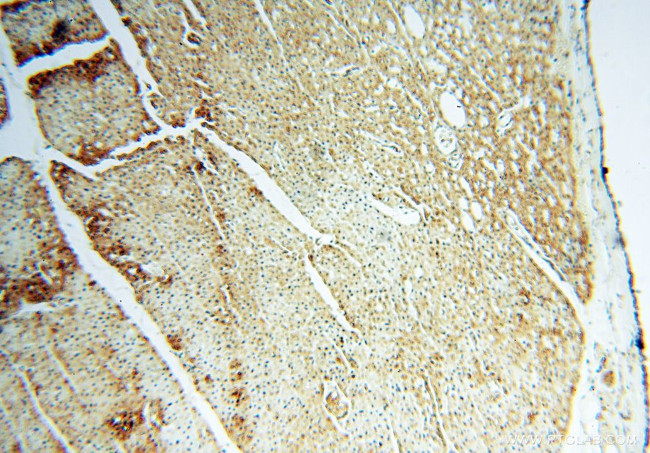
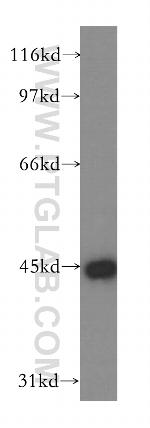
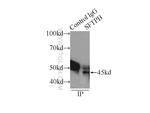
Please note: We are reviewing Western blot images included in the antibody testing data in our catalog, including those provided by third parties. Unless expressly labeled or annotated as “raw-unedited”, Western blot images included in the antibody testing data in our catalog may have been edited, optimized or otherwise adjusted for presentation.


产品信息
13664-1-AP
应用
建议稀释比
已发表文章
产品规格
种属反应
Human
宿主/亚型
Rabbit
/ IgG
分类
Polyclonal
类型
Antibody
抗原
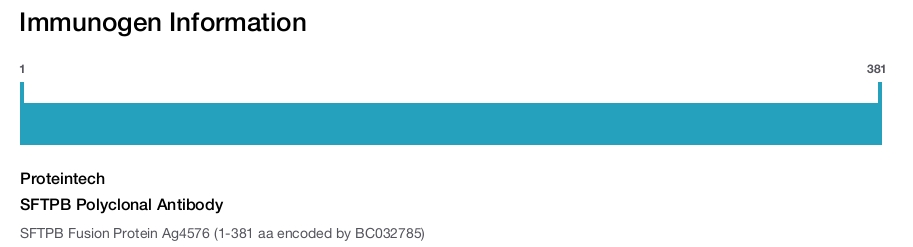
SFTPB Fusion Protein Ag4576 (1-381 aa encoded by BC032785)
偶联物
Unconjugated
Unconjugated
Unconjugated
形式
Liquid
浓度
0.16 mg/mL
规格
24 µg
纯化类型
Antigen affinity chromatography
保存液
PBS, pH 7.3, with 50% glycerol
内含物
0.02% sodium azide
保存条件
-20°C
运输条件
Wet ice (domestic); Dry ice (international)
产品详细信息
Immunogen sequence: MAESHLLQW LLLLLPTLCG PGTAAWTTSS LACAQGPEFW CQSLEQALQC RALGHCLQEV WGHVGADDLC QECEDIVHIL NKMAKEAIFQ DTMRKFLEQE CNVLPLKLLM PQCNQVLDDY FPLVIDYFQN QTDSNGICMH LGLCKSRQPE PEQEPGMSDP LPKPLRDPLP DPLLDKLVLP VLPGALQARP GPHTQDLSEQ QFPIPLPYCW LCRALIKRIQ AMIPKGALAV AVAQVCRVVP LVAGGICQCL AERYSVILLD TLLGRMLPQL VCRLVLRCSM DDSAGPRSPT GEWLPRDSEC HLCMSVTTQA GNSSEQAIPQ AMLQACVGSW LDREKCKQFV EQHTPQLLTL VPRGWDAHTT CQALGVCGTM SSPLQCIHSP DL (1-381 aa encoded by BC032785)
靶标信息
Pulmonary surfactant is a complex mixture of phospholipids and proteins that is secreted from type II cells in alveoli and reduces the surface tension at the alveolar air-liquid interface, providing alveolar stability necessary for normal ventilation. Four distinct proteins isolated from pulmonary surfactant are termed surfactant proteins A, B, C, and D. SP-A (28-36kDa) and SP-D (43kDa) are collagenous carbohydrate-binding proteins, whereas SP-B (8-9kDa) and SP-C (4kDa) are non-collagenous hydrophobic proteins. SP-B is expressed in pulmonary adenocarcinomas with acinar, papillary, bronchioloalveolar, and solid growth patterns. Squamous cell and large cell carcinomas of the lung and nonpulmonary adenocarcinomas do not express SP-B. ProSP-B is glycosylated in the Golgi apparatus and undergoes carboxy- and amino-terminal proteolysis by a cathepsin D-like protease.
仅用于科研。不用于诊断过程。未经明确授权不得转售。
生物信息学
蛋白别名: P SFTB3; pulmonary surfactant-associated proteolipid SPL(Phe); SFPB; sufactant apoprotein 18 precursor; unnamed protein product
基因别名: PSP-B; SFTB3; SFTP3; SMDP1; SP-B
UniProt ID: (Human) P07988
Entrez Gene ID: (Human) 6439
Disclaimer

Clicking the images or links will redirect you to a website hosted by BenchSci that provides third-party scientific content. Neither the content nor the BenchSci technology and processes for selection have been evaluated by us; we are providing them as-is and without warranty of any kind, including for use or application of the Thermo Fisher Scientific products presented.

