Search
Disclaimer

Clicking the images or links will redirect you to a website hosted by BenchSci that provides third-party scientific content. Neither the content nor the BenchSci technology and processes for selection have been evaluated by us; we are providing them as-is and without warranty of any kind, including for use or application of the Thermo Fisher Scientific products presented.
Invitrogen
Sugemalimab Recombinant Human Monoclonal Antibody
{{$productOrderCtrl.translations['antibody.pdp.commerceCard.promotion.promotions']}}
{{$productOrderCtrl.translations['antibody.pdp.commerceCard.promotion.viewpromo']}}
{{$productOrderCtrl.translations['antibody.pdp.commerceCard.promotion.promocode']}}: {{promo.promoCode}} {{promo.promoTitle}} {{promo.promoDescription}}. {{$productOrderCtrl.translations['antibody.pdp.commerceCard.promotion.learnmore']}}
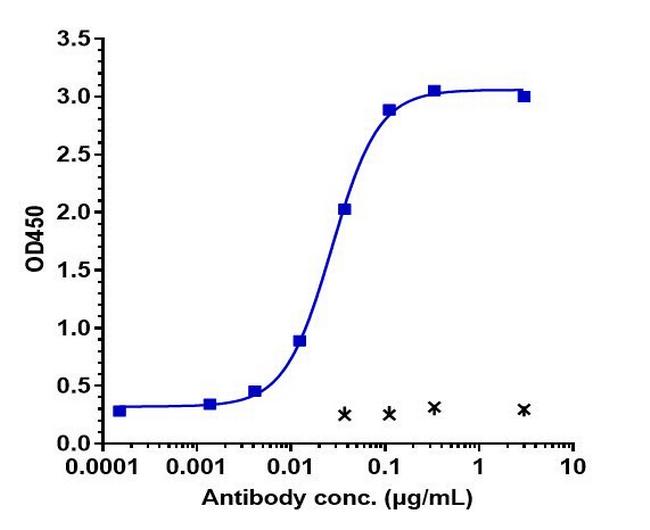
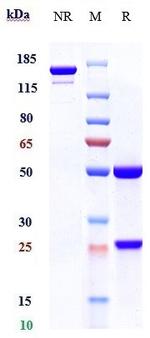


产品信息
MA5-59121
应用
建议稀释比
已发表文章
产品规格
种属反应
Human
宿主/亚型
Human
/ IgG1
Expression System
CHO cells
分类
Recombinant Monoclonal
类型
Antibody
偶联物
形式
Lyophilized
浓度
1 mg/mL
纯化类型
Protein A
保存液
25mM histidine, pH 6.2, with 8% sucrose, 0.01% Tween 80
内含物
no preservative
保存条件
-20°C, Avoid Freeze/Thaw Cycles
运输条件
Ambient (domestic); Dry ice (international)
RRID
产品详细信息
For reconstitution, add sterile, distilled water to achieve a final antibody concentration of 1 mg/mL. Gently shake to solubilize the protein completely. Do not vortex. Reconstituted products should be stored at -80 °.
靶标信息
Sugemalimab, also known as Cejemly, is a fully human, full-length IgG4 monoclonal antibody targeting programmed death-ligand 1 (PD-L1). The gene PD-L1 (Programmed Death-Ligand 1), also known as CD274, encodes a protein crucial for regulating immune responses. Located on chromosome 9, PD-L1 is expressed on the surface of various cells, including tumor cells, immune cells, and other tissues. PD-L1 functions by binding to its receptor PD-1 on T cells, leading to the inhibition of T cell activity and induction of immune tolerance. This interaction plays a pivotal role in preventing autoimmunity and promoting immune escape in cancer, allowing tumor cells to evade the immune system. The expression of PD-L1 is upregulated in many cancers, including melanoma, lung cancer, and renal cell carcinoma, making it a critical target for cancer immunotherapies. Monoclonal antibodies targeting PD-L1, such as atezolizumab and durvalumab, have shown efficacy in restoring anti-tumor immunity. Further research into the regulation and function of PD-L1 continues to enhance our understanding of its role in immune modulation and its potential as a therapeutic target.
仅用于科研。不用于诊断过程。未经明确授权不得转售。
篇参考文献 (0)
您是否在文献中引用过该产品?请点击下方按钮邮件告知我们。

