Search
Invitrogen
TRAIL-R2 (DR5) Humanized Recombinant Human Monoclonal Antibody (TAS266)
{{$productOrderCtrl.translations['antibody.pdp.commerceCard.promotion.promotions']}}
{{$productOrderCtrl.translations['antibody.pdp.commerceCard.promotion.promocode']}}: {{promo.promoCode}} {{promo.promoTitle}} {{promo.promoDescription}}. {{$productOrderCtrl.translations['antibody.pdp.commerceCard.promotion.learnmore']}}
{{$ctrl.translations['antibody.pdp.skuNotes.additionalInformation']}}:
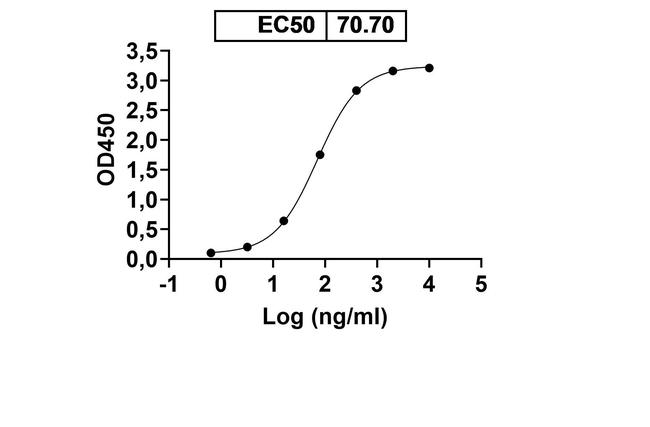
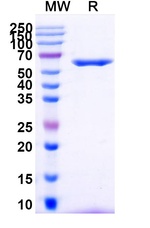
Please note: We are reviewing Western blot images included in the antibody testing data in our catalog, including those provided by third parties. Unless expressly labeled or annotated as “raw-unedited”, Western blot images included in the antibody testing data in our catalog may have been edited, optimized or otherwise adjusted for presentation.


产品信息
MA5-54815
产品规格
种属反应
Human
宿主/亚型
Human
/ VH-VH
Expression System
CHO cells
分类
Recombinant Monoclonal
类型
Antibody
克隆号
TAS266
抗原
Recombinant Human CD262/TNFRSF10B/TRAIL-R2/DR5.
偶联物
Unconjugated
Unconjugated
Unconjugated
形式
Liquid
浓度
2 mg/mL
规格
100 µg
纯化类型
Protein A/G
保存液
PBS
内含物
no preservative
保存条件
Store at 4°C short term. For long term storage, store at -20°C, avoiding freeze/thaw cycles.
RRID
产品详细信息
Compatible with Direct ELISA
Isotype of this product is: (VHH-VHH-hFc)-dimer
靶标信息
DR5 (Apo2, TRAIL-R2, TRICK2, KILLER) is a recently identified death domain containing receptor for TRAIL, which mediates TRAIL induced apoptosis. DR5 is a member of the TNF-receptor superfamily, and contains an intracellular death domain. DR5 can be activated by tumor necrosis factor-related apoptosis inducing ligand (TNFSF10/TRAIL/APO-2L), and transduces an apoptosis signal. Studies with FADD-deficient mice suggested that FADD, a death domain containing adaptor protein, is required for the apoptosis mediated by DR5. Two transcript variants encoding different isoforms of DR5 and one non-coding transcript have been found. Overexpression of DR5 induces apoptosis and activates NF-kappa-B. DR5 is expressed in a number of cell types, and to particularly high levels in lymphocytes and spleen. Diseases associated with DR5 dysfunction include squamous cell carcinoma, and diffuse infiltrative lymphocytosis syndrome.
仅用于科研。不用于诊断过程。未经明确授权不得转售。
篇参考文献 (0)
您是否在文献中引用过该产品?请点击下方按钮邮件告知我们。
生物信息学
蛋白别名: apoptosis inducing protein TRICK2A/2B; apoptosis inducing receptor TRAIL-R2; cytotoxic TRAIL receptor-2; death domain containing receptor for TRAIL/Apo-2L; death receptor 5; dr-5; DR4 homolog; Fas-like protein; p53-regulated DNA damage-inducible cell death receptor(killer); sCD262; second apoptosis inducing receptor for TRAIL; apoptosis-mediating receptor for TRAIL; soluble CD262; TNF-related apoptosis-inducing ligand receptor 2; TNFR family member; TNFRSF10B; tumor necrosis factor receptor superfamily, member 10b; tumor necrosis factor receptor-like protein ZTNFR9; unnamed protein product
基因别名: CD262; DR5; KILLER; KILLER/DR5; TRAIL-R2; TRAILR2; TRICK2; TRICK2A; TRICK2B; TRICKB; ZTNFR9
UniProt ID: (Human) O14763
Entrez Gene ID: (Human) 8795
defense response to tumor cell
apoptotic process
signal transduction
cell surface receptor signaling pathway
activation of NF-kappaB-inducing kinase activity
extrinsic apoptotic signaling pathway via death domain receptors
response to endoplasmic reticulum stress
TRAIL-activated apoptotic signaling pathway
regulation of apoptotic process
positive regulation of apoptotic process
positive regulation of I-kappaB kinase/NF-kappaB signaling
intrinsic apoptotic signaling pathway in response to endoplasmic reticulum stress
cellular response to mechanical stimulus
Disclaimer

Clicking the images or links will redirect you to a website hosted by BenchSci that provides third-party scientific content. Neither the content nor the BenchSci technology and processes for selection have been evaluated by us; we are providing them as-is and without warranty of any kind, including for use or application of the Thermo Fisher Scientific products presented.

