Search
Invitrogen
TrkA/TrkB/TrkC Recombinant Rabbit Monoclonal Antibody (JJ084-04)
{{$productOrderCtrl.translations['antibody.pdp.commerceCard.promotion.promotions']}}
{{$productOrderCtrl.translations['antibody.pdp.commerceCard.promotion.promocode']}}: {{promo.promoCode}} {{promo.promoTitle}} {{promo.promoDescription}}. {{$productOrderCtrl.translations['antibody.pdp.commerceCard.promotion.learnmore']}}
{{$ctrl.translations['antibody.pdp.skuNotes.additionalInformation']}}:
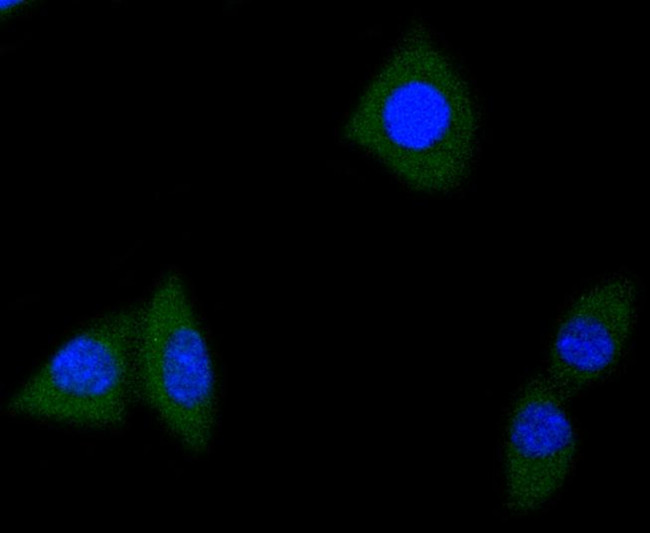
图: 1 / 5
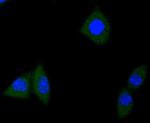
TrkA/TrkB/TrkC Antibody (MA5-32426) in ICC/IF
Immunocytochemical analysis of TrkA/TrkB/TrkC in SH-SY-5Y cells using a TrkA/TrkB/TrkC Monoclonal antibody (Product # MA5-32426) as seen in green. The nuclear counter stain is DAPI (blue). Cells were fixed in paraformaldehyde, permeabilised with 0.25% Triton X100/PBS.
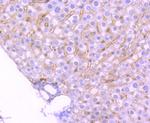
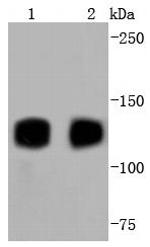
Please note: We are reviewing Western blot images included in the antibody testing data in our catalog, including those provided by third parties. Unless expressly labeled or annotated as “raw-unedited”, Western blot images included in the antibody testing data in our catalog may have been edited, optimized or otherwise adjusted for presentation.


产品信息
MA5-32426
产品规格
种属反应
Human,
Mouse,
Rat
宿主/亚型
Rabbit
/ IgG
Expression System
HEK293 cells
分类
Recombinant Monoclonal
类型
Antibody
克隆号
JJ084-04
抗原
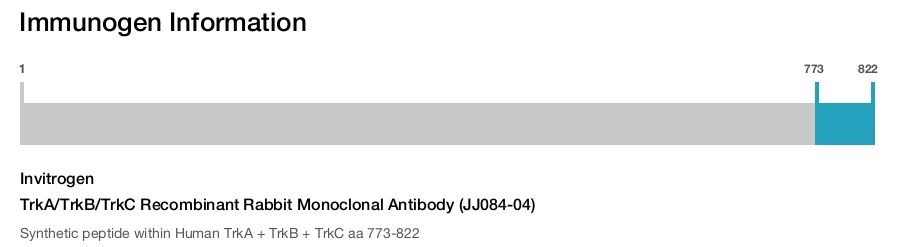
Synthetic peptide within Human TrkB aa 773-822.
偶联物
Unconjugated
Unconjugated
Unconjugated
形式
Liquid
浓度
1 mg/mL
规格
100 µg
纯化类型
Protein A
保存液
TBS, pH 7.4, with 40% Glycerol, 0.05% BSA
内含物
0.05% sodium azide
保存条件
Store at 4°C short term. For long term storage, store at -20°C, avoiding freeze/thaw cycles.
运输条件
Ambient (domestic); Wet ice (international)
RRID
产品详细信息
Recombinant rabbit monoclonal antibodies are produced using in vitro expression systems. The expression systems are developed by cloning in the specific antibody DNA sequences from immunoreactive rabbits. Then, individual clones are screened to select the best candidates for production. The advantages of using recombinant rabbit monoclonal antibodies include: better specificity and sensitivity, lot-to-lot consistency, animal origin-free formulations, and broader immunoreactivity to diverse targets due to larger rabbit immune repertoire.
仅用于科研。不用于诊断过程。未经明确授权不得转售。
篇参考文献 (0)
您是否在文献中引用过该产品?请点击下方按钮邮件告知我们。
生物信息学
蛋白别名: BDNF-tropomyosine receptor kinase B; ETS related protein-neurotrophic receptor tyrosine kinase fusion protein; ETV6-NTRK3 fusion; gp140trk; GP145-TrkB/GP95-TrkB; GP145-TrkC; mTrkC NC1; mTrkC NC2; neural receptor protein-tyrosine kinase (trkB); neural receptor protein-tyrosine kinase (trkC); neurotrophic tyrosine kinase receptor type 2; neurotrophic tyrosine kinase, receptor, type 1; neurotrophic tyrosine kinase, receptor, type 2; neurotrophic tyrosine kinase, receptor, type 3; neurotrophic tyrosine receptor kinase type 2; neurotrophin-3; NTRK2; NTRK3; Oncogene TRK; p140-TrkA; slow nerve growth factor receptor; slow nerve growth factor receptor; TRKC(ki39); splice variant; splicing variant of the Ntrk3 receptor; TEL-TrkC fusion protein; trk tyrosine-specific protein kinase; trk-A; trk-C; TRK1-transforming tyrosine kinase protein; TrkA neurotrophin receptor; trkA proto-oncogene receptor; TrkB; trkB tyrosine kinase; TrkB-T-Shc; trkB.T1; TrkC; trkC tyrosine kinase; TrkC(ki14); slow nerve growth factor receptor; tropomyosin receptor kinase A; tropomyosin-related kinase A; tropomyosin-related kinase B; truncated trkB; tyrosine kinase receptor A; tyrosine kinase receptor B; tyrosine kinase receptor C; tyrosine protein kinase B (trkB) precursor; unnamed protein product
基因别名: DEE58; EIEE58; gp145(trkC); GP145-TrkB; GP145-TrkB/GP95-TrkB; GP145-TrkC; MTC; Ntrk3_tv3; OBHD; p140-TrkA; RATTRKB1; Tkr; Tkrb; TRK; Trk-A; trk-B; TRK1; TRKA; TRKB; TRKB1; TRKC
UniProt ID: (Human) P04629, (Human) Q16620, (Human) Q16288, (Rat) P35739, (Mouse) Q3UFB7, (Mouse) P15209, (Rat) Q63604, (Rat) Q03351, (Mouse) Q6VNS1
Entrez Gene ID: (Human) 4914, (Human) 4915, (Human) 4916, (Rat) 59109, (Mouse) 18211, (Mouse) 18212, (Rat) 25054, (Rat) 29613, (Mouse) 18213
protein kinase activity
protein tyrosine kinase activity
transmembrane receptor protein tyrosine kinase activity
GPI-linked ephrin receptor activity
neurotrophin receptor activity
neurotrophin p75 receptor binding
protein binding
ATP binding
nerve growth factor receptor activity
kinase binding
identical protein binding
protein homodimerization activity
neurotrophin binding
nerve growth factor binding
protease binding
brain-derived neurotrophic factor binding
brain-derived neurotrophic factor-activated receptor activity
p53 binding
transmembrane receptor protein serine/threonine kinase activity
receptor tyrosine kinase binding
protein phosphorylation
transmembrane receptor protein tyrosine kinase signaling pathway
transmembrane receptor protein serine/threonine kinase signaling pathway
spermatogenesis
nervous system development
axon guidance
learning or memory
circadian rhythm
negative regulation of cell proliferation
response to xenobiotic stimulus
programmed cell death involved in cell development
positive regulation of neuron projection development
peptidyl-tyrosine phosphorylation
olfactory nerve development
nerve development
B cell differentiation
neuron projection development
response to nutrient levels
response to nicotine
peptidyl-tyrosine autophosphorylation
nerve growth factor signaling pathway
mechanoreceptor differentiation
positive regulation of programmed cell death
negative regulation of neuron apoptotic process
positive regulation of GTPase activity
positive regulation of angiogenesis
positive regulation of Ras protein signal transduction
protein autophosphorylation
neurotrophin TRK receptor signaling pathway
ephrin receptor signaling pathway
sympathetic nervous system development
neuron development
response to axon injury
detection of temperature stimulus involved in sensory perception of pain
detection of mechanical stimulus involved in sensory perception of pain
response to hydrostatic pressure
response to electrical stimulus
positive regulation of protein kinase B signaling
positive regulation of synaptic transmission, glutamatergic
Sertoli cell development
innervation
axonogenesis involved in innervation
behavioral response to formalin induced pain
positive regulation of ERK1 and ERK2 cascade
cellular response to nicotine
cellular response to growth factor stimulus
cellular response to beta-amyloid
cellular response to nerve growth factor stimulus
response to activity
neuron migration
heart development
positive regulation of cell proliferation
positive regulation of gene expression
neuronal action potential propagation
myelination in peripheral nervous system
positive regulation of cell migration
neurotrophin signaling pathway
positive regulation of apoptotic process
positive regulation of MAPK cascade
response to ethanol
animal organ development
neuron fate specification
positive regulation of axon extension involved in regeneration
negative regulation of astrocyte differentiation
system development
positive regulation of positive chemotaxis
response to corticosterone
lens fiber cell differentiation
cellular response to retinoic acid
cochlea development
postsynaptic density assembly
regulation of presynapse assembly
regulation of neural precursor cell proliferation
learning
central nervous system neuron development
cerebral cortex development
neuron differentiation
brain-derived neurotrophic factor receptor signaling pathway
regulation of GTPase activity
oligodendrocyte differentiation
peripheral nervous system neuron development
positive regulation of axonogenesis
regulation of protein kinase B signaling
long-term synaptic potentiation
trans-synaptic signaling by BDNF, modulating synaptic transmission
negative regulation of beta-amyloid formation
cellular response to brain-derived neurotrophic factor stimulus
negative regulation of anoikis
vasculogenesis
neuromuscular junction development
long-term memory
feeding behavior
regulation of neuron projection development
glutamate secretion
positive regulation of cell projection organization
positive regulation of peptidyl-serine phosphorylation
negative regulation of apoptotic process
regulation of MAPK cascade
retinal rod cell development
regulation of neurotransmitter secretion
regulation of synaptic plasticity
regulation of dendrite development
positive regulation of synaptic transmission
regulation of cytosolic calcium ion concentration
positive regulation of nervous system development
retina development in camera-type eye
cellular response to amino acid stimulus
positive regulation of long term synaptic depression
positive regulation of glucocorticoid receptor signaling pathway
positive regulation of excitatory postsynaptic potential
cell communication
response to light stimulus
response to auditory stimulus
cellular response to tumor necrosis factor
Disclaimer

Clicking the images or links will redirect you to a website hosted by BenchSci that provides third-party scientific content. Neither the content nor the BenchSci technology and processes for selection have been evaluated by us; we are providing them as-is and without warranty of any kind, including for use or application of the Thermo Fisher Scientific products presented.

