Search
Proteintech
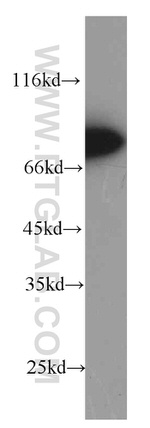
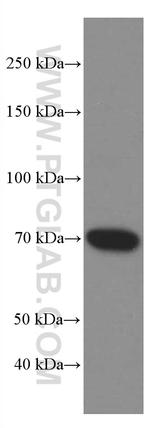
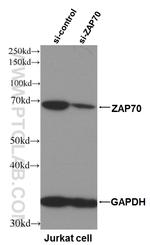
ZAP70 Monoclonal Antibody (1A11G9)
{{$productOrderCtrl.translations['antibody.pdp.commerceCard.promotion.promotions']}}
{{$productOrderCtrl.translations['antibody.pdp.commerceCard.promotion.viewpromo']}}
{{$productOrderCtrl.translations['antibody.pdp.commerceCard.promotion.promocode']}}: {{promo.promoCode}} {{promo.promoTitle}} {{promo.promoDescription}}. {{$productOrderCtrl.translations['antibody.pdp.commerceCard.promotion.learnmore']}}
Additional Information:
{{banner.description}}


产品信息
60200-1-IG
应用
建议稀释比
已发表文章
产品规格
种属反应
Human,
Mouse,
Pig
宿主/亚型
Mouse
/ IgG2a
分类
Monoclonal
类型
Antibody
克隆号
1A11G9
抗原
ZAP70 Fusion Protein Ag7943 (149-493 aa encoded by BC039039)
偶联物
Unconjugated
Unconjugated
Unconjugated
形式
Liquid
浓度
1.37 mg/mL
规格
205.5 µg
纯化类型
Protein A
保存液
PBS, pH 7.3, with 50% glycerol
内含物
0.02% sodium azide
保存条件
-20°C
运输条件
Wet ice (domestic); Dry ice (international)
产品详细信息
Immunogen sequence: STLTHPQRR IDTLNSDGYT PEPARITSPD KPRPMPMDTS VYESPYSDPE ELKDKKLFLK RDNLLIADIE LGCGNFGSVR QGVYRMRKKQ IDVAIKVLKQ GTEKADTEEM MREAQIMHQL DNPYIVRLIG VCQAEALMLV MEMAGGGPLH KFLVGKREEI PVSNVAELLH QVSMGMKYLE EKNFVHRDLA ARNVLLVNRH YAKISDFGLS KALGADDSYY TARSAGKWPL KWYAPECINF RKFSSRSDVW SYGVTMWEAL SYGQKPYKKM KGPEVMAFIE QGKRMECPPE CPPELYALMS DCWIYKWEDR PDFLTVEQRM RACYYSLASK VEGPPGSTQK AEAACA (149-493 aa encoded by BC039039)
靶标信息
ZAP-70 is a cytosolic protein tyrosine kinase that is a member of the Syk family of proteins. ZAP-70 is expressed exclusively in T-cells and natural killer cells and is required for T-cell receptor activation. Upon T cell antigen receptor (TCR) engagement, ZAP70 is phosphorylated on tyrosines 292, 315 and 319 in the interdomain B, located between the SH2 and kinase domains. Phosphorylation of both tyrosines 315 (a Vav binding site) and 319 (a Lck binding site) enhances ZAP70 function in mediating lymphocyte signaling, while tyrosine 292 terminates the transient activation of ZAP70 and attentuates lymphocyte signaling.
仅用于科研。不用于诊断过程。未经明确授权不得转售。
篇参考文献 (0)
您是否在文献中引用过该产品?请点击下方按钮邮件告知我们。
生物信息学
蛋白别名: 70 kDa zeta-associated protein; 70 kDa zeta-chain associated protein; EC 2.7.10.2; FLJ17670; FLJ17679; kinase ZAP70; Selective T cell defect; Syk-related tyrosine kinase; Tyrosine-protein kinase ZAP-70; Tyrosine-protein kinase ZAP-70;TZK; unnamed protein product; ZA70; Zeta chain associated protein kinase 70kDa; zeta chain of T cell receptor associated protein kinase 70kDa; zeta-chain (TCR) associated protein kinase 70kDa; zeta-chain associated protein kinase, 70kD
基因别名: ADMIO2; IMD48; mrtle; mur; SRK; STCD; STD; TZK; ZAP-70; ZAP70
UniProt ID: (Human) P43403, (Mouse) P43404
Entrez Gene ID: (Pig) 100739325, (Human) 7535, (Mouse) 22637
nucleotide binding
phosphotyrosine binding
protein kinase activity
protein tyrosine kinase activity
non-membrane spanning protein tyrosine kinase activity
protein binding
ATP binding
kinase activity
transferase activity
receptor binding
transferase activity, transferring phosphorus-containing groups
immune system process
protein phosphorylation
immune response
transmembrane receptor protein tyrosine kinase signaling pathway
phosphorylation
cell migration
peptidyl-tyrosine phosphorylation
cell differentiation
intracellular signal transduction
peptidyl-tyrosine autophosphorylation
beta selection
positive thymic T cell selection
negative thymic T cell selection
thymic T cell selection
innate immune response
positive regulation of T cell differentiation
positive regulation of alpha-beta T cell differentiation
positive regulation of alpha-beta T cell proliferation
protein autophosphorylation
positive regulation of calcium-mediated signaling
T cell receptor signaling pathway
adaptive immune response
leukocyte cell-cell adhesion
calcium-mediated signaling
T cell differentiation
T cell activation
B cell activation
positive regulation of MAPK cascade
alpha-beta T cell differentiation
leukocyte migration
T cell aggregation
T cell migration
Disclaimer

Clicking the images or links will redirect you to a website hosted by BenchSci that provides third-party scientific content. Neither the content nor the BenchSci technology and processes for selection have been evaluated by us; we are providing them as-is and without warranty of any kind, including for use or application of the Thermo Fisher Scientific products presented.

