Search
Invitrogen
Human Alpha-2 Glycoprotein/ZAG/A2GP1 ELISA Kit
{{$productOrderCtrl.translations['antibody.pdp.commerceCard.promotion.promotions']}}
{{$productOrderCtrl.translations['antibody.pdp.commerceCard.promotion.promocode']}}: {{promo.promoCode}} {{promo.promoTitle}} {{promo.promoDescription}}. {{$productOrderCtrl.translations['antibody.pdp.commerceCard.promotion.learnmore']}}

产品规格
检测灵敏度
0.174 ng/mL
测定范围
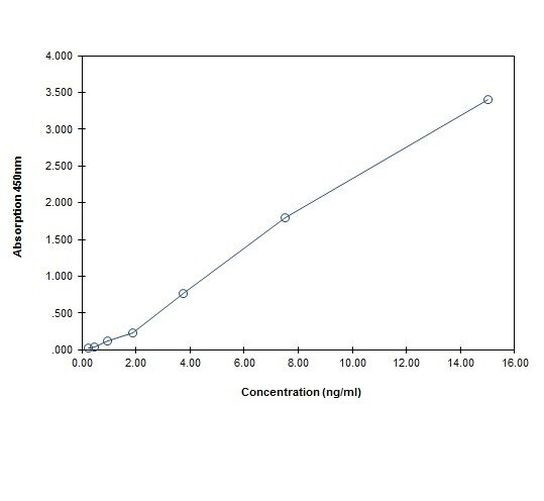
0.23-15.0 ng/mL
检测样本类型/体积
{Plasma=10 µL, Serum=10 µL, Supernatant=10 µL}
手工操作时间
1 hr 20 min
总时间
3 hr 30 min
均相(无需洗涤)
No
批间差异
4.9%
批内差异
5.6%
检测仪器
Absorbance Microplate Reader
产品规格
96 Tests
产品成分
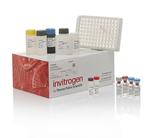
Pre-coated 96 well plate
Standard
Sample Diluent
Assay Buffer concentrate
Biotinylated Detection Antibody
SAV-HRP
Wash Buffer
Chromogen
Stop Solution
Controls
Adhesive Plate Covers
Standard
Sample Diluent
Assay Buffer concentrate
Biotinylated Detection Antibody
SAV-HRP
Wash Buffer
Chromogen
Stop Solution
Controls
Adhesive Plate Covers
运输条件
Wet ice
储存
2-8°C
蛋白名称
AZGP1
Target site-specificity
检测试剂盒格式
Sandwich ELISA Kit
检测抗体结合物
Biotin
标签或染料
HRP
关于本试剂盒
The Human Alpha-2 Glycoprotein (Hu A2GP/ZAG) ELISA quantitates Hu A2GP/ZAG in human serum, plasma, buffered solution, or cell culture medium. The assay will exclusively recognize both natural and recombinant Hu A2GP/ZAG.
原理方法
The Human A2GP/ZAG solid-phase sandwich ELISA (enzyme-linked immunosorbent assay) is designed to measure the amount of the target bound between a matched antibody pair. A target-specific antibody has been pre-coated in the wells of the supplied microplate. Samples, standards, or controls are then added into these wells and bind to the immobilized (capture) antibody. The sandwich is formed by the addition of the second (detector) antibody, a substrate solution is added that reacts with the enzyme-antibody-target complex to produce measurable signal. The intensity of this signal is directly proportional to the concentration of target present in the original specimen.
严格验证
Each manufactured lot of this ELISA kit is quality tested for criteria such as sensitivity, specificity, precision, and lot-to-lot consistency. See manual for more information on validation.
靶标信息
Alpha-2-glycoprotein 1, zinc-binding (AZGP1) is a gene encoding a protein that belongs to the immunoglobulin superfamily. This protein is abundant in various body fluids, such as blood plasma and milk, and is involved in lipid mobilization. AZGP1 is expressed in numerous tissues, including the liver, prostate, and adipose tissue, where it plays a significant role in the regulation of lipid metabolism and adipocyte function. It acts as an adipokine, influencing the breakdown and mobilization of fats, thereby contributing to energy homeostasis. In cancer research, AZGP1 has been highlighted for its potential as a prognostic biomarker, particularly in prostate and breast cancer, where lower expression levels are often associated with poor prognosis. Recent studies have also linked AZGP1 to cachexia, an extreme form of weight loss and muscle wasting, by promoting lipid mobilization in adipose tissue and influencing systemic catabolic states. Due to its multifaceted roles in lipid metabolism and disease processes, AZGP1 is considered a promising target for therapeutic interventions in metabolic and cancer-related disorders.
For Research Use Only. Not for use in diagnostic procedures. Not for resale without express authorization.
篇参考文献 (0)
您是否在文献中引用过该产品?请点击下方按钮邮件告知我们。
生物信息学
蛋白别名 : Zn-alpha-2-GP, Zn-alpha-2-glycoprotein

