Search

Microplastics Virtual Forum
Virtual Event
Jul 29, 2021
- Jul 29, 2021
Microplastics have been found in our oceans, drinking water, and food supply brought about by pollution and manufacturing practices. These particulates can be smaller than the eye can see, and their impact on our environment and our health need to be studied.
Hear from experts as they review sample preparation methods used for various samples from different research groups, and discuss advantages and limitations of analytical solutions such as FTIR microscopy, Raman microscopy and Py-GC-MS, for microplastics analysis.
Connect with our speakers in a live Q&A session after the presentations - a great opportunity to have your burning questions answered directly from our experts in microplastics analysis.
Click on the presentation titles below to learn more.
Agenda and Speakers’ Info
2:00pm – 2:20pm
Nowadays, microplastics are found almost from everywhere and inside everything. There are vast research works on different type of samples, such as water, air, soil, food, biota, etc. For any of the study, before we could identify the microplastics types and quantify the amount, we need to extract microplastics from the samples. Sample preparation workflow is crucial to the accuracy of the analytical results regardless which analytical technique is used.
In this presentation, we will review the sample preparation methods used for various samples from different research groups.
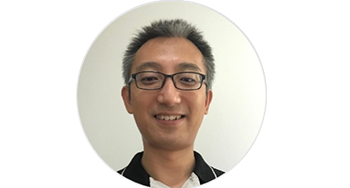
Dr. Wang Rui - Business Development Manager, Spectroscopy, Thermo Fisher Scientific
Dr. Wang Rui joined Thermo Fisher Scientific in 2019 as Business Development Manager for spectroscopy business unit. His current focus is on vibrational microscopy technique for environmental application. Prior to his current job, he worked for Bruker as Product Application Manager in Nano-Analytical Division. He graduated from Nanyang Technological University in 2011.
2.20pm – 2:50pm
An explanation of advantages and limitations are for spectroscopy-based analytical methods will be discussed. Specifically, microspectroscopy techniques (Raman and FTIR microscopy) as well as attenuated total reflectance (ATR) spectroscopy provide options for identifying unknown particles by characterizing their composition, size, and quantity. Resources are available to help make decisions on which system is best for a given application and budget.
Joe Set - Regional Application Scientist (Molecular Spectroscopy), Southeast Asia & Taiwan, Materials & Structural Analysis, Thermo Fisher Scientific
Joe Set has over 13 years of experience in supporting molecular spectroscopy applications and service. Prior to joining Thermo Fisher Scientific, she worked as an application chemist and service engineer for a distributor of Thermo Scientific molecular spectroscopy products. She was also a regional applications engineer in Agilent Technologies for four years. Joe has expertise in FT-IR, FT-NIR, Raman, and UV/Vis spectroscopy, covering diverse industries. Joe holds a BSc in chemistry and biology from University of North Carolina, USA and MSc from the University of Malaya.

2:50pm – 3:20pm
Single-use plastics are persistent pollutants making up approximately 40% of beach litter, which eventually ends up in the marine environment. Due to their characteristics and additional content, micro- and nanoplastics can have complex toxicological effects on marine life through direct ingestion and/or leachates and representing a hazard for ecosystems and for human exposure through consumption and inhalation. Pyrolysis-gas chromatography mass spectrometry (Py-GC-MS) presents a promising approach for surveillance where throughput is critical enabling time-saving detection of bulk amounts of micro- and nanoplastics.
In this presentation, learn analytical solutions for plastics and microplastic analysis using Py-GC-MS, benefits of high-resolution accurate mass spectrometry (HRAM) in microplastics analysis, and workflows for analysis and identification of microplastics using GC Orbitrap and Single Quadrupole GC-MS.
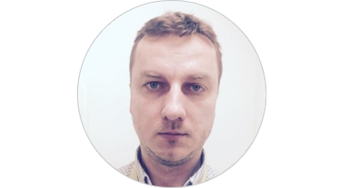
Cristian Cojocariu - Senior Manager, Product Application, Thermo Fisher Scientific, UK
Cristian manages the GC-MS and Trace Elemental applications team at Thermo Fisher Scientific which focuses on applications development support. He has worked in both academia and industrial gaining strong hands-on experience with GC-MS and LC-MS systems used to investigate organic chemicals in biological and environmental samples. Cristian holds Bachelor of Science degree in Ecology & Environmental Protection, a Master of Science degree in Biodiversity, and a PhD in tree physiology from Albert Ludwigs University of Freiburg, Germany.
3.20pm – 3.40pm
Have burning questions on microplastics and/or the presentations? Join experts from Thermo Fisher Scientific as they address your questions in this live Q&A session.
Giveaways and Certificate of Attendance*
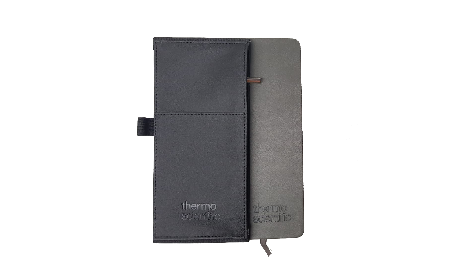
First 30 early bird registrants will receive a gift
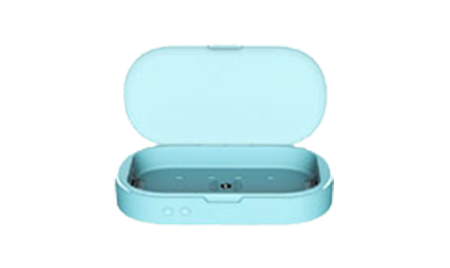
Submit your questions now and the top 5 questions chosen by our speakers will receive a special gift!
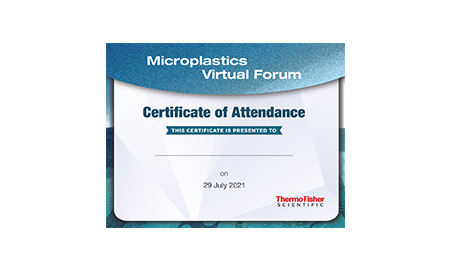
‘Certificate of Attendance’ will be awarded to all attendees for the “Live” event.
*Only participants from Asia Pacific (excluding China comprising Mainland, Hong Kong and Macau) are eligible for the giveaways.
Register to join the Microplastics Virtual Forum
*Required field
Style Sheet for Global Design System