Search
Proteintech
BCAS1 Polyclonal Antibody
{{$productOrderCtrl.translations['antibody.pdp.commerceCard.promotion.promotions']}}
{{$productOrderCtrl.translations['antibody.pdp.commerceCard.promotion.promocode']}}: {{promo.promoCode}} {{promo.promoTitle}} {{promo.promoDescription}}. {{$productOrderCtrl.translations['antibody.pdp.commerceCard.promotion.learnmore']}}
{{$ctrl.translations['antibody.pdp.skuNotes.additionalInformation']}}:
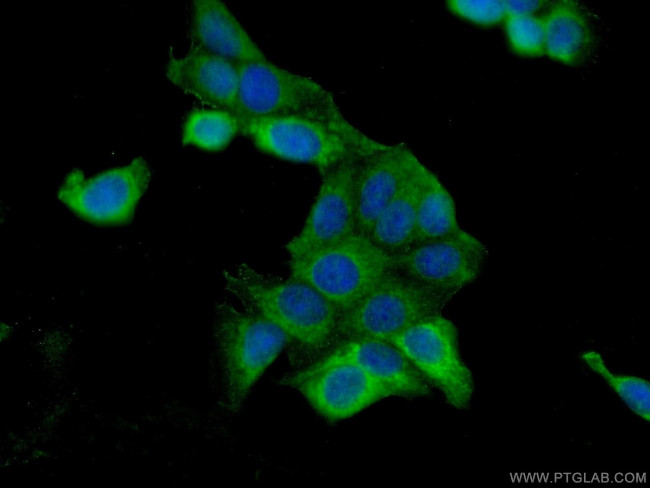

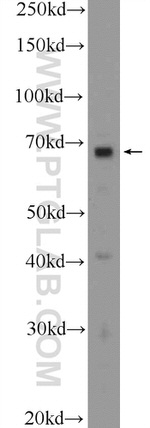
Please note: We are reviewing Western blot images included in the antibody testing data in our catalog, including those provided by third parties. Unless expressly labeled or annotated as “raw-unedited”, Western blot images included in the antibody testing data in our catalog may have been edited, optimized or otherwise adjusted for presentation.


产品信息
25776-1-AP
产品规格
种属反应
Human,
Mouse
宿主/亚型
Rabbit
/ IgG
分类
Polyclonal
类型
Antibody
抗原
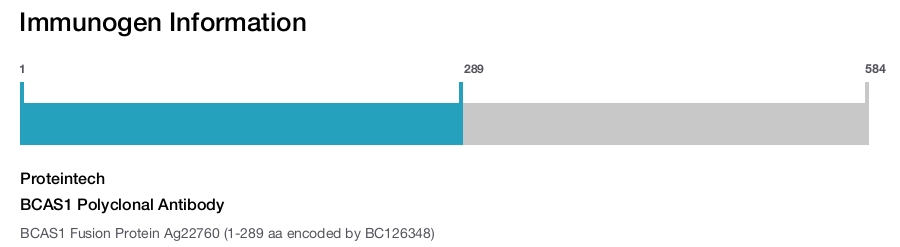
BCAS1 Fusion Protein Ag22760 (1-289 aa encoded by BC126348)
偶联物
Unconjugated
Unconjugated
Unconjugated
形式
Liquid
浓度
0.43 mg/mL
规格
64.5 µg
纯化类型
Antigen affinity chromatography
保存液
PBS, pH 7.3, with 50% glycerol
内含物
0.02% sodium azide
保存条件
-20°C
运输条件
Wet ice (domestic); Dry ice (international)
产品详细信息
Immunogen sequence: MGNQMSVPQ RVEDQENEPE AETYKDNASA LNGVPVVVST HTVQHLEEVD LGISVKTDNV ATSSPETTEI SAVADANGKN LGKEAKPEAP AAKSRFFLML SRPVPGRTGD QAADSSLGSV KLDVSSNKAP ANKDPSESWT LPVAAGPGQD TDKTPGHAPA QDKALSAARD PTLLPPETGG AGGEAPSKPK DSSFFDKFFK LDKGQEKVPG DSQQEAKRAE HQDKVDEVPG LSGQSDDVPA GKDIVDGKEK EGQELGTADC SVPGDPEGLE TAKDDSQAAA IAENNNSIMS (1-289 aa encoded by BC126348)
靶标信息
BCAS1 was identified through positional cloning and was found to be overexpressed in most but not all breast cancer cells lines. Little is known about this protein; BCAS1 is cytoplasmically localized and is thought to form homodimers through coiled-coil structures. High levels of BCAS1 mRNA are seen in brain and prostate tissues, with lower amounts observed in colon, intestine and testis. Cells engineered to overexpress BCAS1 did not lose anchorage-dependent growth or increase their rate of growth, suggesting that BCAS1 is not a prototypical oncogene. The BCAS1 gene was also found to be amplified in other carcinomas such as pancreatic carcinoma, suggesting that BCAS1 may play in important role in the control of cell proliferation.
仅用于科研。不用于诊断过程。未经明确授权不得转售。
篇参考文献 (0)
您是否在文献中引用过该产品?请点击下方按钮邮件告知我们。
生物信息学
蛋白别名: amplified and overexpressed in breast cancer; amplified in breast cancer 1; breast carcinoma amplified sequence 1; NABC1; novel amplified in breast cancer 1; novel amplified in breast cancer 1 homolog; protein having mRNA enriched in synaptosomes 2; unnamed protein product
基因别名: 2210416M21Rik; 9030223A09Rik; AIBC1; NABC1; PMES-2
UniProt ID: (Human) O75363, (Mouse) Q80YN3
Entrez Gene ID: (Human) 8537, (Mouse) 76960
Disclaimer

Clicking the images or links will redirect you to a website hosted by BenchSci that provides third-party scientific content. Neither the content nor the BenchSci technology and processes for selection have been evaluated by us; we are providing them as-is and without warranty of any kind, including for use or application of the Thermo Fisher Scientific products presented.

