Search
Proteintech
BIN2 Polyclonal Antibody
{{$productOrderCtrl.translations['antibody.pdp.commerceCard.promotion.promotions']}}
{{$productOrderCtrl.translations['antibody.pdp.commerceCard.promotion.viewpromo']}}
{{$productOrderCtrl.translations['antibody.pdp.commerceCard.promotion.promocode']}}: {{promo.promoCode}} {{promo.promoTitle}} {{promo.promoDescription}}. {{$productOrderCtrl.translations['antibody.pdp.commerceCard.promotion.learnmore']}}
Additional Information:
{{banner.description}}
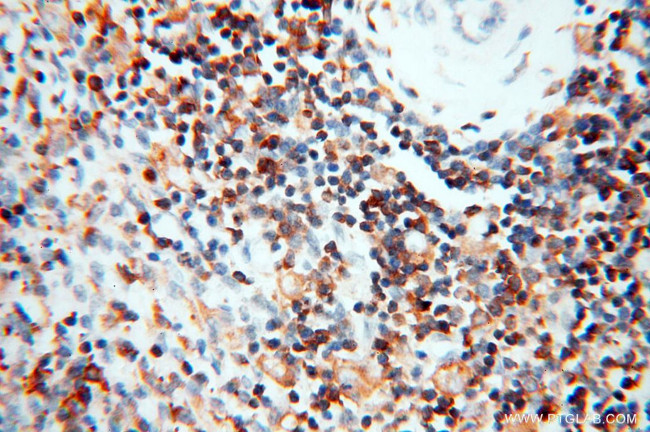
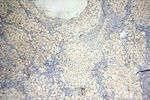
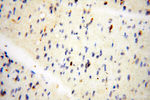
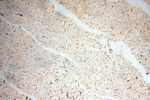
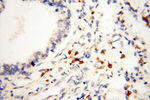


产品信息
14245-1-AP
应用
建议稀释比
已发表文章
产品规格
种属反应
Human
宿主/亚型
Rabbit
/ IgG
分类
Polyclonal
类型
Antibody
抗原
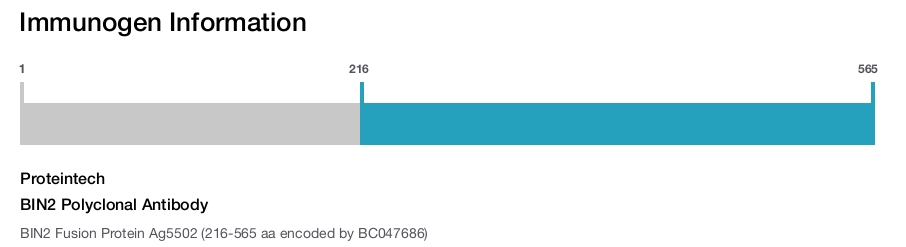
BIN2 Fusion Protein Ag5502 (216-565 aa encoded by BC047686)
偶联物
形式
Liquid
浓度
0.2 mg/mL
规格
30 µg
纯化类型
Antigen affinity chromatography
保存液
PBS, pH 7.3, with 50% glycerol
内含物
0.02% sodium azide
保存条件
-20°C
运输条件
Wet ice (domestic); Dry ice (international)
产品详细信息
Immunogen sequence: LRDVFYREM SKLNHNLYEV MSKLEKQHSN KVFVVKGLSS SSRRSLVISP PVRTATVSSP LTSPTSPSTL SLKSESESVS ATEDLAPDAA QGEDNSEIKE LLEEEEIEKE GSEASSSEED EPLPACNGPA QAQPSPTTER AKSQEEVLPS STTPSPGGAL SPSGQPSSSA TEVVLRTRTA SEGSEQPKKR ASIQRTSAPP SRPPPPRATA SPRPSSGNIP SSPTASGGGS PTSPRASLGT GTASPRTSLE VSPNPEPPEK PVRTPEAKEN ENIHNQNPEE LCTSPTLMTS QVASEPGEAK KMEDKEKDNK LISADSSEGQ DQLQVSMVPE NNNLTAPEPQ EEVSTSENPQ L (216-565 aa encoded by BC047686)
靶标信息
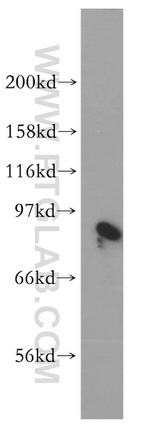
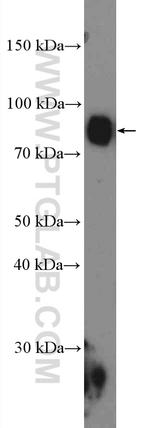
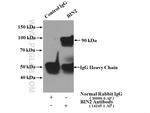
BAR proteins, which are characterized by a common N-terminal BAR domain, are a family of adaptor proteins implicated in a diverse set of cellular processes. BIN1 (bridging integrator 1) and BIN2 are BAR proteins. The human BIN2 gene is located at chromosome 4q22.1, and encodes a 565-amino acid protein with a predicted molecular weight of ~62 kDa. It shows preferential expression in hematopoietic tissues, with highest mRNA levels in spleen and peripheral blood leukocytes and also high levels in thymus, colon, and placenta. BIN2 has been shown to migrate with an apparent mobility of ~80 kDa, and interact with BIN1.
仅用于科研。不用于诊断过程。未经明确授权不得转售。
生物信息学
蛋白别名: ATSK21; BIN2; BRASSINOSTEROID-INSENSITIVE 2; breast cancer associated protein BRAP1; Breast cancer-associated protein 1; Bridging integrator 2; DWARF 12; DWF12; F28A21.120; F28A21_120; SHAGGY-LIKE KINASE 21; SK21; UCU1; ULTRACURVATA 1; unnamed protein product
基因别名: BIN2; BRAP-1; BRAP1
UniProt ID: (Human) Q9UBW5
Entrez Gene ID: (Human) 51411
Disclaimer

Clicking the images or links will redirect you to a website hosted by BenchSci that provides third-party scientific content. Neither the content nor the BenchSci technology and processes for selection have been evaluated by us; we are providing them as-is and without warranty of any kind, including for use or application of the Thermo Fisher Scientific products presented.

