Search
Proteintech
BLVRA Polyclonal Antibody
{{$productOrderCtrl.translations['antibody.pdp.commerceCard.promotion.promotions']}}
{{$productOrderCtrl.translations['antibody.pdp.commerceCard.promotion.viewpromo']}}
{{$productOrderCtrl.translations['antibody.pdp.commerceCard.promotion.promocode']}}: {{promo.promoCode}} {{promo.promoTitle}} {{promo.promoDescription}}. {{$productOrderCtrl.translations['antibody.pdp.commerceCard.promotion.learnmore']}}
Additional Information:
{{banner.description}}
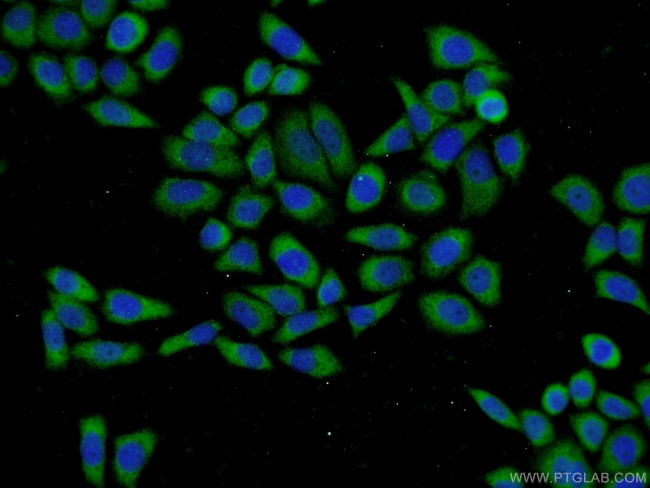
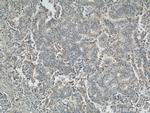
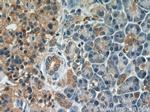
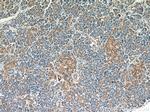
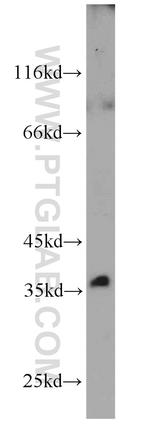
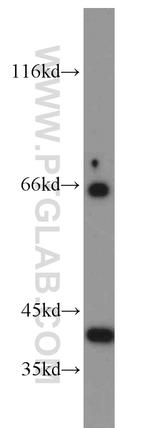
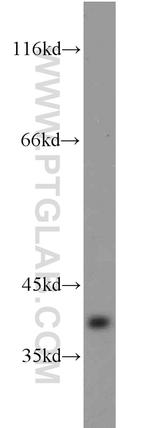


产品信息
10775-1-AP
应用
建议稀释比
已发表文章
产品规格
种属反应
Human,
Mouse
宿主/亚型
Rabbit
/ IgG
分类
Polyclonal
类型
Antibody
抗原
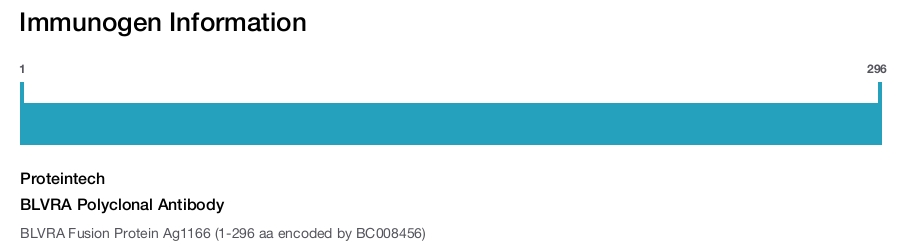
BLVRA Fusion Protein Ag1166 (1-296 aa encoded by BC008456)
偶联物
形式
Liquid
浓度
0.43 mg/mL
规格
64.5 µg
纯化类型
Antigen affinity chromatography
保存液
PBS, pH 7.3, with 50% glycerol
内含物
0.02% sodium azide
保存条件
-20°C
运输条件
Wet ice (domestic); Dry ice (international)
产品详细信息
Immunogen sequence: MNAEPERKF GVVVVGVGRA GSVRMRDLRN PHPSSAFLNL IGFVSRRELG SIDGVQQISL EDALSSQEVE VAYICSESSS HEDYIRQFLN AGKHVLVEYP MTLSLAAAQE LWELAEQKGK VLHEEHVELL MEEFAFLKKE VVGKDLLKGS LLFTAGPLEE ERFGFPAFSG ISRLTWLVSL FGELSLVSAT LEERKEDQYM KMTVCLETEK KSPLSWIEEK GPGLKRNRYL SFHFKSGSLE NVPNVGVNKN IFLKDQNIFV QKLLGQFSEK ELAAEKKRIL HCLGLAEEIQ KYCCSRK (1-296 aa encoded by BC008456)
靶标信息
Biliverdin reductase (BLVR) is a ubiquitously expressed, small cytoplasmic oxidoreductase that catalyzes the reduction of biliverdin to bilirubin. The first step of this process is catalyzed by heme oxygenase, an enzyme that converts heme to iron, carbon monoxide, and biliverdin. BLVR is unique among all enzymes to date in being dual pH/dual cofactor-dependent, as it requires NADH (pH 6.7) or NADPH (pH 8.7) as an electron donor. There are two isoforms of BLVR, biliverdin-IX alpha-reductase (BLVRA), the major component of human adult liver, and biliverdin-IX beta-reductase (BLVRB), found predominantly in fetal liver. The product of BLVR, bilirubin, is an important biological antioxidant, however it is also a neurotoxin and the cause of kernicterus. In addition to being an antioxidant, it inhibits kinase activity and the activity of enzymes such as protein kinase C and NADPH oxidase.
仅用于科研。不用于诊断过程。未经明确授权不得转售。
生物信息学
蛋白别名: Biliverdin reductase A; biliverdin reductase IXalpha; Biliverdin-IX alpha-reductase; BVR A; EC 1.3.1.24; testis tissue sperm-binding protein Li 61n; unnamed protein product
基因别名: 0610006A11Rik; 2500001N03Rik; BLVR; BLVRA; BVR; BVRA; BVRalpha
UniProt ID: (Human) P53004, (Mouse) Q9CY64
Entrez Gene ID: (Human) 644, (Mouse) 109778
fatty acid metabolic process
triglyceride metabolic process
chemotaxis
inflammatory response
response to oxidative stress
gene expression
response to food
response to lipopolysaccharide
lipid oxidation
complement component C5a signaling pathway
heme catabolic process
pigment metabolic process
sensory perception of itch
response to cyclosporin A
oxidation-reduction process
Disclaimer

Clicking the images or links will redirect you to a website hosted by BenchSci that provides third-party scientific content. Neither the content nor the BenchSci technology and processes for selection have been evaluated by us; we are providing them as-is and without warranty of any kind, including for use or application of the Thermo Fisher Scientific products presented.

