Search
Invitrogen
Collagen I Monoclonal Antibody (COL-1)
{{$productOrderCtrl.translations['antibody.pdp.commerceCard.promotion.promotions']}}
{{$productOrderCtrl.translations['antibody.pdp.commerceCard.promotion.promocode']}}: {{promo.promoCode}} {{promo.promoTitle}} {{promo.promoDescription}}. {{$productOrderCtrl.translations['antibody.pdp.commerceCard.promotion.learnmore']}}
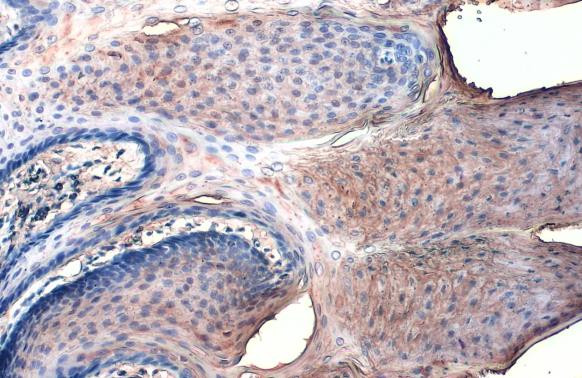
图: 1 / 9
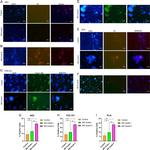
Collagen I Antibody (MA1-26771) in IHC (P)
Collagen I Monoclonal Antibody (COL-1) detects Collagen I protein at cell membrane by immunohistochemical analysis. Sample: Paraffin-embedded rabbit tongue. Collagen I stained by Collagen I Monoclonal Antibody (COL-1) (Product # MA1-26771) diluted at 1:200. Antigen Retrieval: Citrate buffer, pH 6.0, 15 min.
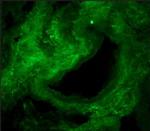
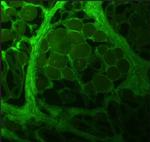
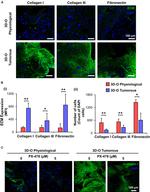
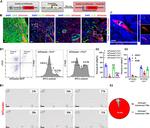
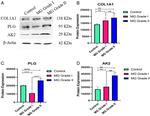
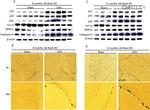
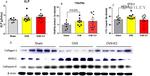
Please note: We are reviewing Western blot images included in the antibody testing data in our catalog, including those provided by third parties. Unless expressly labeled or annotated as “raw-unedited”, Western blot images included in the antibody testing data in our catalog may have been edited, optimized or otherwise adjusted for presentation.


产品信息
MA1-26771
应用
建议稀释比
已发表文章
产品规格
种属反应
Bovine,
Deer,
Human,
Mouse,
Pig,
Rabbit,
Rat
已发表种属
Human,
Mouse,
Pig,
Rabbit,
Rat
宿主/亚型
Mouse
/ IgG1
分类
Monoclonal
类型
Antibody
克隆号
COL-1
抗原
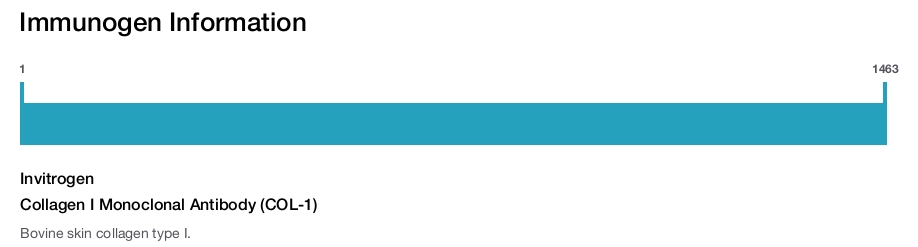
Bovine skin collagen type I.
偶联物
Unconjugated
Unconjugated
Unconjugated
形式
Liquid
浓度
5.2 mg/mL
规格
520 µg
保存液
ascites
内含物
15mM sodium azide
保存条件
Store at 4°C short term. For long term storage, store at -20°C, avoiding freeze/thaw cycles.
运输条件
Ambient (domestic); Wet ice (international)
RRID
产品详细信息
The antibody is reactive with the native (helical) form of collagen type I in ELISA and dot blot. The product is not reactive when tested on thermally denatured molecules. In immunohistochemical staining of acetone-fixed and unfixed frozen sections, a strong staining of connective tissue fibers is seen. Using the dot blot and ELISA techniques, the antibody shows no cross-reactivity with collagen types, II, III, IV, V, VI, VII, IX, X and XI. The epitope recognized by the antibody is sensitive to routine formalin fixation and paraffin embedding.|Store product as a concentrated solution. Centrifuge briefly prior to opening the vial.
靶标信息
Collagen I is a Type I collagen with a triple helix structure comprised of two alpha-1 chains and one alpha-2 chain. Collagen I is a member of group I collagen (fibril-forming collagen) found in most connective tissues, and is abundant in bone, cornea, dermis and tendon. Mutations in the COL1A2 gene encoding the alpha-2 chain are associated with osteogenesis imperfecta types I-IV, Ehlers-Danlos syndrome type VIIB, recessive Ehlers-Danlos syndrome Classical type, idiopathic osteoporosis, and atypical Marfan syndrome. Symptoms associated with mutations in the COL1A2 gene which codes for the alpha-2 chain, however, tend to be less severe than mutations in the COL1A1 gene, reflecting the different role of alpha-2 chains in matrix integrity. Reciprocal translocations between chromosomes 17 and 22, where Collagen Type 1 genes and the gene for platelet derived growth factor beta are located, are associated with a particular type of skin tumor called dermatofibrosarcoma protuberans, resulting from unregulated expression of the growth factor. Two transcripts, resulting from the use of alternate polyadenylation signals, have been identified.
仅用于科研。不用于诊断过程。未经明确授权不得转售。
生物信息学
蛋白别名: alpha 1 (I) chain propeptide; alpha 1 type I collagen; alpha 2 type I procollagen; alpha 2(I) procollagen; alpha 2(I)-collagen; alpha-1 collagen type 1; alpha-1 collagen type I; alpha-1 type 1 collagen; alpha-1 type I collagen; alpha-2 type I collagen; alpha1 chain of type I collagen; alpha1(I) procollagen; alpha2 chain of type I collagen; COL1; COL1A1; COL1A1; matrix protein; collagen 1 alpha 2 chain; collagen 1 pro-alpha-2 chain; collagen alpha 1 chain type I; Collagen alpha-1(I) chain; collagen alpha-1(I) chain preproprotein; collagen Col1-ColIII-1; collagen Col1-ColIII-2; collagen COL1A2; collagen I alpha-2 polypeptide; collagen I, alpha-2 polypeptide; collagen of skin, tendon and bone, alpha-1 chain; collagen of skin, tendon and bone, alpha-2 chain; collagen type I alpha 1; collagen, type 1, alpha 1; collagen, type I, alpha 1; collagen, type I, alpha 2; epididymis secretory sperm binding protein; extracellular matrix protein; pre-pro-alpha-2 type I collagen; prepro-alpha-1 collagen type I; pro-alpha-1 collagen type 1; pro-alpha-1 type I collagen; procollagen type I, alpha 1; procollagen, type 1, alpha 1; procollagen, type I, alpha 1; procollagen, type I, alpha 2; Type I Collagen; type I proalpha 1; type I procollagen; type I procollagen alpha 1 chain; type I-alpha 1 collagen; unnamed protein product
基因别名: CAFYD; Col1a-1; Col1a-2; Cola-1; Cola-2; Cola1; Cola2; COLIA1; EDSARTH1; EDSARTH2; EDSC; EDSCV; Mov-13; Mov13; OI1; OI2; OI3; OI4; oim
protease binding
extracellular matrix structural constituent
protein binding
extracellular matrix structural constituent conferring tensile strength
identical protein binding
platelet-derived growth factor binding
metal ion binding
protein binding, bridging
SMAD binding
extracellular matrix structural protein
skeletal system development
ossification
blood vessel development
osteoblast differentiation
response to nutrient
visual perception
sensory perception of sound
response to xenobiotic stimulus
response to mechanical stimulus
positive regulation of epithelial to mesenchymal transition
collagen fibril organization
positive regulation of cell migration
response to nutrient levels
response to estradiol
response to insulin
collagen biosynthetic process
protein localization to nucleus
tooth mineralization
response to hydrogen peroxide
response to peptide hormone
skin morphogenesis
cellular response to fibroblast growth factor stimulus
positive regulation of transcription, DNA-templated
animal organ development
response to steroid hormone
embryonic skeletal system development
system development
response to cAMP
response to hyperoxia
cellular response to mechanical stimulus
cellular response to retinoic acid
cellular response to vitamin E
cellular response to glucose stimulus
cellular response to tumor necrosis factor
cellular response to epidermal growth factor stimulus
cellular response to transforming growth factor beta stimulus
positive regulation of canonical Wnt signaling pathway
response to fluoride
cellular response to fluoride
cellular response to acetaldehyde
intramembranous ossification
endochondral ossification
negative regulation of cell-substrate adhesion
protein transport
face morphogenesis
bone trabecula formation
cartilage development involved in endochondral bone morphogenesis
cellular response to amino acid stimulus
transforming growth factor beta receptor signaling pathway
Rho protein signal transduction
regulation of blood pressure
odontogenesis
skin development
bone mineralization
collagen metabolic process
protein heterotrimerization
extracellular matrix assembly
collagen-activated tyrosine kinase receptor signaling pathway
skeletal system morphogenesis
response to norepinephrine
cellular response to thyroid hormone stimulus
cellular response to aldehyde
Disclaimer

Clicking the images or links will redirect you to a website hosted by BenchSci that provides third-party scientific content. Neither the content nor the BenchSci technology and processes for selection have been evaluated by us; we are providing them as-is and without warranty of any kind, including for use or application of the Thermo Fisher Scientific products presented.

