Search
Proteintech
DAAM1 Polyclonal Antibody
{{$productOrderCtrl.translations['antibody.pdp.commerceCard.promotion.promotions']}}
{{$productOrderCtrl.translations['antibody.pdp.commerceCard.promotion.promocode']}}: {{promo.promoCode}} {{promo.promoTitle}} {{promo.promoDescription}}. {{$productOrderCtrl.translations['antibody.pdp.commerceCard.promotion.learnmore']}}
{{$ctrl.translations['antibody.pdp.skuNotes.additionalInformation']}}:
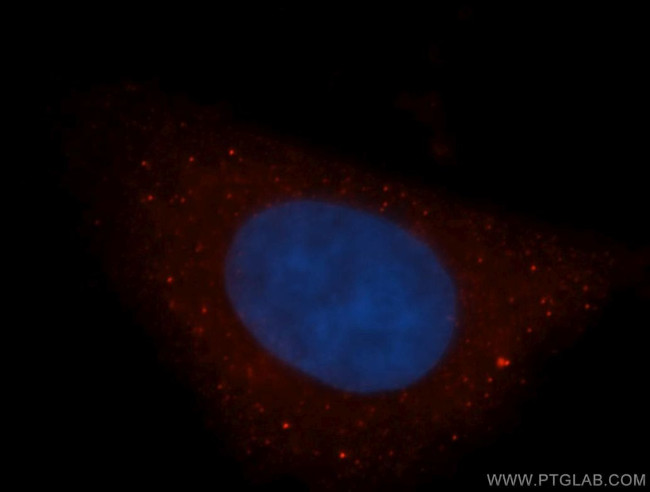
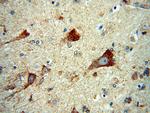
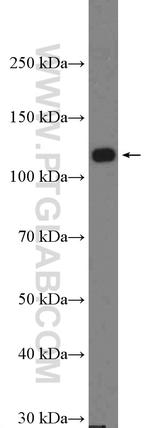
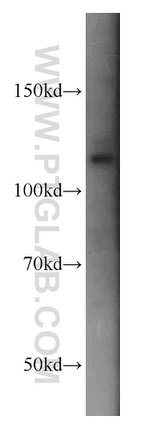
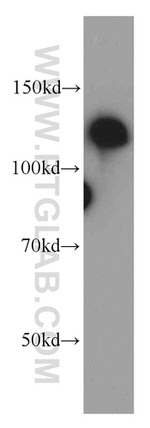
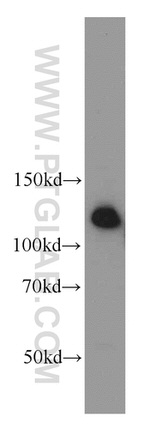
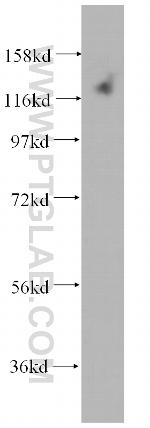
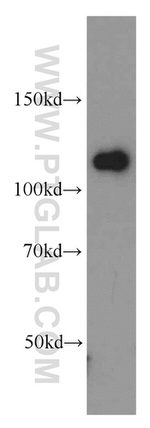
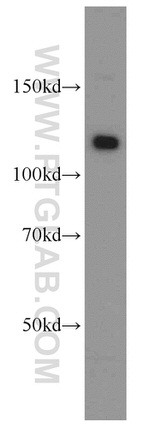
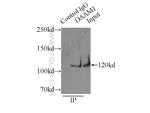
Please note: We are reviewing Western blot images included in the antibody testing data in our catalog, including those provided by third parties. Unless expressly labeled or annotated as “raw-unedited”, Western blot images included in the antibody testing data in our catalog may have been edited, optimized or otherwise adjusted for presentation.


产品信息
14876-1-AP
应用
建议稀释比
已发表文章
产品规格
种属反应
Human,
Mouse,
Rat
已发表种属
Human,
Mouse
宿主/亚型
Rabbit
/ IgG
分类
Polyclonal
类型
Antibody
抗原
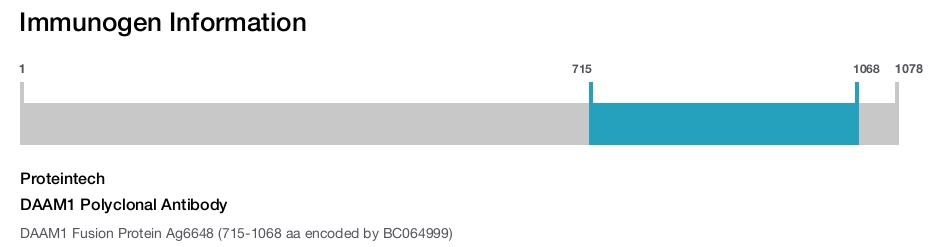
DAAM1 Fusion Protein Ag6648 (715-1068 aa encoded by BC064999)
偶联物
Unconjugated
Unconjugated
Unconjugated
形式
Liquid
浓度
0.21 mg/mL
规格
31.5 µg
纯化类型
Antigen affinity chromatography
保存液
PBS, pH 7.3, with 50% glycerol
内含物
0.02% sodium azide
保存条件
-20°C
运输条件
Wet ice (domestic); Dry ice (international)
产品详细信息
This antibody well recognizes the endogenous DAAM1 protein around 120 kDa.
Immunogen sequence: KDMLEQLLK FVPEKSDIDL LEEHKHELDR MAKADRFLFE MSRINHYQQR LQSLYFKKKF AERVAEVKPK VEAIRSGSEE VFRSGALKQL LEVVLAFGNY MNKGQRGNAY GFKISSLNKI ADTKSSIDKN ITLLHYLITI VENKYPSVLN LNEELRDIPQ AAKVNMTELD KEISTLRSGL KAVETELEYQ KSQPPQPGDK FVSVVSQFIT VASFSFSDVE DLLAEAKDLF TKAVKHFGEE AGKIQPDEFF GIFDQFLQAV SEAKQENENM RKKKEEEERR ARMEAQLKEQ RERERKMRKA KENSEESGEF DDLVSALRSG EVFDKDLSKL KRNRKRITNQ MTDSSRERPI TKLNF (715-1068 aa encoded by BC064999)
靶标信息
DAAM1 is a diaphanous-related formin first studied as a novel Disheveled binding protein and shown to be crucial for the planar cell polarity pathway in Xenopus. DAAM1, like other formins, directs nucleation and elongation of new actin filaments using its conserved formin-homology-2 (FH2) domain. It is a Rho-regulated formin implicated in neuronal development and regulation of gastrulation. It was identified as a binding protein of the Wnt receptor-associated protein Disheveled. It also binds the GTP-bound RhoA and increases its GTP-bound form population in cells. It exists in an autoinhibited state via intramolecular interactions between its amino-terminal GBD and carboxyl-terminal DAD domains. Structurally the protein includes a GTPase-binding domain (GBD), a diaphanous inhibitory domain (DID), and a coiled-coil region followed by the FH1, FH2 and C-terminal diaphanous auto-regulatory domain (DAD). In humans, the DAAM1 gene is mapped to chromosome 14q23.1.
仅用于科研。不用于诊断过程。未经明确授权不得转售。
生物信息学
蛋白别名: unnamed protein product
UniProt ID: (Human) Q9Y4D1, (Mouse) Q8BPM0
Entrez Gene ID: (Human) 23002, (Rat) 314212, (Mouse) 208846
Disclaimer

Clicking the images or links will redirect you to a website hosted by BenchSci that provides third-party scientific content. Neither the content nor the BenchSci technology and processes for selection have been evaluated by us; we are providing them as-is and without warranty of any kind, including for use or application of the Thermo Fisher Scientific products presented.

