Search
Proteintech
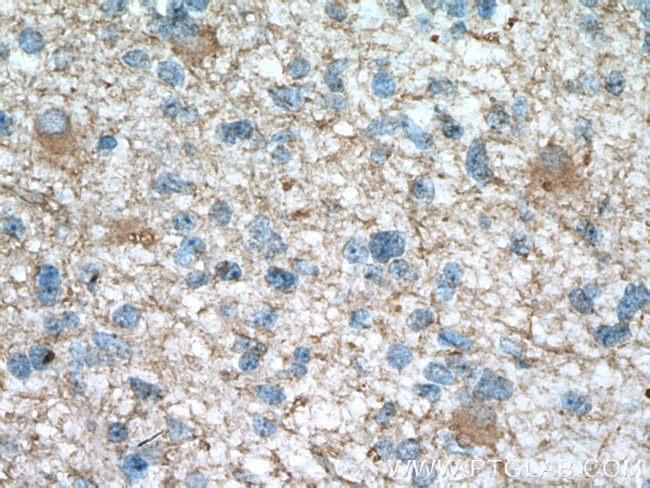
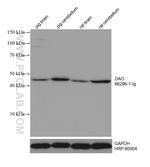
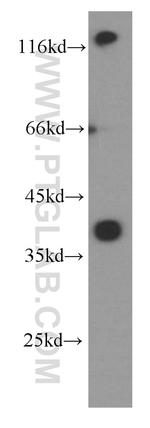
DAO Monoclonal Antibody (1C12F4)
{{$productOrderCtrl.translations['antibody.pdp.commerceCard.promotion.promotions']}}
{{$productOrderCtrl.translations['antibody.pdp.commerceCard.promotion.viewpromo']}}
{{$productOrderCtrl.translations['antibody.pdp.commerceCard.promotion.promocode']}}: {{promo.promoCode}} {{promo.promoTitle}} {{promo.promoDescription}}. {{$productOrderCtrl.translations['antibody.pdp.commerceCard.promotion.learnmore']}}
Additional Information:
{{banner.description}}



产品信息
66296-1-IG
产品规格
宿主/亚型
Mouse
/ IgG1
分类
Monoclonal
类型
Antibody
克隆号
1C12F4
抗原
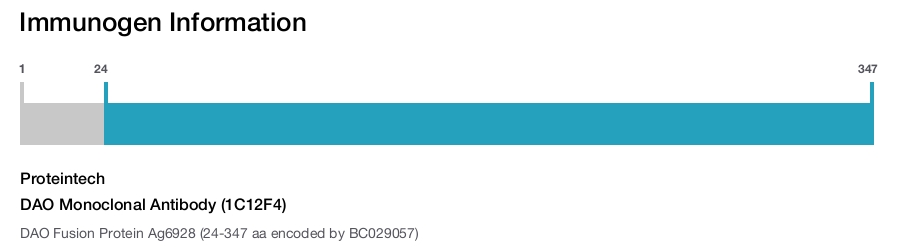
DAO Fusion Protein Ag6928 (24-347 aa encoded by BC029057)
偶联物
Unconjugated
Unconjugated
Unconjugated
形式
Liquid
浓度
1 mg/mL
规格
150 µg
保存条件
-20°C
运输条件
Wet ice (domestic); Dry ice (international)
产品详细信息
Immunogen sequence: HSVLQPLDI KVYADRFTPL TTTDVAAGLW QPYLSDPNNP QEADWSQQTF DYLLSHVHSP NAENLGLFLI SGYNLFHEAI PDPSWKDTVL GFRKLTPREL DMFPDYGYGW FHTSLILEGK NYLQWLTERL TERGVKFFQR KVESFEEVAR EGADVIVNCT GVWAGALQRD PLLQPGRGQI MKVDAPWMKH FILTHDPERG IYNSPYIIPG TQTVTLGGIF QLGNWSELNN IQDHNTIWEG CCRLEPTLKN ARIIGERTGF RPVRPQIRLE REQLRTGPSN TEVIHNYGHG GYGLTIHWGC ALEAAKLFGR ILEEKKLSRM PPSHL (24-347 aa encoded by B C029057)
靶标信息
This gene encodes the peroxisomal enzyme D-amino acid oxidase. The enzyme is a flavoprotein which uses flavin adenine dinucleotide (FAD) as its prosthetic group. Its substrates include a wide variety of D-amino acids, but it is inactive on the naturally occurring L-amino acids. Its biological function is not known; it may act as a detoxifying agent which removes D-amino acids that accumulate during aging. In mice, it degrades D-serine, a co-agonist of the NMDA receptor. This gene may play a role in the pathophysiology of schizophrenia.
仅用于科研。不用于诊断过程。未经明确授权不得转售。
篇参考文献 (0)
您是否在文献中引用过该产品?请点击下方按钮邮件告知我们。
Disclaimer

Clicking the images or links will redirect you to a website hosted by BenchSci that provides third-party scientific content. Neither the content nor the BenchSci technology and processes for selection have been evaluated by us; we are providing them as-is and without warranty of any kind, including for use or application of the Thermo Fisher Scientific products presented.

