Search
Proteintech
FC tag Polyclonal Antibody
{{$productOrderCtrl.translations['antibody.pdp.commerceCard.promotion.promotions']}}
{{$productOrderCtrl.translations['antibody.pdp.commerceCard.promotion.viewpromo']}}
{{$productOrderCtrl.translations['antibody.pdp.commerceCard.promotion.promocode']}}: {{promo.promoCode}} {{promo.promoTitle}} {{promo.promoDescription}}. {{$productOrderCtrl.translations['antibody.pdp.commerceCard.promotion.learnmore']}}
Additional Information:
{{banner.description}}
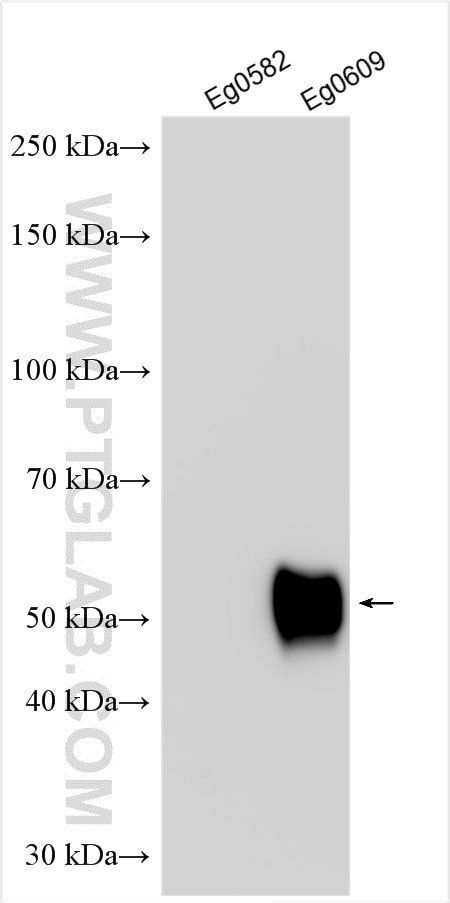

产品信息
28108-1-AP
产品规格
种属反应
Mouse
宿主/亚型
Rabbit
/ IgG
分类
Polyclonal
类型
Antibody
抗原
Recombinant protein
偶联物
形式
Liquid
纯化类型
Antigen affinity chromatography
保存液
PBS with 50% glycerol
内含物
0.02% sodium azide
保存条件
-20°C
运输条件
Wet ice
产品详细信息
Immunogen sequence: PRGPTIKPCP PCKCPAPNLL GGPSVFIFPP KIKDVLMISL SPIVTCVVVD VSEDDPDVQI SWFVNNVEVH TAQTQTHRED YNSTLRVVSA LPIQHQDWMS GKEFKCKVNN KDLPAPIERT ISKPKGSVRA PQVYVLPPPE EEMTKKQVTL TCMVTDFMPE DIYVEWTNNG KTELNYKNTE PVLDSDGSYF MYSKLRVEKK NWVERNSYSC SVVHEGLHNH HTTKSFSRTP GK
靶标信息
The FC antibody fragment refers to a specific part of an antibody molecule, known as the fragment crystallizable region. It plays a crucial role in the immune response and has important functions in antibody-mediated immune reactions. The structure of the FC antibody fragment typically consists of the constant region of the antibody heavy chain. This region contains a specific amino acid sequence that allows the fragment to bind to various immune cells and molecules, such as Fc receptors and complement proteins. The FC fragment is responsible for initiating effector functions, such as antibody-dependent cellular cytotoxicity (ADCC), antibody-dependent cellular phagocytosis (ADCP), and complement-dependent cytotoxicity (CDC). The FC antibody fragment acts as a bridge between the antibody and the immune system, facilitating the elimination of pathogens, infected cells, or other foreign substances. In addition to its immune functions, the FC region also plays a role in antibody stability and half-life. It can influence the pharmacokinetics and biodistribution of therapeutic antibodies.
仅用于科研。不用于诊断过程。未经明确授权不得转售。
篇参考文献 (0)
您是否在文献中引用过该产品?请点击下方按钮邮件告知我们。
生物信息学
蛋白别名: fc fragment
Disclaimer

Clicking the images or links will redirect you to a website hosted by BenchSci that provides third-party scientific content. Neither the content nor the BenchSci technology and processes for selection have been evaluated by us; we are providing them as-is and without warranty of any kind, including for use or application of the Thermo Fisher Scientific products presented.

