Search
Invitrogen
GFAP Monoclonal Antibody (ASTRO6)
{{$productOrderCtrl.translations['antibody.pdp.commerceCard.promotion.promotions']}}
{{$productOrderCtrl.translations['antibody.pdp.commerceCard.promotion.promocode']}}: {{promo.promoCode}} {{promo.promoTitle}} {{promo.promoDescription}}. {{$productOrderCtrl.translations['antibody.pdp.commerceCard.promotion.learnmore']}}
{{$ctrl.translations['antibody.pdp.skuNotes.additionalInformation']}}:
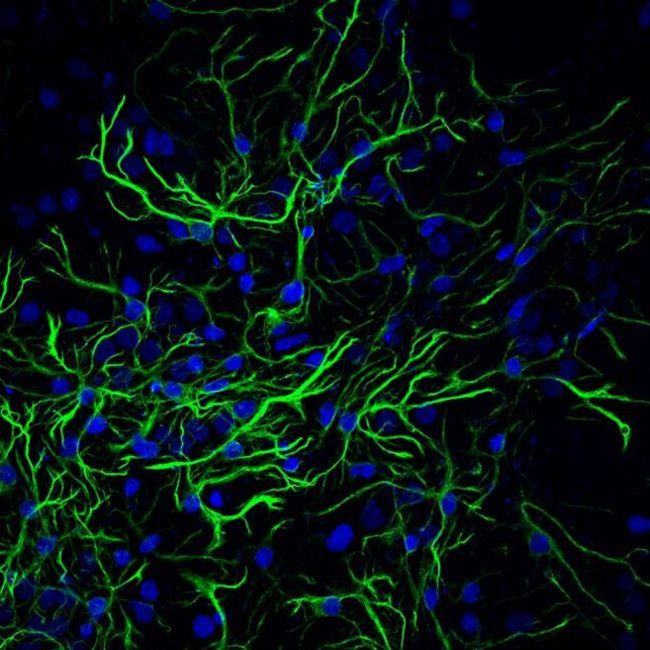
图: 1 / 38
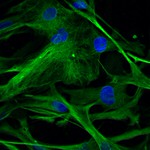
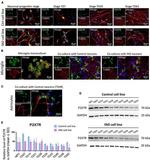
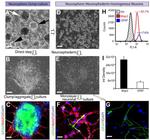
GFAP Antibody (MA5-12023) in ICC/IF
Immunofluorescent analysis of glial fibrillary acidic protein (GFAP) in E18 Sparague Dawley primary cortical neuronal cells containing astrocytes. The cells were fixed with 4% formaldehyde for 15 mins, permeabilized with 0.25% Triton X-100 in PBS for 10 mins, and blocked with 3% BSA in PBS for 30 mins at RT. Cells were stained with a GFAP mouse monoclonal antibody (Product # MA5-12023) at a dilution of 1:200 in 3% BSA in PBS for 1 hr at RT, and then incubated with Invitrogen™ AlexaFluor™ 488 Plus goat anti-mouse IgG secondary antibody (Pro... View More
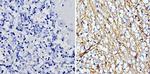
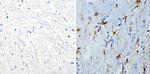
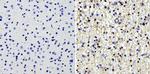
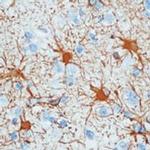
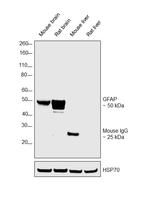
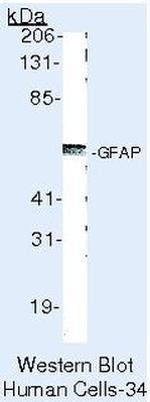
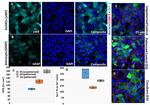


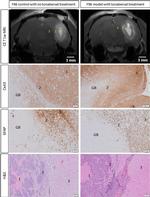
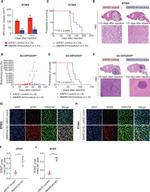
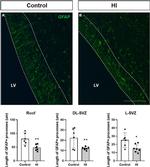
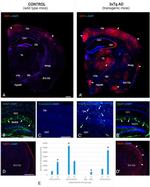
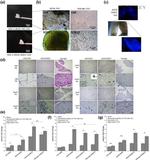
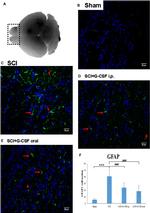
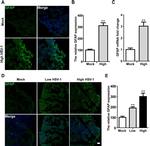
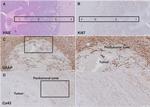
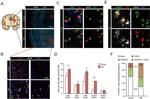
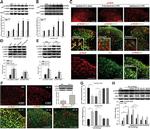
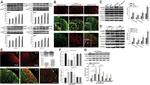
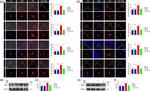
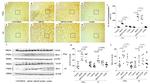
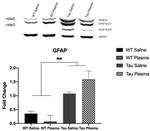
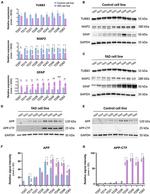
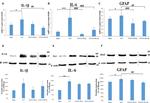
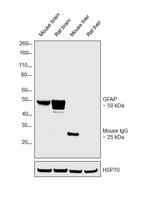
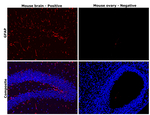
Please note: We are reviewing Western blot images included in the antibody testing data in our catalog, including those provided by third parties. Unless expressly labeled or annotated as “raw-unedited”, Western blot images included in the antibody testing data in our catalog may have been edited, optimized or otherwise adjusted for presentation.


产品信息
MA5-12023
应用
建议稀释比
已发表文章
产品规格
已发表种属
Human,
Mouse,
Pig,
Rat
宿主/亚型
Mouse
/ IgG1
分类
Monoclonal
类型
Antibody
克隆号
ASTRO6
抗原
Glial Fibrillary Acidic Protein
偶联物
Unconjugated
Unconjugated
Unconjugated
形式
Liquid
浓度
200 mg/mL
规格
100 mg
保存条件
4°C
运输条件
Ambient (domestic); Wet ice (international)
RRID
产品详细信息
MA5-12023 targets Glial Fibrillary Acidic Protein in IF, IHC (P), and WB applications and shows reactivity with Chicken, Human, Porcine, and Rat samples.
The MA5-12023 immunogen is glial Fibrillary Acidic Protein.
MA5-12023 was successfully used to detect astrocytes in E18 Sparague Dawley primary cortical cells.
靶标信息
GFAP (Glial fibrillary acidic protein) is a member of the class III intermediate filament protein family. GFAP is heavily and specifically expressed in astrocytes and certain astroglia of the central nervous system, in satellite cells of peripheral ganglia, and in non-myelinating Schwann cells of peripheral nerves. In addition, neural stem cells strongly express GFAP. Antibodies to GFAP are very useful as markers of astrocytic cells. In addition, many types of brain tumor, presumably derived from astrocytic cells, heavily express GFAP. GFAP is also found in the lens epithelium, Kupffer cells of the liver, in some cells in salivary tumors and has been reported in erythrocytes. GFAP is used as a marker to distinguish astrocytes from other glial cells during development. Mutations in this gene cause Alexander disease, a rare disorder of astrocytes in the central nervous system. Alternative splicing of the GFAP gene results in multiple transcript variants encoding distinct isoforms.
仅用于科研。不用于诊断过程。未经明确授权不得转售。
Disclaimer

Clicking the images or links will redirect you to a website hosted by BenchSci that provides third-party scientific content. Neither the content nor the BenchSci technology and processes for selection have been evaluated by us; we are providing them as-is and without warranty of any kind, including for use or application of the Thermo Fisher Scientific products presented.

