Search
Proteintech
GLDC Polyclonal Antibody
{{$productOrderCtrl.translations['antibody.pdp.commerceCard.promotion.promotions']}}
{{$productOrderCtrl.translations['antibody.pdp.commerceCard.promotion.promocode']}}: {{promo.promoCode}} {{promo.promoTitle}} {{promo.promoDescription}}. {{$productOrderCtrl.translations['antibody.pdp.commerceCard.promotion.learnmore']}}
{{$ctrl.translations['antibody.pdp.skuNotes.additionalInformation']}}:
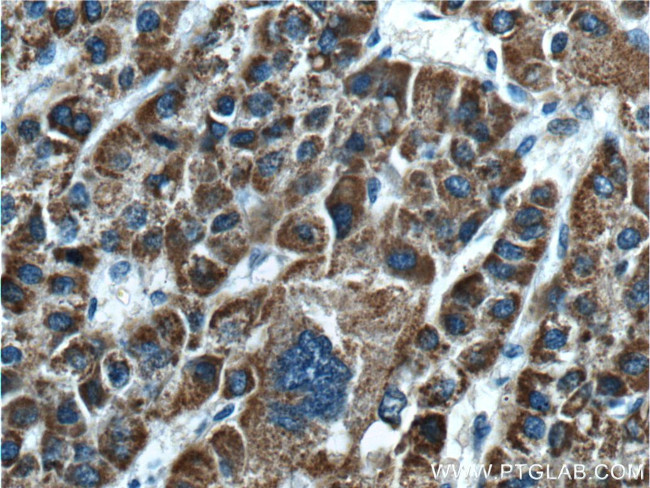
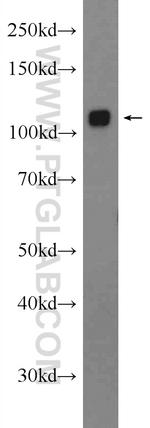
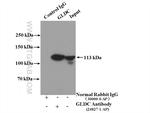
Please note: We are reviewing Western blot images included in the antibody testing data in our catalog, including those provided by third parties. Unless expressly labeled or annotated as “raw-unedited”, Western blot images included in the antibody testing data in our catalog may have been edited, optimized or otherwise adjusted for presentation.


产品信息
24827-1-AP
应用
建议稀释比
已发表文章
产品规格
种属反应
Human,
Mouse
宿主/亚型
Rabbit
/ IgG
分类
Polyclonal
类型
Antibody
抗原
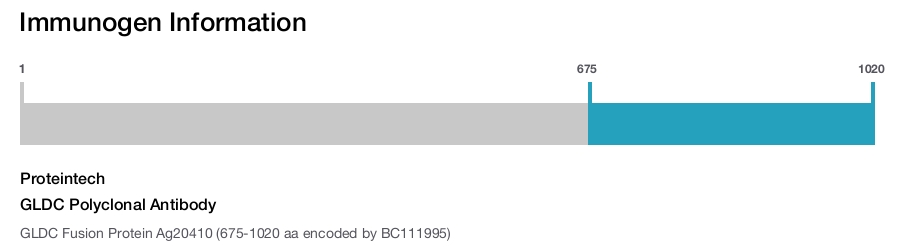
GLDC Fusion Protein Ag20410 (675-1020 aa encoded by BC111995)
偶联物
Unconjugated
Unconjugated
Unconjugated
形式
Liquid
浓度
0.33 mg/mL
规格
49.5 µg
纯化类型
Antigen affinity chromatography
保存液
PBS, pH 7.3, with 50% glycerol
内含物
0.02% sodium azide
保存条件
-20°C
运输条件
Wet ice (domestic); Dry ice (international)
产品详细信息
Immunogen sequence: NIDAVHLKA MVDKHKENLA AIMITYPSTN GVFEENISDV CDLIHQHGGQ VYLDGANMNA QVGICRPGDF GSDVSHLNLH KTFCIPHGGG GPGMGPIGVK KHLAPFLPNH PVISLKRNED ACPVGTVSAA PWGSSSILPI SWAYIKMMGG KGLKQATETA ILNANYMAKR LETHYRILFR GARGYVGHEF ILDTRPFKKS ANIEAVDVAK RLQDYGFHAP TMSWPVAGTL MVEPTESEDK AELDRFCDAM ISIRQEIADI EEGRIDPRVN PLKMSPHSLT CVTSSHWDRP YSREVAAFPL PFVKPENKFW PTIARIDDIY GDQHLVCTCP PMEVYESPFS EQKRASS (675-1020 aa encoded by BC111995)
靶标信息
Degradation of glycine is brought about by the glycine cleavage system, which is composed of four mitochondrial protein components: P protein (a pyridoxal phosphate-dependent glycine decarboxylase), H protein (a lipoic acid-containing protein), T protein (a tetrahydrofolate-requiring enzyme), and L protein (a lipoamide dehydrogenase). The protein is the P protein, which binds to glycine and enables the methylamine group from glycine to be transferred to the T protein. Defects in this gene are a cause of nonketotic hyperglycinemia (NKH).
仅用于科研。不用于诊断过程。未经明确授权不得转售。
生物信息学
蛋白别名: glycine cleavage system P protein; glycine cleavage system protein P; glycine decarboxylase P-protein; glycine dehydrogenase (aminomethyl-transferring); glycine dehydrogenase [decarboxylating], mitochondrial; nonketotic hyperglycinemia; RP11-472F14.1; unnamed protein product
基因别名: b2b2679Clo; D030049L12Rik; D19Wsu57e; GCE; GCE1; GCSP; HYGN1
UniProt ID: (Human) P23378, (Mouse) Q91W43
Entrez Gene ID: (Human) 2731, (Mouse) 104174
Disclaimer

Clicking the images or links will redirect you to a website hosted by BenchSci that provides third-party scientific content. Neither the content nor the BenchSci technology and processes for selection have been evaluated by us; we are providing them as-is and without warranty of any kind, including for use or application of the Thermo Fisher Scientific products presented.

