Search
Invitrogen
GLUT1 Polyclonal Antibody
{{$productOrderCtrl.translations['antibody.pdp.commerceCard.promotion.promotions']}}
{{$productOrderCtrl.translations['antibody.pdp.commerceCard.promotion.viewpromo']}}
{{$productOrderCtrl.translations['antibody.pdp.commerceCard.promotion.promocode']}}: {{promo.promoCode}} {{promo.promoTitle}} {{promo.promoDescription}}. {{$productOrderCtrl.translations['antibody.pdp.commerceCard.promotion.learnmore']}}
Additional Information:
{{banner.description}}
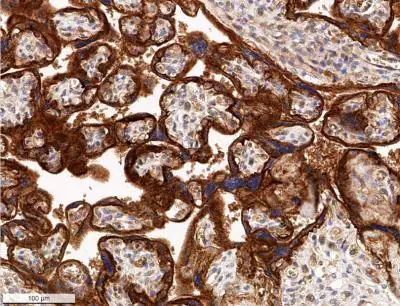
图: 1 / 14
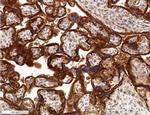
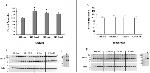
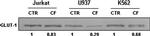
GLUT1 Antibody (PA1-46152) in IHC (P)
Immunohistochemical analysis of GLUT1 in formalin-fixed paraffin-embedded tissue section of human placenta. Samples were incubated in GLUT1 polyclonal antibody (Product # PA1-46152) using a dilution of 1:200. The staining was developed using HRP-DAB detection method and the sections were further counterstained with hematoxylin. This antibody generated a specific strong membrane cytoplasmic staining of Glut1... View More
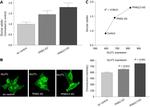
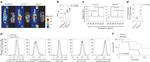
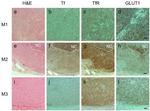
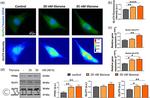
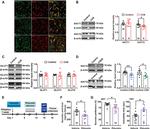
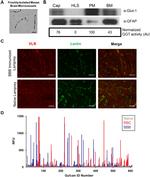
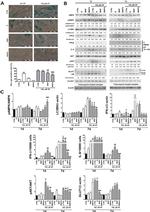
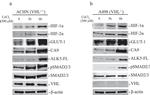


产品信息
PA1-46152
应用
建议稀释比
已发表文章
产品规格
已发表种属
Hamster,
Human,
Mouse,
Rabbit
宿主/亚型
Rabbit
/ IgG
分类
Polyclonal
类型
Antibody
抗原
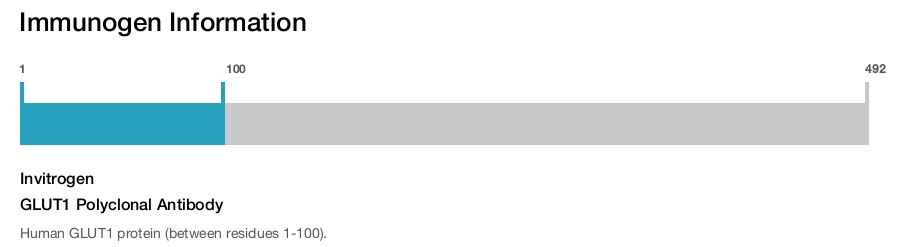
Human GLUT1 protein (between residues 1-100).
偶联物
形式
Liquid
浓度
0.9 mg/mL
规格
90 µg
保存条件
-20°C or -80°C if preferred
运输条件
Ambient (domestic); Wet ice (international)
RRID
产品详细信息
The target sequence has 100% sequence homology with primate, and 93% with rat, bovine, and rabbit.
靶标信息
Glucose transporter 1 (GLUT1), encoded by the SLC2A1 gene, is a facilitative glucose transporter that plays a pivotal role in the uptake of glucose across cell membranes, particularly in tissues with high-energy demands such as the brain, erythrocytes, and endothelial cells of the blood-brain barrier. GLUT1 is ubiquitously expressed and functions through a passive diffusion mechanism, allowing glucose to move down its concentration gradient. Its involvement in maintaining glucose homeostasis is crucial for cellular metabolism and energy production. Mutations in SLC2A1 can lead to GLUT1 deficiency syndrome, characterized by seizures, developmental delay, and movement disorders due to impaired glucose transport into the brain. GLUT1 also plays a significant role in cancer biology, where its overexpression is commonly observed in various tumors, facilitating the enhanced glucose uptake required for rapid tumor cell proliferation. This characteristic makes GLUT1 a potential target for cancer diagnostics and therapeutics. Additionally, GLUT1's regulation is influenced by factors such as hypoxia, insulin, and cellular stress, highlighting its adaptive role in different physiological and pathological states.
仅用于科研。不用于诊断过程。未经明确授权不得转售。
Disclaimer

Clicking the images or links will redirect you to a website hosted by BenchSci that provides third-party scientific content. Neither the content nor the BenchSci technology and processes for selection have been evaluated by us; we are providing them as-is and without warranty of any kind, including for use or application of the Thermo Fisher Scientific products presented.

