Search
Invitrogen
GNA11 Polyclonal Antibody
{{$productOrderCtrl.translations['antibody.pdp.commerceCard.promotion.promotions']}}
{{$productOrderCtrl.translations['antibody.pdp.commerceCard.promotion.promocode']}}: {{promo.promoCode}} {{promo.promoTitle}} {{promo.promoDescription}}. {{$productOrderCtrl.translations['antibody.pdp.commerceCard.promotion.learnmore']}}
{{$ctrl.translations['antibody.pdp.skuNotes.additionalInformation']}}:
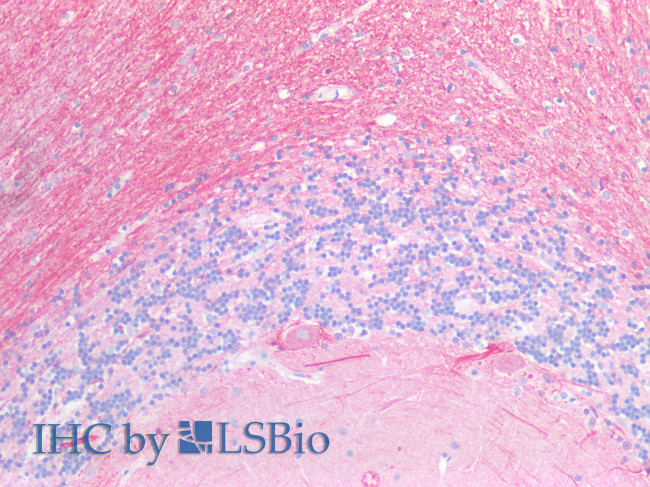
图: 1 / 6
GNA11 Antibody (PA5-119130) in IHC (P)
Immunohistochemistry analysis of GNA11 in paraffin-embedded Human Cerebellum tissue. Samples were incubated with polyclonal antibody (Product # PA5-119130) at a dilution of 10 µg/mL, followed by HRP-Linked Caprine Anti-Rabbit IgG using a dilution of 2 µg/mL.

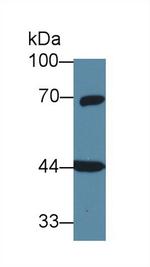
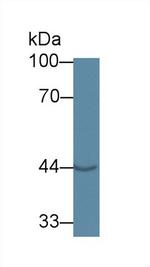
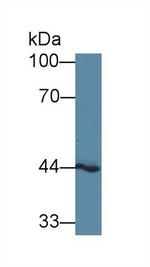
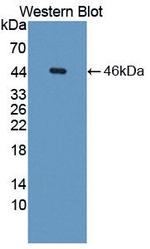
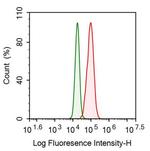
Please note: We are reviewing Western blot images included in the antibody testing data in our catalog, including those provided by third parties. Unless expressly labeled or annotated as “raw-unedited”, Western blot images included in the antibody testing data in our catalog may have been edited, optimized or otherwise adjusted for presentation.


产品信息
PA5-119130
应用
建议稀释比
已发表文章
产品规格
种属反应
Human,
Rat
宿主/亚型
Rabbit
/ IgG
分类
Polyclonal
类型
Antibody
抗原
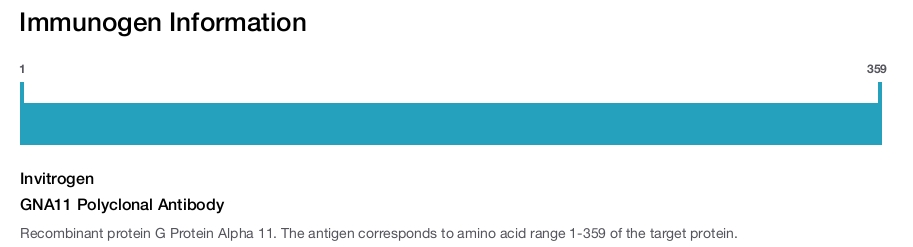
Recombinant protein G Protein Alpha 11. The antigen corresponds to amino acid range 1-359 of the target protein.
偶联物
Unconjugated
Unconjugated
Unconjugated
形式
Liquid
浓度
0.5 mg/mL
规格
100 µg
纯化类型
Antigen affinity chromatography, Protein A
保存液
PBS, pH 7.4, with 50% glycerol
内含物
0.05% ProClin 300
保存条件
Store at 4°C short term. For long term storage, store at -20°C, avoiding freeze/thaw cycles.
运输条件
Ambient (domestic); Wet ice (international)
RRID
靶标信息
Heterotrimeric guanine nucleotide-binding proteins (G proteins) consist of α, β and γ subunits and mediate the effects of hormones, neurotransmitters, chemokines and sensory stimuli. To date, over 20 known Gα subunits have been classified into four families, Gα(s), Gα(i/o), Gα(q) and Gα(12), based on structural and functional similarities (1,2). Phosphorylation of Tyr356 of Gα(q)/Gα(11) is essential for activation of the G protein, since phenylalanine substitution for Tyr356 changes the interaction of Gα with receptors and abolishes ligand-induced IP3 formation (3).
仅用于科研。不用于诊断过程。未经明确授权不得转售。
篇参考文献 (0)
您是否在文献中引用过该产品?请点击下方按钮邮件告知我们。
生物信息学
蛋白别名: g alpha-11; G protein; G11; GNA11; Gq class; guanine nucleotide binding protein (G protein), alpha 11 (Gq class); guanine nucleotide binding protein, alpha 11; guanine nucleotide regulatory protein G alpha 11; guanine nucleotide-binding protein alpha 11 subunit; guanine nucleotide-binding protein G(y) subunit alpha; heterotrimeric guanine nucleotide-binding protein 1K
基因别名: FBH; FBH2; FHH2; GNA-11; HG1K; HHC2; HYPOC2
UniProt ID: (Human) P29992, (Rat) Q9JID2
Entrez Gene ID: (Human) 2767, (Rat) 81662
action potential
signal transduction
G-protein coupled receptor signaling pathway
adenylate cyclase-modulating G-protein coupled receptor signaling pathway
phospholipase C-activating G-protein coupled receptor signaling pathway
phospholipase C-activating G-protein coupled acetylcholine receptor signaling pathway
G-protein coupled acetylcholine receptor signaling pathway
phototransduction, visible light
regulation of blood pressure
entrainment of circadian clock
phospholipase C-activating dopamine receptor signaling pathway
endothelin receptor signaling pathway
cranial skeletal system development
skeletal system development
heart development
regulation of melanocyte differentiation
developmental pigmentation
cellular response to pH
Disclaimer

Clicking the images or links will redirect you to a website hosted by BenchSci that provides third-party scientific content. Neither the content nor the BenchSci technology and processes for selection have been evaluated by us; we are providing them as-is and without warranty of any kind, including for use or application of the Thermo Fisher Scientific products presented.

