Search
Invitrogen
IRF4 Monoclonal Antibody (3E4), eFluor™ 660, eBioscience™
{{$productOrderCtrl.translations['antibody.pdp.commerceCard.promotion.promotions']}}
{{$productOrderCtrl.translations['antibody.pdp.commerceCard.promotion.viewpromo']}}
{{$productOrderCtrl.translations['antibody.pdp.commerceCard.promotion.promocode']}}: {{promo.promoCode}} {{promo.promoTitle}} {{promo.promoDescription}}. {{$productOrderCtrl.translations['antibody.pdp.commerceCard.promotion.learnmore']}}
Additional Information:
{{banner.description}}
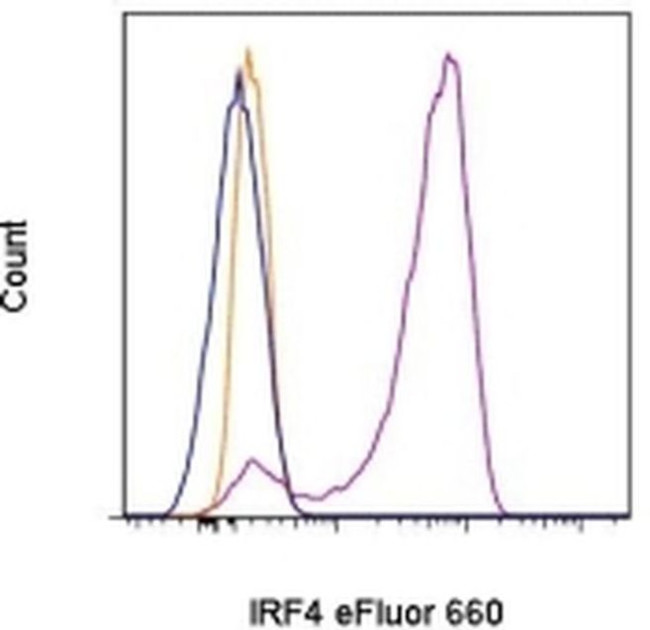
图: 1 / 20
IRF4 Antibody (50-9858-82) in Flow
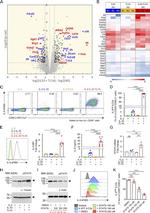
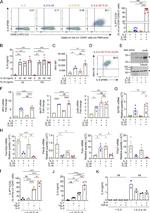
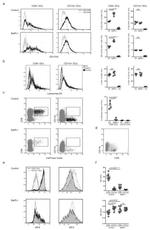
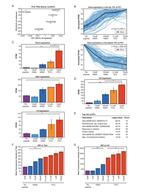
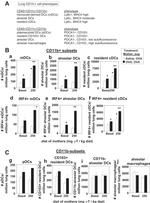
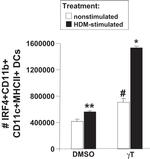
Intracellular staining of 3-day Anti-Human CD3 and Anti-Human CD28 Functional Grade Purified (Product # 16-0031-82 and Product # 16-0281-82)-stimulated human peripheral blood cells with 0.125 µg of Rat IgG1 K Isotype Control eFluor® 660 (Product # 50-4301-82) (blue histogram) or 0.125 µg of Anti-Human/Mouse IRF4 eFluor® 660 (purple histogram). The orange histogram is unstimulated cells stained with 0.125 µg of Anti-Human/Mouse IRF4 eFluor® 660. Viable lymphocytes, as determined by Fixable Viability Dye eFluor® 450 (Product # 65-0863-14), w... View More
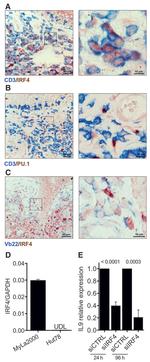
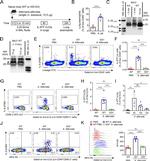
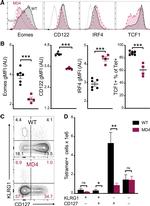
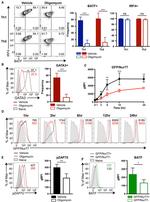
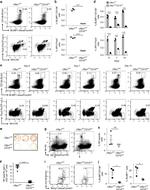
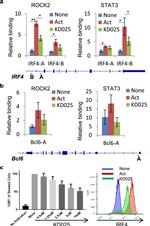
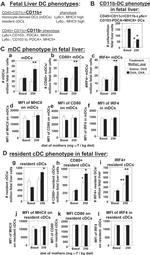
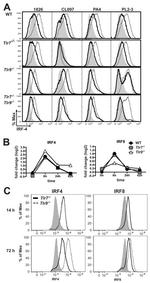
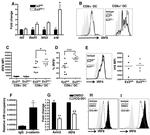
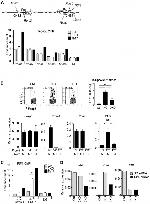
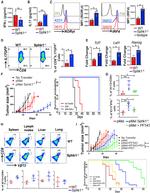
Please note: We are reviewing Western blot images included in the antibody testing data in our catalog, including those provided by third parties. Unless expressly labeled or annotated as “raw-unedited”, Western blot images included in the antibody testing data in our catalog may have been edited, optimized or otherwise adjusted for presentation.


产品信息
50-9858-82
应用
建议稀释比
已发表文章
产品规格
种属反应
Human,
Mouse
已发表种属
Human,
Mouse,
Rhesus monkey
宿主/亚型
Rat
/ IgG1, kappa
分类
Monoclonal
类型
Antibody
克隆号
3E4
偶联物
eFluor™ 660
eFluor™ 660
eFluor™ 660
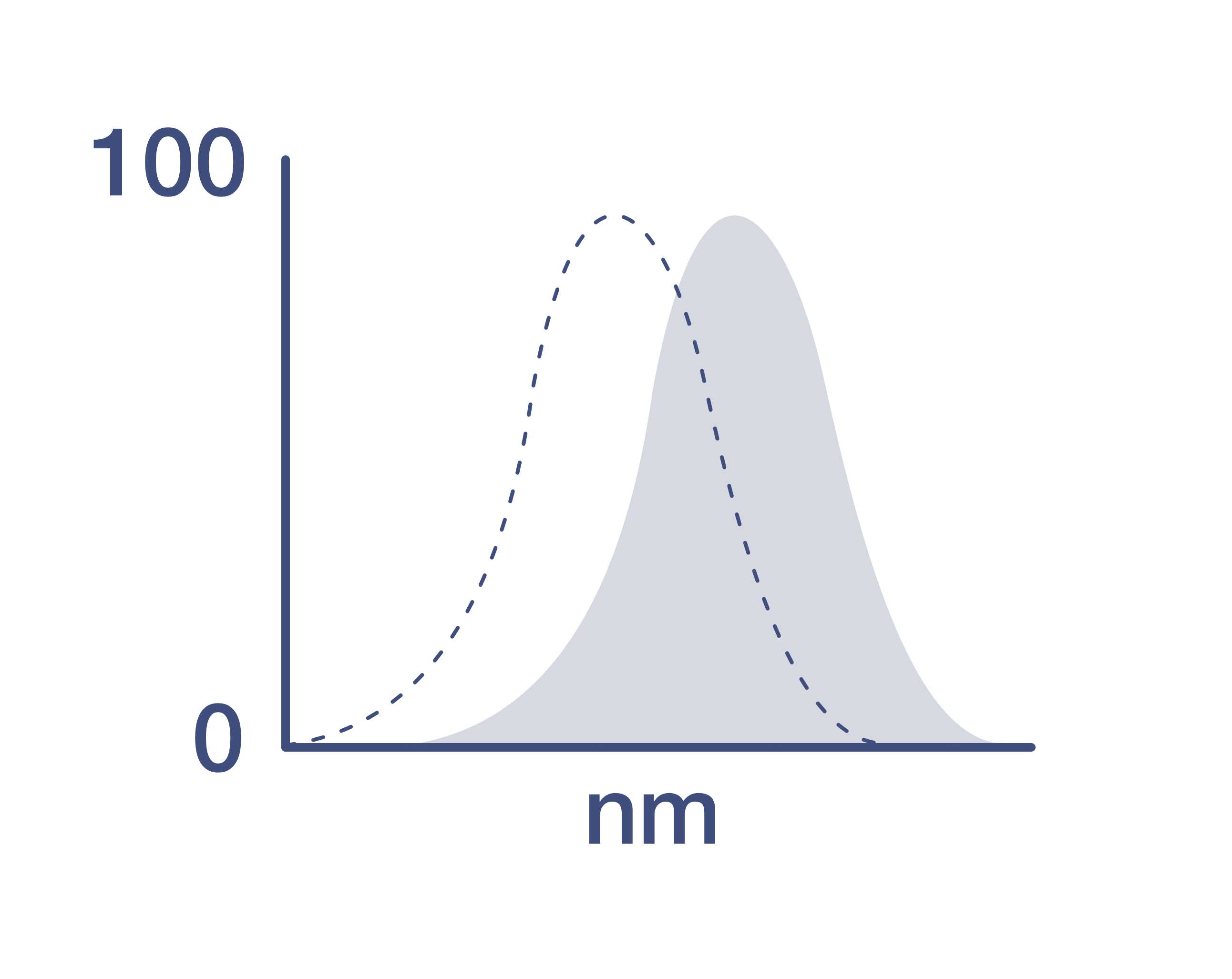
激发/发射光谱
651/668 nm
查看光谱
形式
Liquid
浓度
0.2 mg/mL
规格
100 µg
纯化类型
Affinity chromatography
保存液
PBS, pH 7.2
内含物
0.09% sodium azide
保存条件
4°C, store in dark, DO NOT FREEZE!
运输条件
Ambient (domestic); Wet ice (international)
RRID
产品详细信息
Description: The monoclonal antibody 3E4 reacts with human and mouse interferon regulatory factor 4 (IRF4). IRF4 is a 52 kDa transcription factor with roles in B cell, T cell and macrophage function. In B cells, IRF4 is highly expressed in mature plasma cells and plays a crucial role in their differentiation. IRF4 has been shown to interact with PU.1 and control the transcription of many B cell-specific genes including Prdm1, which encodes Blimp1. In T cells, IRF4 has been implicated in regulatory T (Treg), Th2, Th9 and Th17 cell development and function. This transcription factor is upregulated upon T cell activation and is expressed in mature T cells. Studies have shown that IRF4 directly induces Blimp1 expression in Tregs, leading to IL-10 expression. IRF4 has also been demonstrated to be involved in macrophage polarization and regulation. Lastly, in addition to its roles in normal immune function, IRF4 expression has been reported to be upregulated in many blood-related cancers.
Applications Reported:This 3E4 antibody has been reported for use in intracellular staining followed by flow cytometric analysis.
Applications Tested: This 3E4 antibody has been tested by intracellular staining and flow cytometric analysis of stimulated normal human peripheral blood cells using the Foxp3/Transcription Factor Buffer Set
靶标信息
The IRF (interferon regulatory factor) family of transcription factors are characterized by an unique tryptophan pentad repeat DNA-binding domain. The IRFs are important in the regulation of interferons in response to infection by virus, and in the regulation of interferon-inducible genes. IRF4 is lymphocyte specific and negatively regulates toll-like-receptor (TLR) signaling that is central to the activation of innate and adaptive immune systems. A chromosomal translocation involving this gene and the IgH locus, t(6;14)(p25;q32), may be a cause of multiple myeloma. Alternatively spliced transcript variants have been found.
仅用于科研。不用于诊断过程。未经明确授权不得转售。
How to use the Panel Builder
Watch the video to learn how to use the Invitrogen Flow Cytometry Panel Builder to build your next flow cytometry panel in 5 easy steps.
生物信息学
蛋白别名: Interferon regulatory factor 4; IRF-4; LSIRF; Lymphocyte-specific interferon regulatory factor; Multiple myeloma oncogene 1; NF-EM5; PU.1 interaction partner; Sfpi1/PU.1 interaction partner; Transcriptional activator PIP
基因别名: AI385587; IMD131; IRF-4; IRF4; LSIRF; MUM1; NF-EM5; SHEP8; Spip
UniProt ID: (Mouse) Q64287
Entrez Gene ID: (Human) 3662, (Mouse) 16364
transcription regulatory region sequence-specific DNA binding
RNA polymerase II core promoter proximal region sequence-specific DNA binding
RNA polymerase II transcription factor activity, sequence-specific DNA binding
core promoter proximal region sequence-specific DNA binding
transcriptional activator activity, RNA polymerase II transcription regulatory region sequence-specific binding
transcription factor activity, sequence-specific DNA binding
transcription coactivator activity
protein binding
sequence-specific DNA binding
sequence-specific double-stranded DNA binding
regulatory region DNA binding
transcriptional activator activity, RNA polymerase II core promoter proximal region sequence-specific binding
DNA binding
protein-lysine N-methyltransferase activity
winged helix/forkhead transcription factor
immune system process
regulation of transcription, DNA-templated
regulation of transcription from RNA polymerase II promoter
positive regulation of interleukin-10 production
positive regulation of interleukin-13 production
positive regulation of interleukin-2 production
positive regulation of interleukin-4 production
T cell activation
defense response to protozoan
regulation of T-helper cell differentiation
positive regulation of transcription, DNA-templated
positive regulation of transcription from RNA polymerase II promoter
positive regulation of multicellular organismal process
T-helper 17 cell lineage commitment
positive regulation of cold-induced thermogenesis
transcription, DNA-templated
transcription from RNA polymerase II promoter
protein methylation
peptidyl-lysine methylation
negative regulation of toll-like receptor signaling pathway
myeloid dendritic cell differentiation
positive regulation of DNA binding
histone H3 acetylation
histone H4 acetylation
positive regulation of interleukin-10 biosynthetic process
positive regulation of interleukin-2 biosynthetic process
positive regulation of interleukin-13 biosynthetic process
positive regulation of interleukin-4 biosynthetic process
Disclaimer

Clicking the images or links will redirect you to a website hosted by BenchSci that provides third-party scientific content. Neither the content nor the BenchSci technology and processes for selection have been evaluated by us; we are providing them as-is and without warranty of any kind, including for use or application of the Thermo Fisher Scientific products presented.

