Search
Additional Information:
{{banner.description}}
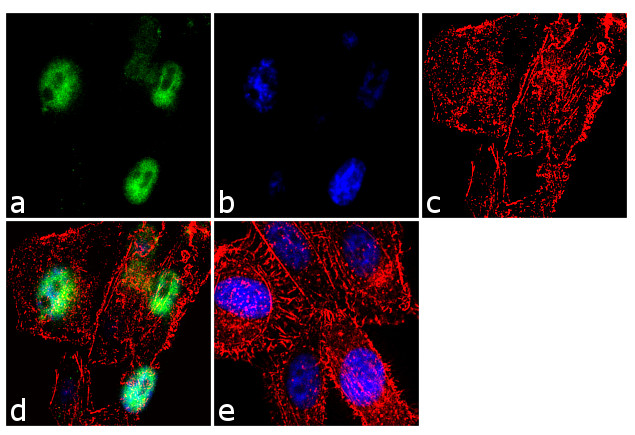
图: 1 / 4
MECP2 Antibody (711065) in ICC/IF
Immunofluorescence was performed on fixed and permeabilized PC-3 cells for detection of MECP2 using MECP2 Recombinant Rabbit Superclonal™ Antibody (Product # 711065, 2 µg/mL) and labeled with Goat anti-Rabbit IgG (Heavy Chain) Superclonal™ Secondary Antibody, Alexa Fluor® 488 conjugate (Product # A27034, 1:2000). Panel a) shows representative cells that were stained for detection and localization of MECP2 protein (green), Panel b) is stained for nuclei (blue) using SlowFade® Gold Antifade Mountant with DAPI (Product # S36938). Panel c) rep... View More
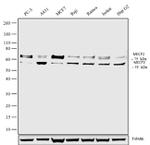
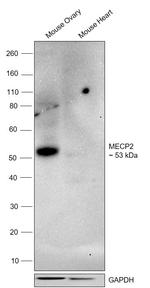
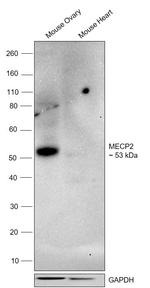
Please note: We are reviewing Western blot images included in the antibody testing data in our catalog, including those provided by third parties. Unless expressly labeled or annotated as “raw-unedited”, Western blot images included in the antibody testing data in our catalog may have been edited, optimized or otherwise adjusted for presentation.


产品信息
711065
产品规格
种属反应
Human,
Mouse
宿主/亚型
Rabbit
/ IgG
Expression System
Expi293
分类
Recombinant Superclonal
类型
Antibody
克隆号
2HCLC
抗原
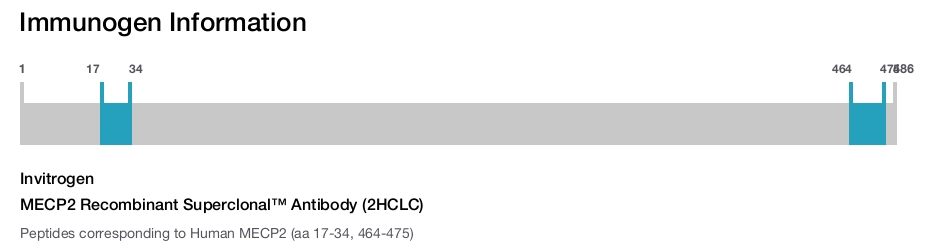
Peptides corresponding to Human MECP2 (aa 17-34, 464-475)
偶联物
Unconjugated
Unconjugated
Unconjugated
形式
Liquid
浓度
0.5 mg/mL
规格
100 µg
纯化类型
Protein A
保存液
PBS, pH 7.2-7.4
内含物
0.09% sodium azide
保存条件
Store at 4°C short term. For long term storage, store at -20°C, avoiding freeze/thaw cycles.
运输条件
Wet ice
RRID
产品详细信息
This antibody is predicted to react with Monkey, Horse and Pig.
Recombinant rabbit Superclonal™ antibodies are unique offerings from Thermo Fisher Scientific. They are comprised of a selection of multiple different recombinant monoclonal antibodies, providing the best of both worlds - the sensitivity of polyclonal antibodies with the specificity of monoclonal antibodies - all delivered with the consistency only found in a recombinant antibody. While functionally the same as a polyclonal antibody - recognizing multiple epitope sites on the target and producing higher detection sensitivity for low abundance targets - a recombinant rabbit Superclonal™ antibody has a known mixture of light and heavy chains. The exact population can be produced in every lot, circumventing the biological variability typically associated with polyclonal antibody production. Note: Formerly called “Recombinant polyclonal antibody”, this product is now rebranded as “Recombinant Superclonal™ antibody”. The physical product and the performance remain unchanged.
靶标信息
MECP2 belongs to a family of nuclear proteins (including MBD1, MBD2, MBD3 and MBD4) that have a methyl-CpG binding domain. MECP2 is capable of binding specifically to methylated DNA. DNA methylation is the major modification of eukaryotic genomes and plays an essential role in mammalian development. MECP2 can also repress transcription from methylated gene promoters. In contrast to other MBD family members, MECP2 is X-linked and subject to X inactivation. MECP2 is dispensible in stem cells, but is essential for embryonic development. MECP2 gene mutations are the cause of most cases of Rett syndrome, a progressive neurologic developmental disorder and one of the most common causes of mental retardation in females.
仅用于科研。不用于诊断过程。未经明确授权不得转售。
篇参考文献 (0)
您是否在文献中引用过该产品?请点击下方按钮邮件告知我们。
生物信息学
蛋白别名: DKFZp686A24160; meCp-2 protein; MECP2A; methyl CpG binding protein 2 (Rett syndrome) isoform MECP2_1; methyl CpG binding protein 2 (Rett syndrome) isoform MECP2_2; methyl CpG binding protein 2 (Rett syndrome) isoform MECP2_3; methyl CpG binding protein 2 (Rett syndrome) isoform MECP2_5; methyl CpG binding protein 2 (Rett syndrome) isoform MECP2_6; methyl CpG binding protein 2 (Rett syndrome) isoform MECP2_7; methyl CpG binding protein 2 (Rett syndrome) isoform MECP2_8; Rett Syndrome transcript 1; Rett syndrome; MECP2B; transcript variant; transcriptional repressor; involved in Rett syndrome disease; unnamed protein product
基因别名: 1500041B07Rik; AUTSX3; D630021H01Rik; Mbd5; MRX16; MRX79; MRXS13; MRXSL; PPMX; RS; RTS; RTT; WBP10
UniProt ID: (Human) P51608, (Mouse) Q9Z2D6
Entrez Gene ID: (Human) 4204, (Mouse) 17257
nucleic acid binding
DNA binding
chromatin binding
transcription corepressor activity
RNA binding
mRNA binding
protein binding
methyl-CpG binding
double-stranded methylated DNA binding
siRNA binding
binding, bridging
histone reader activity
molecular condensate scaffold activity
promoter-specific chromatin binding
four-way junction DNA binding
enzyme binding
protein domain specific binding
chromatin DNA binding
identical protein binding
histone deacetylase binding
unmethylated CpG binding
negative regulation of transcription from RNA polymerase II promoter
Notch signaling pathway
associative learning
gene expression
negative regulation of gene expression
negative regulation of angiogenesis
neuron differentiation
regulation of gene expression, epigenetic
negative regulation of blood vessel endothelial cell migration
hypermethylation of CpG island
negative regulation of transcription, DNA-templated
cell development
negative regulation of developmental process
negative regulation of smooth muscle cell differentiation
regulation of multicellular organismal process
genetic imprinting
positive regulation of microtubule nucleation
axo-dendritic protein transport
protein localization to presynapse
behavioral fear response
response to hypoxia
startle response
neurological system process involved in regulation of systemic arterial blood pressure
regulation of respiratory gaseous exchange by neurological system process
inositol metabolic process
regulation of transcription from RNA polymerase II promoter
glutamine metabolic process
cellular biogenic amine metabolic process
triglyceride metabolic process
chemical synaptic transmission
synapse assembly
brain development
respiratory gaseous exchange
learning
memory
long-term memory
protein localization
glucocorticoid metabolic process
positive regulation of cell proliferation
adult locomotory behavior
visual learning
post-embryonic development
regulation of gene expression
positive regulation of gene expression
dendrite development
proprioception
sensory perception of pain
cerebellum development
ventricular system development
neuron projection development
heterochromatin assembly
positive regulation of synaptic plasticity
cardiolipin metabolic process
multicellular organismal response to stress
social behavior
cellular response to potassium ion
response to cocaine
neuron maturation
negative regulation of neuron apoptotic process
regulation of respiratory gaseous exchange
positive regulation of transcription, DNA-templated
positive regulation of transcription from RNA polymerase II promoter
phosphatidylcholine metabolic process
regulation of synaptic plasticity
negative regulation of astrocyte differentiation
regulation of synapse organization
neuromuscular process controlling posture
neuromuscular process
sensory perception of touch
response to other organism
excitatory postsynaptic potential
long-term synaptic potentiation
positive regulation of dendritic spine development
negative regulation of dendritic spine development
cellular response to isoquinoline alkaloid
negative regulation of locomotion involved in locomotory behavior
regulation of action potential firing threshold
positive regulation of anterograde dense core granule transport
positive regulation of retrograde dense core granule transport
negative regulation of dendrite extension
positive regulation of dendrite extension
negative regulation of respiratory gaseous exchange
positive regulation of branching morphogenesis of a nerve
negative regulation of primary miRNA processing
Disclaimer

Clicking the images or links will redirect you to a website hosted by BenchSci that provides third-party scientific content. Neither the content nor the BenchSci technology and processes for selection have been evaluated by us; we are providing them as-is and without warranty of any kind, including for use or application of the Thermo Fisher Scientific products presented.

